
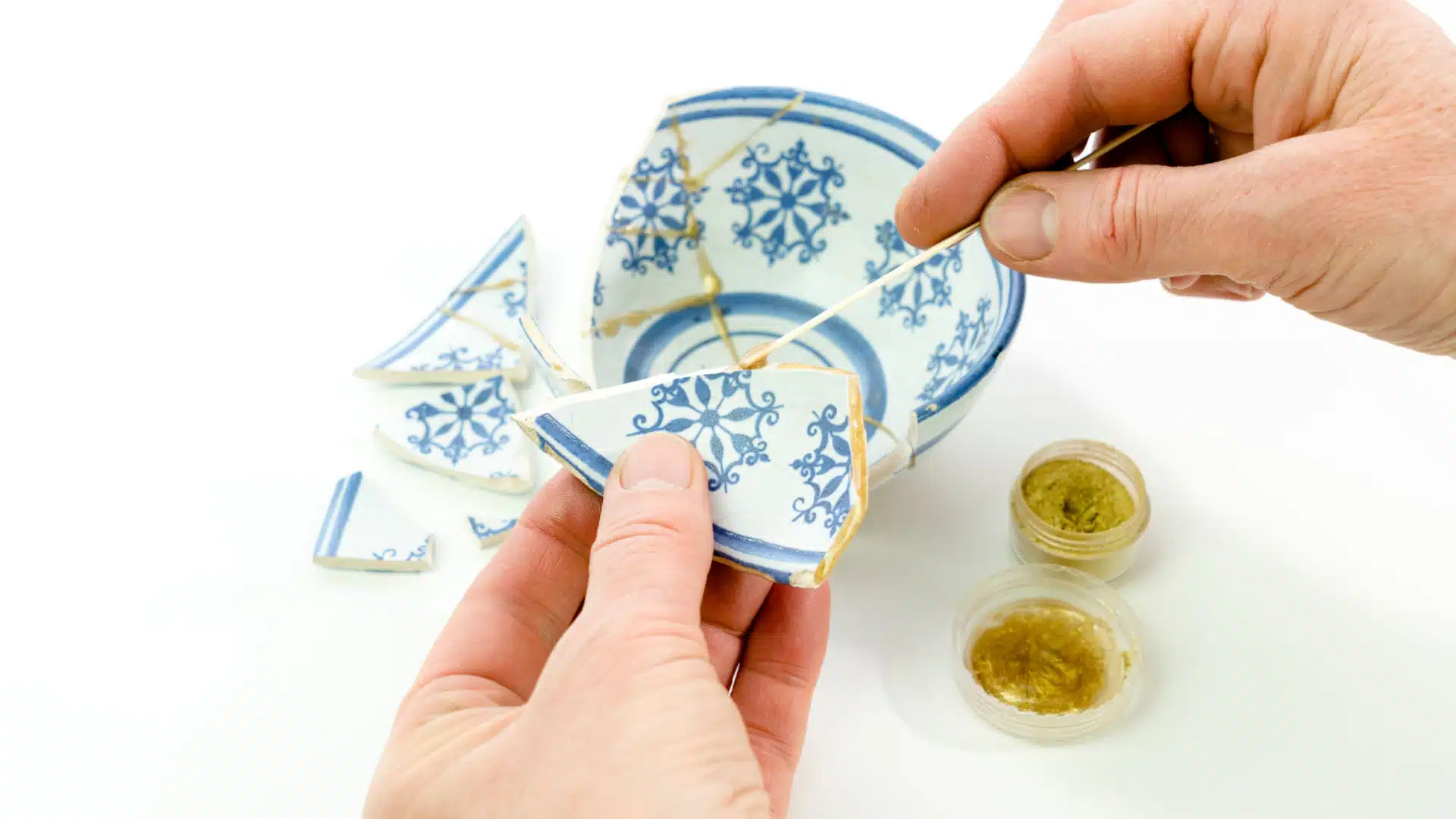
Think back to the last time you broke a dish. What did you do?
In today’s throw-away culture, you more than likely tossed it out and got a new one. However, the Japanese have a unique approach to broken items: Kintsugi.
What is Kintsugi?
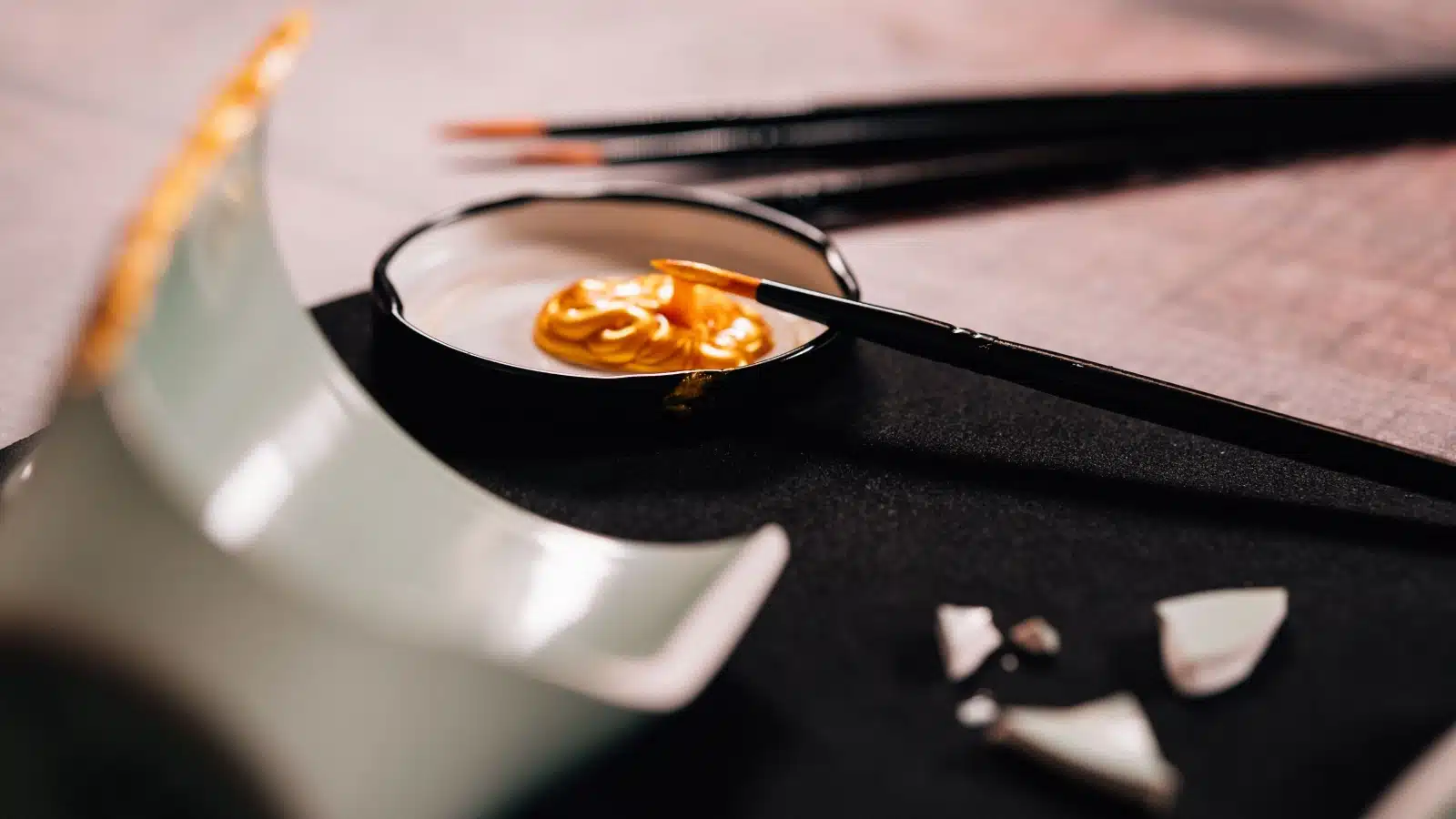
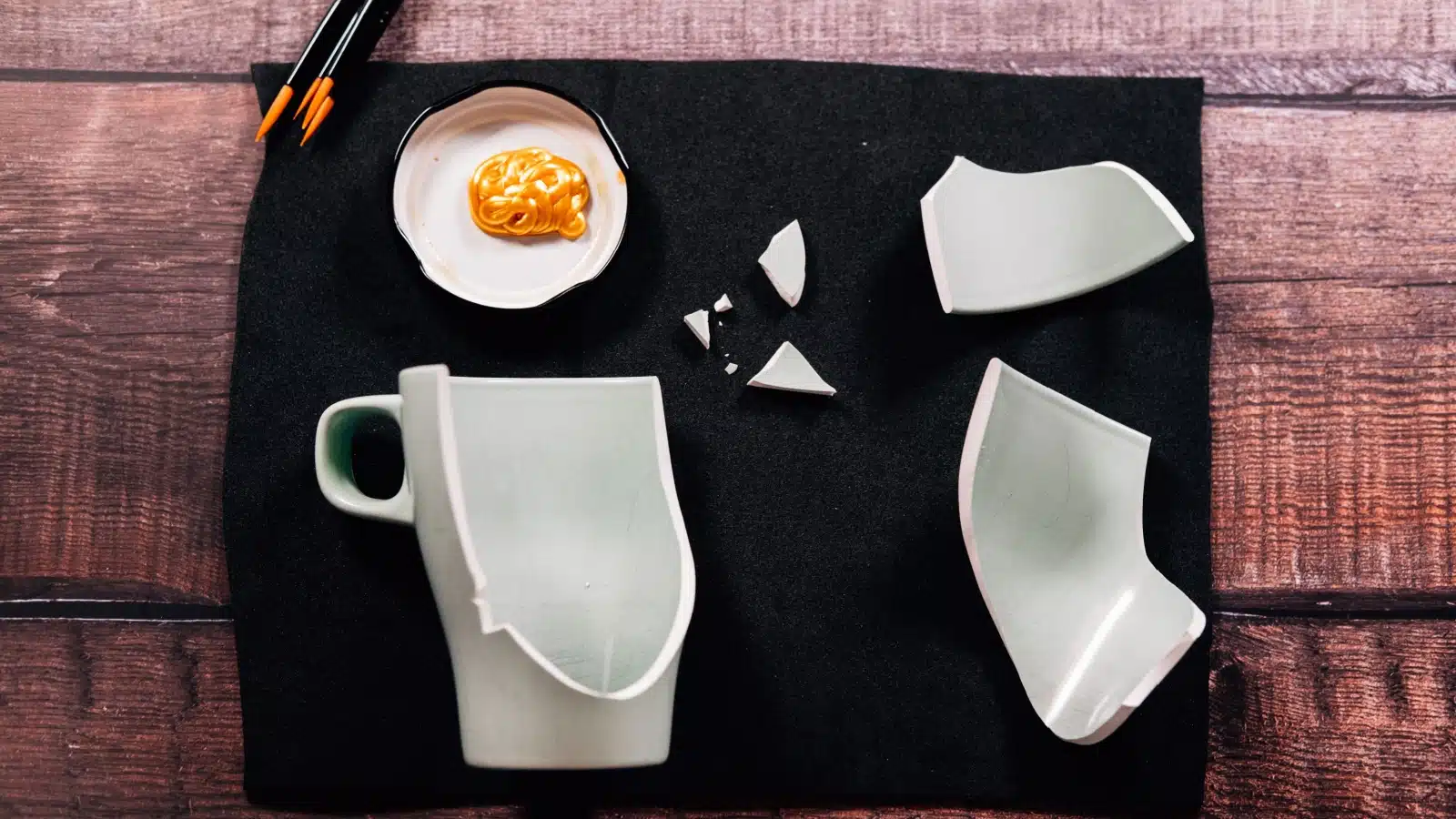
Kintsugi is a Japanese tradition of repairing broken items. Rather than fix things with simple glue or try to mask imperfections, the art of Kintsugi showcases the flaws and imperfections.
The Japanese use silver, gold, or platinum flaked lacquer when repairing a broken item which highlights the flaws and makes them part of the item’s history. The word kintsugi can be loosely translated to “golden seams.”
What Items Can I Repair?
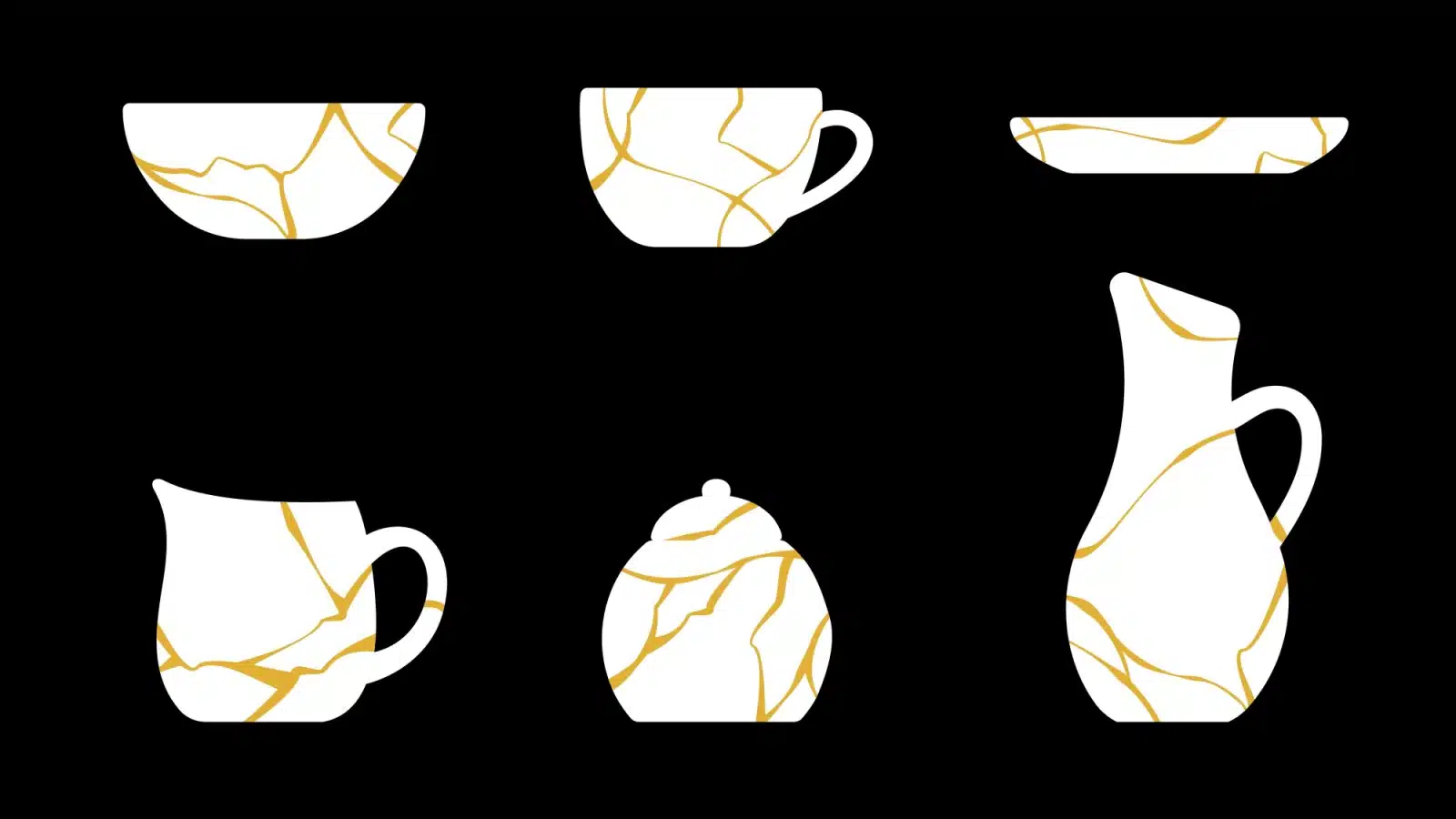
Kintsugi is mainly used to repair ceramics. Anything made from porcelain, stoneware, or earthenware is fair game. Cups, plates, bowls, statues, pots, teacups, and various wares are ideal subjects for the art.
Although ceramic arts are the most common objects for Kintsugi, it’s been to mend items made of glass and wood as well.
Origins
The ancient art of kintsugi has origins in Japan but was also practiced in other areas of Asia. Historians believe this tradition dates to the 15th century.
Kintsugi is used on all styles of Japanese pottery but is very closely associated with the Japanese tea ceremony. According to Wikipedia, one theory for the origin of Kintsugi is a damaged Chinese tea bowl. Ashikaga Yoshimasa, the 8th shogun of the Muromachi period, sent a damaged tea bowl back to China for repairs. The repair work was horrific, as the Chinese put it back together with ugly staples. This awful repair job may have influenced Japanese artisans to develop a method of repair that was more aesthetically pleasing.
This is just one theory, however. The true origins of the aesthetic are unknown.
What Does Kintsugi Symbolize?

Kintsugi is more than just a method of repair. It’s an entire philosophy.
It’s about embracing an object’s history, flaws, and all. An item’s repairs lines, marks, and chips help showcase the item’s history. These imperfections give a piece character that can’t be created in any factory-produced way.
Kintsugi has a more practical meaning as well. Ceramics are expensive and can often be costly to repair.
The kintsugi philosophy also embraces a zero-waste mentality. If something can be repaired, it is wasteful not to fix it. Items should not be thrown out if repair is possible.
What Can Kintsugi Teach Us About Life?

I think this art can teach us a lot about our own lives. We often try to hide our flaws behind make-up or bravado and pretend that everything in our lives is perfect and okay.
Kintsugi teaches us that flaws can be beautiful, and we don’t need to hide them. We can be loved for what we are, including our bruises, past trauma, and past mistakes. We don’t need to hide those things to be worthy of love and respect.
It also has a more practical message about being wasteful. In our overly consumeristic culture, we tend to throw things away the second we see a flaw in them. If it’s not perfect, we don’t need it anymore, and we buy a new one.
Instead, embrace the idea that defective items can be beautiful. Repair things when you can, rather than throwing them away. Give older items new life with gold and silver repairs, and let them tell a story, your story.
Is Kintsugi Still Practiced?
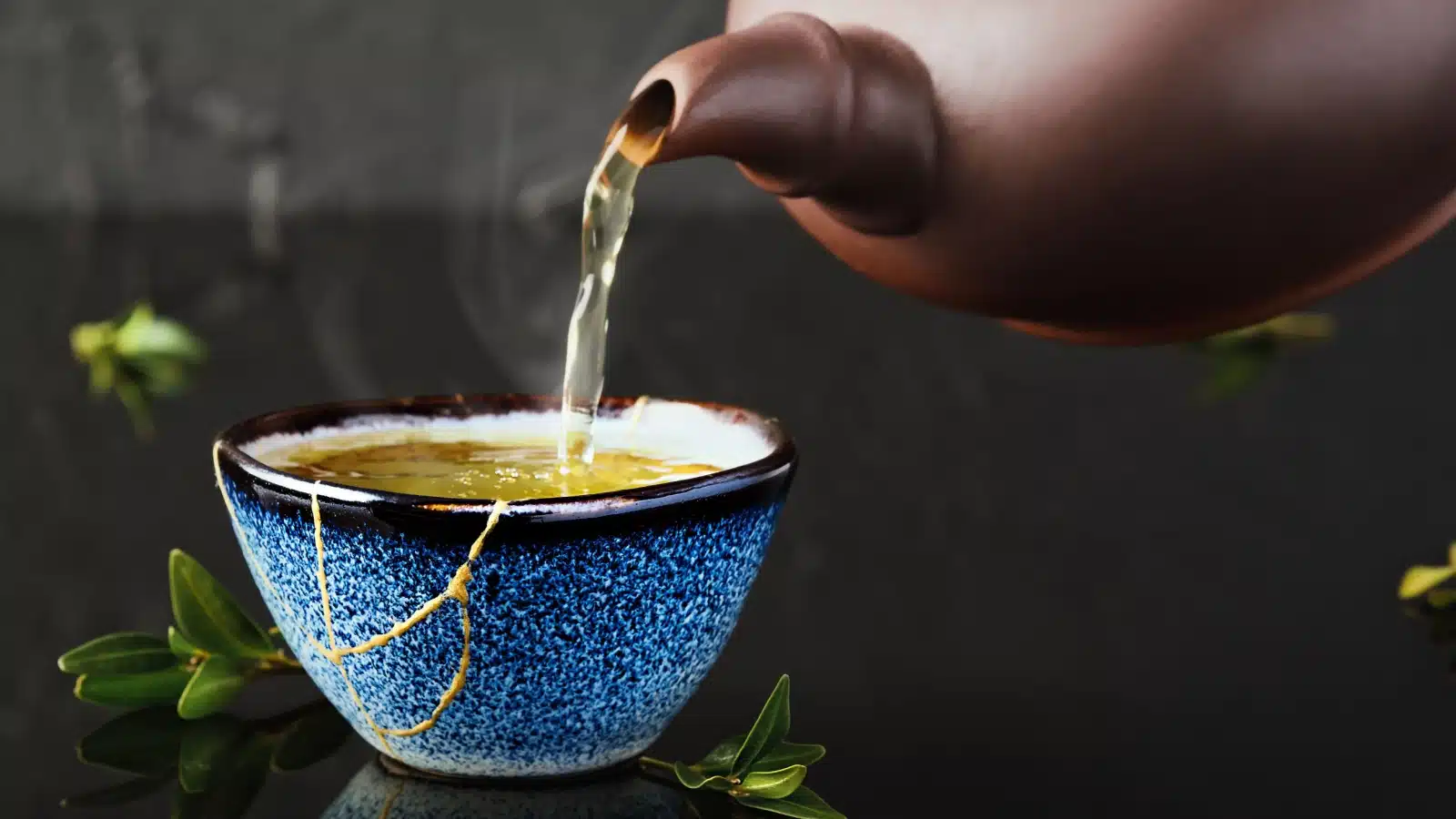
Kintsugi is still practiced in many forms in Japan by masters. Contemporary artists around the world also practice the art form. It’s also something you can do on your own with items you may break at home.
How Do I Do I Start?
Hey folks! Transparency Disclosure- Some of the links in this article are affiliate links. That means I’ll receive a small commission if you decide to click on it and buy something. Don’t worry, it doesn’t cost you anything extra!
The most fun way to start is to do it on your own. The next time you break a dinner plate, vase, or teacup, repair it using the kintsugi method.
Many people, artists specifically, break items on purpose so they can apply gold lacquer to the broken seams. I don’t recommend breaking your stuff, but if you have things you don’t want anymore, this could be a great place to start.
You can also grab old pottery at garage sales for low prices and practice your new skills with these pieces.
Kintsugi Repair Kits
An easy way to get started is to get a Kintsugi repair kit on Amazon. These kits come with everything you need to create your own Kintsugi art. Most kits include gold powder, epoxy glue, mixing kits, gloves, and an instruction manual. You will need to provide your broken pottery to complete your work.
Related Japanese Traditions

Japanese culture is known for its various aesthetics. Many of the traditions in Japan are related to kintsugi concerning either Japanese art or philosophy.
Wabi Sabi, Shibui, and Enso are three familiar Japanese aesthetics commonly associated with Kintsugi. Many of them are related to a celebration of the imperfect.
Wabi-Sabi
Wabi-Sabi is a philosophy that embraces and accepts imperfections. The philosophy teaches that there is beauty in asymmetry, roughness, modesty, simplicity, and other things we usually see as bland or even ugly.
Showcasing visual imperfections is common in Japanese art, and much of those works use Wabi-Sabi as a framework.
Shibui
Shibui is a Japanese aesthetic that celebrates subtle and intrinsic beauty. It’s a little different from the other philosophies in that it doesn’t showcase the beauty in flawed objects but instead lets the inherent beauty of an object speak for itself.
Shibui items have a simple appearance. Only when one looks closely can one see the finer details used in creating the work. This philosophy is the epitome of simple elegance used in art, jewelry, textiles, and even home décor.
Enso
Enso is a circle that is hand-drawn in simple brushstrokes. This Zen practice is meant to be a moment where the mind is free, letting the body create the ring without worrying about precise form.
It’s related to Wabi-Sabi and Kintsugi because it celebrates the beauty found in the imperfect circle.
Putting Things Back Together

Although Kintsugi started with Japanese pottery, the philosophy has broadened to become an almost humanistic philosophy. Yes, it’s an art form at heart, used to repair broken items and highlight their flaws.
But it is also related to humanity. We feel the need to hide our scars rather than embrace them. Let the idea of Kintsugi relate to your personal life and your art. Embrace your scars, your flaws, your weaknesses. Those things made you who you are. Be proud of it.