

If you ever want to achieve financial security, budgeting matters.
But it’s not the dirty word you think it is.
Budgeting isn’t about restriction but about freedom. When you learn how to budget, you’ll start to see it that way, too.
Why Budgeting Matters

“Don’t tell me where your priorities are. Show me where you spend your money, and I’ll tell you what they are.”
– James W. Frick
Do you know where your money goes?
So many people flit from paycheck to paycheck, buying this random thing here and that random thing there, without even thinking about it.
At the end of the pay period, they’re nickel-and-diming it, anxious for the cash to hit so they can spend freely once again.
But what did they even buy? Was it stuff they really wanted? Did it contribute to their financial goals? Nobody knows.
A budget changes that. It helps you align your spending with your priorities.
Budgeting helps you take control of your spending so you get to decide where your cash goes.
What is a Budget?

Think of a budget as a spending plan.
It’s a way for you to look at the money coming in, compare it to the money going out, and decide what changes you want to make.
There’s nothing inherently restrictive about it – it’s simply a way to decide (in advance) where and how to spend your money.
How to Budget
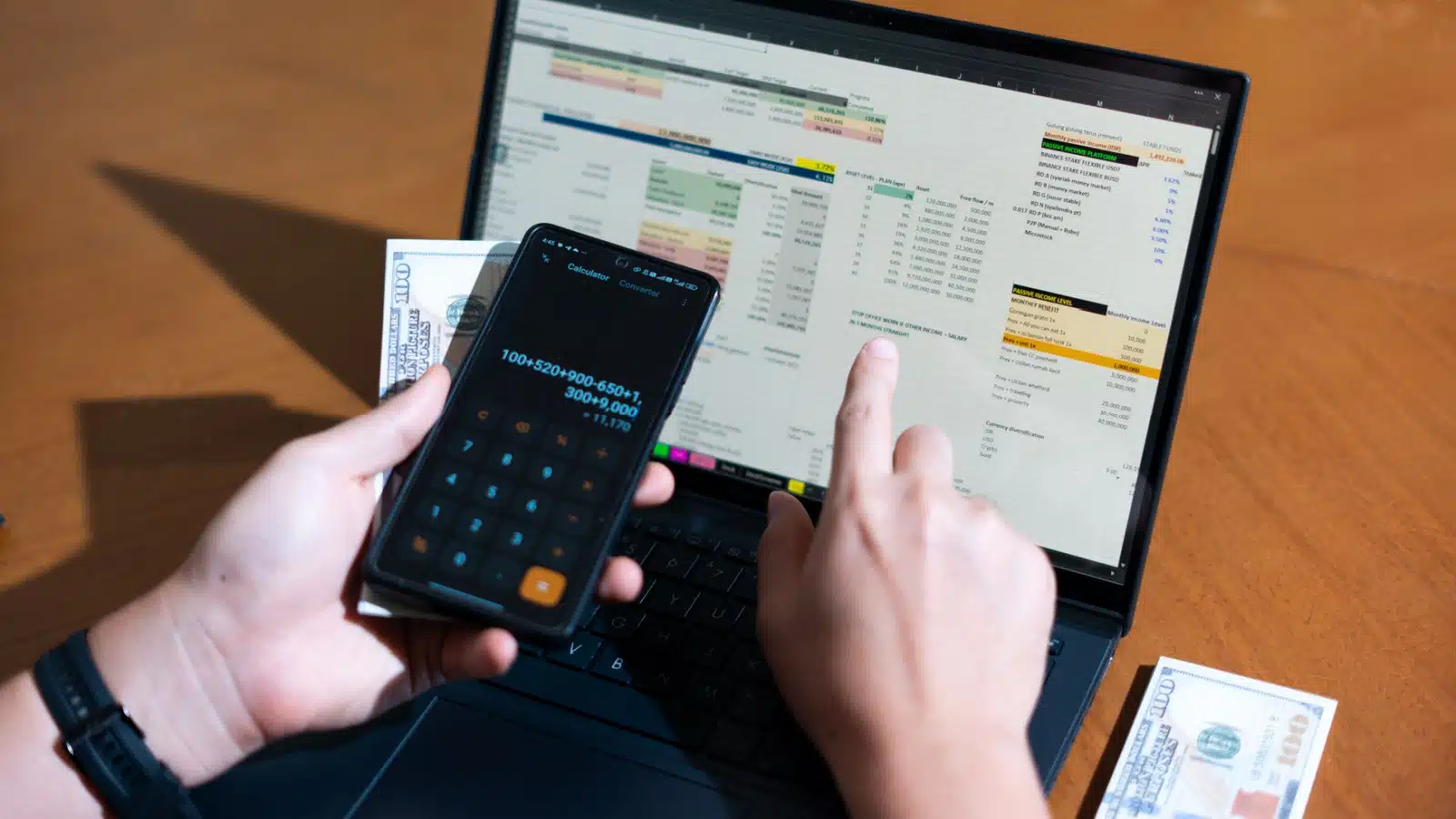
Everyone thinks budgeting is hard. People tell themselves they’re terrible at math or bad with money as an excuse to avoid it.
It’s all lies.
Budgeting is easy. You’re probably already doing most of the work in your head.
But to make the most of it, you should get it out on paper (or budgeting software – whatever works for you).
Here’s how to budget in seven simple steps.
Start with your Monthly Bills
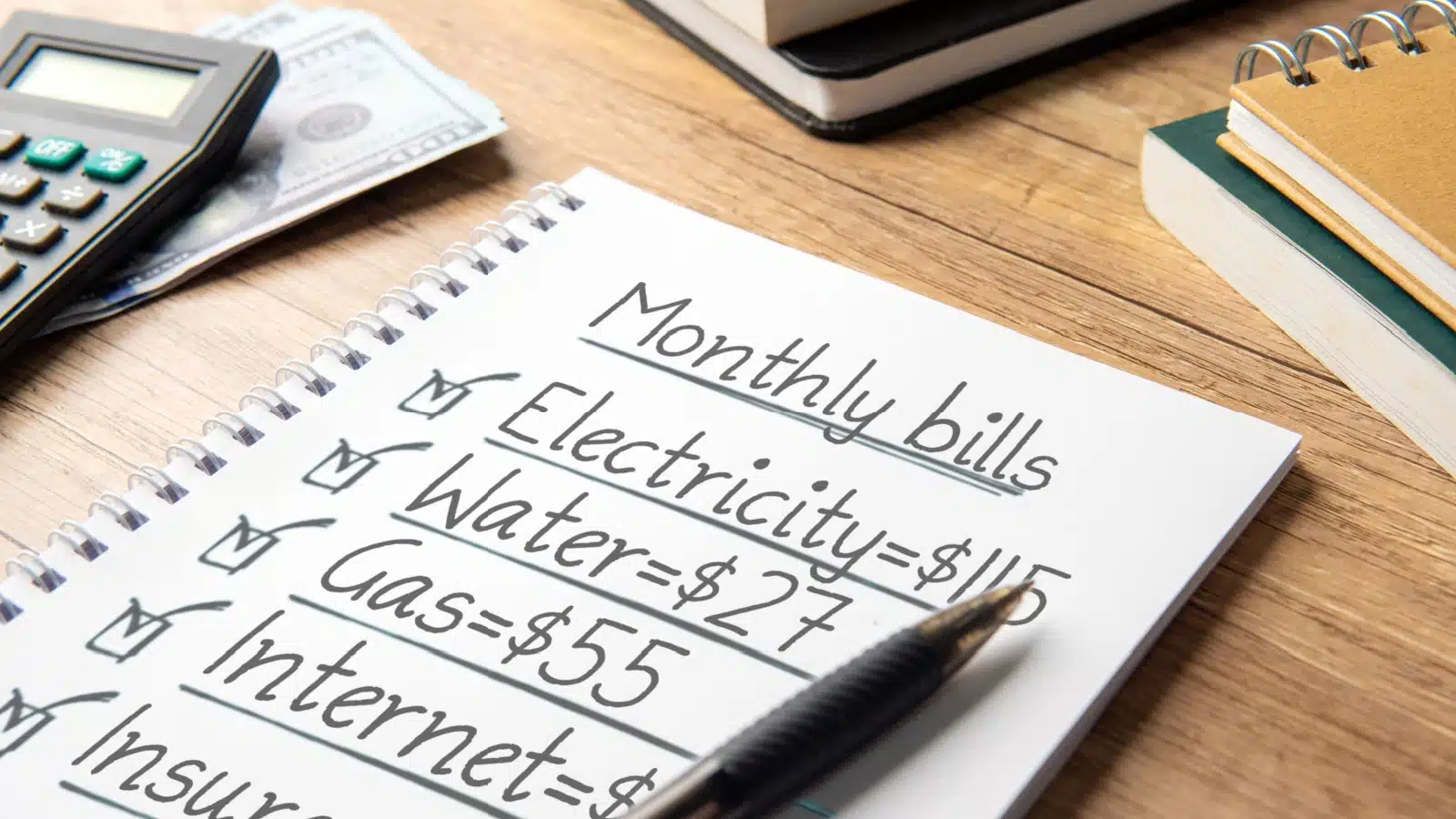
The first step to building a budget is writing down your monthly bills and their due dates.
But why?
A monthly budget is the easiest for beginners. Most of our bills are due once a month, and most of us get paid regularly enough to anticipate our monthly income.
I like to start with bills, because they don’t usually change much from month to month. Rent, car payments, and insurance usually don’t change, and although utilities might fluctuate, they’re usually close enough that you can estimate them (I always estimate higher – just to be safe).
But Don’t Forget Quarterly/Annual Expenses

A lot of people destroy their budgets by forgetting about big expenses that only occur a few times per year.
Break them down into monthly payments and add them to your list of monthly bills.
For example, we all know Christmas comes at the end of December. If I want to buy 10 people each a $100 present, I’ll need $1000 by the end of the year. That would be impossible to pull off in November/December, but if I save $80 each month starting in January, I’ll have a nice little Christmas fund by the end of the year.
Other big expenses that occur throughout the year might include vet visits, property taxes, insurance, or home maintenance.
Record Your Income
Now that you’ve got all your bills recorded, it’s time to write out your income.
We’re all on different payment plans. You might get paid weekly, every other week, or twice a month. Account for every paycheck.
If you have regular income outside of your typical job, like child support, a pension, royalties, etc., include it as well.
However, you should only account for money you know is coming. If you have a side hustle that sometimes makes money, you can’t include it in your regular budget – instead, you should ensure your regular income covers your budget, then create a plan for any bonus money.
Freelancers and the self-employed will have a harder time here, because their income isn’t always stable. However, if you’ve been doing it for a while, you should have a good idea of your expected monthly income. Use a conservative estimate for your “normal” budget and create a plan for any additional income.
Determine Your Discretionary Spending

Here’s where budgeting gets dirty.
Most of us already have an idea of how much money we earn versus how much we spend on bills. It’s the discretionary spending that eats away at our wallets – random snacks at the gas station, lunches out twice a week, impulse buys at the grocery store, one too many drinks at the bar – all these little things add up to destroy our budgets.
And yes, it’s fun in the moment. But is that fleeting moment of fun worth sacrificing your goals and financial security?
If you really want to learn how to budget, you must track all that spending and figure out exactly where all your extra money goes. Print out your bank statements and highlight all the money spent at the gas station or on fast food. Keep your receipts for a month and add them all up.
You’ll be shocked at how much random money you spend on random junk.
Identify Your Top Priorities

I asked above if the fleeting moment of fun was worth the sacrifice – here’s where you get to decide whether it is or not.
Budgeting isn’t about limiting yourself. It’s about making a conscious decision on how to spend your money.
To do that, you need to know what you want.
Think about what you want out of life. It might be long-term financial goals, such as financial security or a secure retirement, or shorter-term goals, such as a European vacation or a new car. Maybe you want to save for a house one day.
Identifying these goals will help you build a budget that supports them.
Pay Yourself First

Budgeting is about paying yourself before spending all your money. When you know what you want, you can make a budget that gets you there.
You can do that by creating a budget line item for your goals. Think of it as another bill you must pay every month – $100 towards my vacation fund, $200 towards my house savings, 5% of my paycheck towards retirement, etc.
I put it on autopilot, so I can’t say “well, I won’t do it just this month,” because we all know that will turn into every month, and I’ll never actually grow the wealth I want. If it’s an automatic transfer, it’s too much work to turn off, so I have to account for it in my budget.
Shift Your Spending
Let’s be real – building a budget to achieve your financial goals might require some sacrifice.
You may need to decline lunch outings or limit spending on junk food. You will probably have to shift your spending to stick to your budget.
Reframing can help.
It’s not that you can’t afford these things – but that you’ve consciously decided you’re not going to prioritize them anymore.
You’re shifting your spending because you want something bigger than a lunch out once a week or a tasteless snack after work.
Budgeting Methods
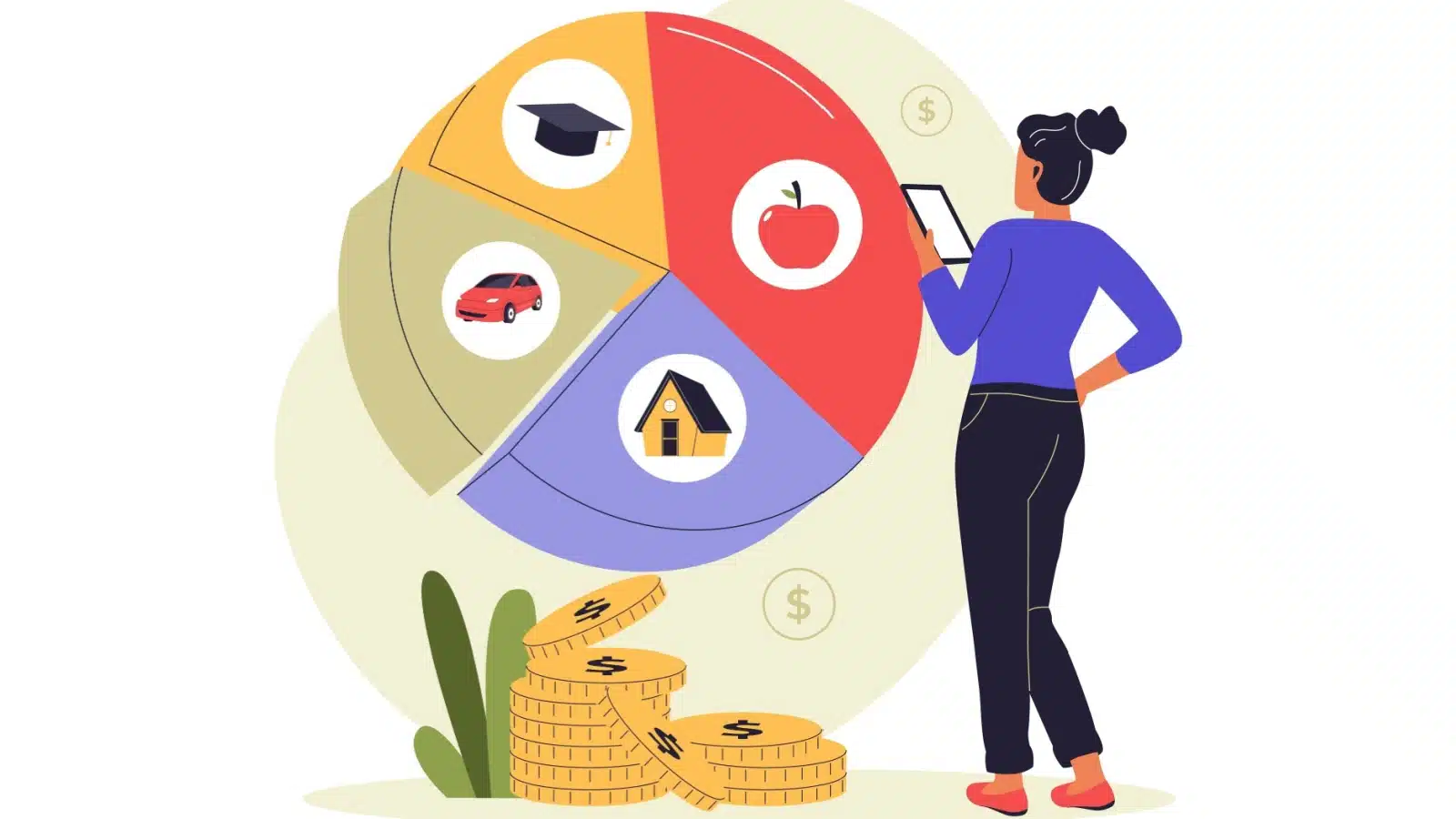
We focused on how to budget monthly here, because that’s probably the easiest way for beginners to think about it. But there are lots of different budgeting methods to use.
I get paid every other week, so it’s easiest for me to do my budget on payday. Some folks create yearly budgets, while others find popular methods like the 50/30/20 rule or Zero-Based Budgeting helpful.
Explore the variety of methods out there and use whatever works best for you.
Budgeting Tools

In my opinion, nothing beats good ole’ pencil and paper. I use a little ledger book to write everything by hand, and a calculator to get my math right.
But there are so many other tools out there, from software to applications to websites that help you track your spending or build and stick to your budget.
Budgeting Will Help You

I’ve come to love budgeting day. I get to see how much my savings has grown and daydream about my financial goals that are actually within reach.
Once you do it regularly and start building momentum, you will love it too. Giving up the random spending won’t even feel like a sacrifice anymore – it will feel normal.
Your savings will grow, you’ll feel less stressed about money, and you’ll look forward to what the future holds.
It all starts with learning how to budget.