

Throughout history, pioneering women accomplished the impossible.
Women discovered DNA’s double helix structure, created the first computer program, sent astronauts into space, split the atom, and painted masterpieces.
So why don’t we know about these achievements?
The Matilda Effect tried its hardest to erase them from history.
What is the Matilda Effect?

The Matilda Effect is the systematic erasure of women’s accomplishments.
It’s the way men get credited for women’s work; a woman’s contributions to a project get dismissed, and women’s work in general is deemed “lesser.”
Of course, it’s not exactly purposeful. To my knowledge, there’s no “council of males” huddled in dimly lit rooms, sinisterly rubbing their hands together as they decide which woman’s accomplishments they can credit to a random guy.
It’s a subconscious bias born from misogyny. Decision makers assume a man did the work. They assume men led the project, had the idea, made the progress, and put in the majority of the effort.
At the same time, they assume the women’s contributions had little, if any, impact on the actual science. Maybe the woman took notes, kept records, or cleaned the space. Those tasks are, after all, “women’s work,” so of course that must have been her role. She wouldn’t have been doing the real science.
Most of us know these assumptions have no basis in reality, but they still exist, and they still prevent women from receiving the honors they deserve.
It’s the Matilda Effect.
History of the Matilda Effect

We can find examples where men were credited for women’s work as far back as the Renaissance, and as our historical record-keeping has improved, we see it more and more.
Unfortunately, we will probably never know the true scope of the problem. Was Shakespeare a woman? If not, did a woman help him write? It’s impossible to know for sure.
How many scientific achievements, from astronomy to thermodynamics, anthropology to anatomy, only happened because of a woman that history erased? We’ll never know.
But we can start our history of the Matilda Effect with the paper that first examined the problem.
Woman as Inventor

In 1870, suffragist and abolitionist Matilda Joslyn Gage published her essay “Woman as Inventor,” which was later published in the North American Review (1883).
In it, Gage outlines how ancient cultures celebrated female ingenuity, sharing how Egyptians praised Isis and Greeks worshipped Athena. These goddesses invented things like agriculture, breadmaking, and medicine; tools, musical instruments, and chariots.
Leaving mythology, she describes how prehistoric women, not men, invented pottery and spinning, arts which women continued to improve well into the 19th century, and provides numerous examples of women who contributed to some of the most important inventions of all time (i.e, the cotton gin).
Then she gets to the main point: despite all of women’s impressive inventions, the vast majority of patents are issued to men. And she posits the root cause: women’s oppression.
Gage says it better than I ever could:
“Inventors must not only possess full freedom to exercise their powers, but there must also be a certain welcome and protection to their ideas. Deprived, as woman is, of political power, she has to face contempt of her sex, open and covert scorn of womanhood, depreciatory allusions to her intellectual powers, — all tending to hamper the expression of her inventive genius.”
Naming the Matilda Effect

The term Matilda Effect wasn’t coined until over a century later. In 1993, science historian Margaret W. Rossiter used it to describe the very real phenomenon.
Rossiter dedicated most of her post-doctoral life to uncovering and celebrating the hundreds of female scientists society forgot (or purposefully left out).
She focused mainly on American scientists, publishing three volumes spanning different eras of US history: Women Scientists in America, Struggles and Strategies to 1940, Women Scientists in America: Before Affirmative Action, 1940–1972, and Women Scientists in American Volume 3: Forging a New World Since 1972.
Though the first was published in 1982 and was well received, due to the struggle to get funding and maintain a secure position (another example of misogyny), the next volume didn’t come until 1995, and the third wasn’t published until 2012.
The Matilda Effect in Action
The Matilda Effect isn’t just about crediting men with women’s accomplishments. It’s also about deciding that the work a man is working on is more important than whatever a woman is working on.
The Nobel committee has a long history of awarding only the male contributors to a theory the prize or snubbing female nominees in favor of males.
French botanist Jeanne Baret was half of a dynamic duo, but most of their achievements were attributed to her male partner. Marietta Blau and Herthe Wambacher both contributed to the development of a photographic method for studying nuclear processes, but only their male counterpart, Cecil Powell, received the award. The women were snubbed even after receiving the nomination from one of the most famous scientists of all time, Erwin Shrödinger.
What’s the Impact?

People need role models.
Little boys get to look up to the Albert Einsteins and Stephen Hawkings of the world, and think “I can do that too!”
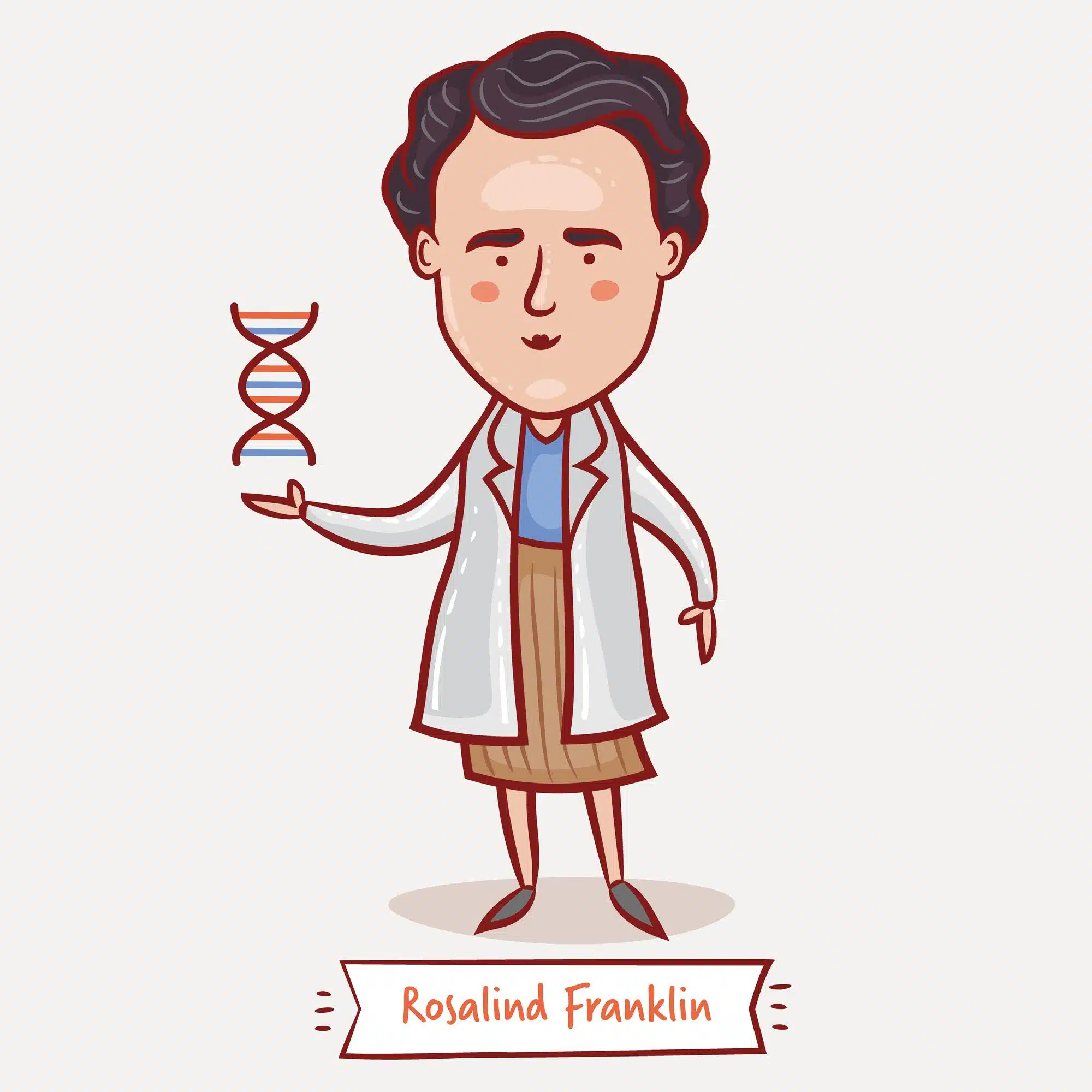
Little girls should be able to look up to the Lise Meitners and Rosalind Franklins, but for decades, these women’s work was ignored.
Think about it – which names do you recognize? If we asked you to name five famous scientists, would any woman make your list?
It’s not your fault. It’s because the women who should be on your list were erased.
Imagine now how much more difficult it must be for young girls to dream of careers in the sciences when all their role models were erased or dismissed. Even if they do their own research and find these pioneering women, what message does that instill?
It tells us that we could be smarter than everyone in the room, and still nobody will take us seriously. Our accomplishments will still be passed over in favor of the person with the penis.
Ben Barres
You probably think I’m joking about the “person with the penis”, but it’s more true than you want to believe.
Take Ben Barres, for example. As a trans man, Barres experienced both worlds. Before transitioning, he was passed over, dismissed, and ignored, like most other women.
But as soon as the world thought he had a penis, everything changed. One scientist even said his work was so much better than his sister’s.
Hint: Neither of Barres’ sisters was a scientist; the commenter was referring to Barres, pre-transition.
Proof of Systematic Misogyny

Missing the woman once is a mistake. Twice could be forgiven. After three times, we see a pattern emerge, and after hundreds of times throughout the centuries, we must admit it’s systematic.
And the Matilda Effect only refers to female scientists and inventors; it doesn’t even account for the thousands of examples of women being dismissed in every other aspect of life.
We know similar patterns appear in nearly every other sphere. We see it play out when traditionally female careers start to attract more men (and higher salaries) – and in the opposite, where salaries fall as women enter a career field. The change in salary when it’s men working vs. women highlights that society cares more about who is doing the job than what the job is.
It’s also apparent in gender pay gaps, the way we devalue the role of mothers, the awful salaries of daycare workers (traditionally female), and the way female authors hide their names so as not to scare off half the population.
The misogyny surrounds us, and the Matilda Effect is just one small sampling of the sexist pie.
What Can We Do?

Fight the patriarchy!
That’s it, that’s the answer.
The Matilda Effect isn’t some unexplainable phenomenon; it’s the direct result of society’s systematic misogyny. To fix it, we need to dismantle the systems that lead to it in the first place, i.e., the patriarchy.
We need to work toward a system with true gender equality, where both men and women are celebrated for their accomplishments, where gender comes second to personhood, and where anyone can be anything they want.
That means men can be stay-at-home parents and women can be scientists. It means men can be teachers and daycare workers while women can be oil rig workers and engineers.
It means raising our sons to respect women and raising our daughters to respect themselves.
We’re Already Equal!

Stop it. No, we aren’t.
While the late 1990s and early 2000s saw great strides in gender equality, the 2010s and 2020s brought a massive backlash.
Some women in the US can’t even control their own bodies. They’re bleeding to death in parking lots while being denied life-saving healthcare.
Child marriage, where teenage girls are sold off to adult men, is still legal and rampant. Influential people are even questioning women’s right to vote.
At home, women still do the vast majority of the domestic labor, and at work, they’re still paid less.
We’ll never be able to stop the Matilda Effect, or any of the other systematic misogyny in place, until we admit it’s a problem.
And it really is a problem – not just for women. As the book Why Nations Fail illustrates, you can’t extract resources from half the population and expect a functioning society.
The strongest societies are those where everyone has the opportunity to participate equally. We were so close – and we can get there again.
Celebrate Women

It starts with you.
Celebrate the female scientists the Matilda Effect tried to erase. Read books written by women. Support woman-owned businesses, woman-created art, and woman-led research.
Give so much support that it’s impossible for the powers that be to ignore. Together, we can elevate women to the heights they deserve – on equal footing with men.