

You know what you need to do to live a healthier life, but it’s so hard to remember it every day.
Habit stacking can help.
Here’s how it works.
What is Habit Stacking

Habit stacking is a way to trick your body into forming new habits.
The basic idea is that you should group the new habit you want to develop with other things you already do, putting them all on autopilot for your daily routine.
The new habits meld with the old, and they all become second nature. You do them without thinking.
Why Habit Stacking Works

Habit stacking works because it is a cheat code for forming a new habit. Instead of building all the new muscle memory needed to form a new routine, we use what’s already there.
It starts with muscle memory.
Building Habits with Muscle Memory

Building any habit relies on muscle memory.
Let’s use a simple example, like opening a door.
When you have to open a door, do you consciously think about grabbing, then twisting the knob, then pulling the door toward you, but slightly away so you don’t hit yourself with it?
I did, when I was first learning to operate a door. But it’s been second nature for nearly 40 years now. I can open a door without thinking. My body automatically goes through the motions.
Building habits works the same way. You train your body to do the action over and over again. Eventually, your body will do the things you want without you having to think about it.
Squeezing the New Habit In

Habit stacking relies on your muscle memory from the habits you already have. You simply squeeze a new one, forcing yourself to adapt to the tiny change in routine.
Since you do the same thing before and after, it’s easier to build that new muscle memory, meaning it’s easier to stick to the new habit. You’re “stacking” all the habits together.
The alternative, like developing a brand new evening routine when you’ve never had one, is a lot harder.
Habit Stacking Origins

Tonuka Stock via Shutterstock.com.
We learned about habit stacking from one of the best books for productivity: Atomic Habits. Author James Clear coined the term, but people have been using the core tenets long before it became a buzzword.
You can use them too.
How to Stack Your Habits
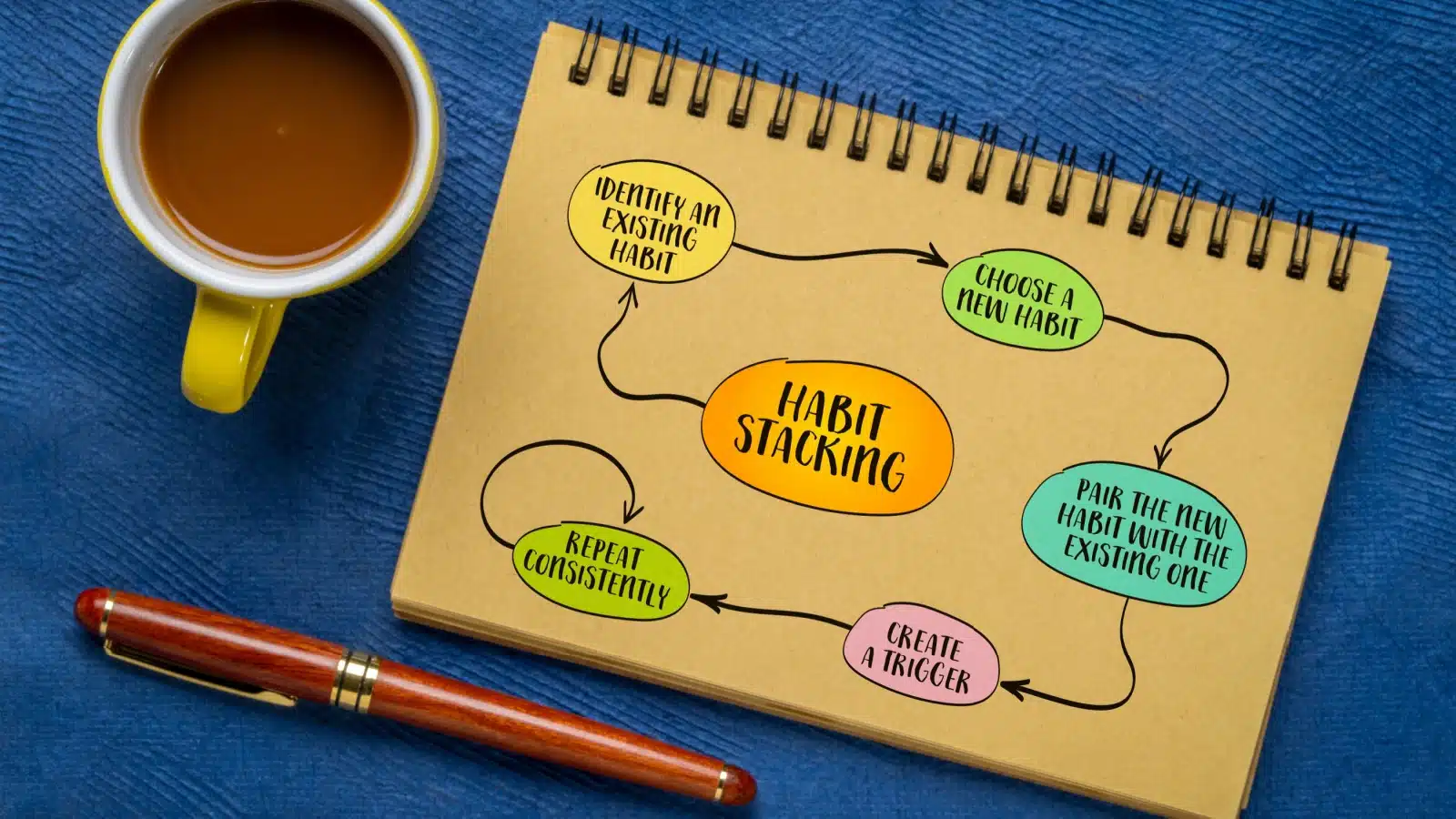
The idea is simple, but the implementation takes a lot of work. It’s not easy to build enough muscle memory to make a habit stick.
These tips can help.
Define Your Habits

First, you need to figure out what habits you already have. What do you do every day that’s so routine you hardly even think about it?
For me, it’s my morning routine.
When I get up, I automatically brush my teeth, turn the water on for coffee, let the dogs out, wash my face, and feed the cats. My routine is so ingrained that I could do it with my eyes closed, hungover, sick, or with an arm tied around my back. I’m barely awake most days, and I still manage to do it all – it’s almost all muscle memory at this point.
You have habits like this, too.
Define them so you can stack your new habits in with them.
Identify The New Habits You Want

The next step is figuring out what you want to add.
What healthy lifestyle ritual do you want to transform into a habit? It could be anything, from doing 10 pushups to writing a journal entry, showing gratitude, to meditation.
Whatever it is, define it in as specific terms as possible. Don’t say “work out” because that can mean anything. Instead, say “do 10 pushups” or “run for 10 minutes”.
Determine the Best Fit

The hardest part is figuring out where your new habit will fit best with your old habits.
I can’t put anything in between brushing my teeth and turning the water on, or the coffee won’t be ready on time. But I could probably find an extra few minutes after washing my face to journal or express gratitude.
Decide where your new habit makes the most sense and squeeze it in there.
Create a Trigger

Determining where your new habit fits goes hand in hand with creating a trigger. If you squeeze it into a pre-existing routine, the thing you finish right before becomes your trigger.
In my example, my trigger for whatever new habit would be drying my face, because that’s when I want to add it in.
Sometimes, triggers work better if they’re related somehow to the new habit. For example, if I wanted to drink more water, maybe I’d add taking a sip to my routine when I’m already making hot water for coffee.
Try it On for Size

Things often look great on paper, but don’t work in reality. You need to try your new routine out to make sure it fits as expected.
Don’t give up right away if it’s not working. Incorporating anything new into your routine will take time.
Move it around if you need, but keep trying. It might fit better after you wear it in a little.
Baby Steps
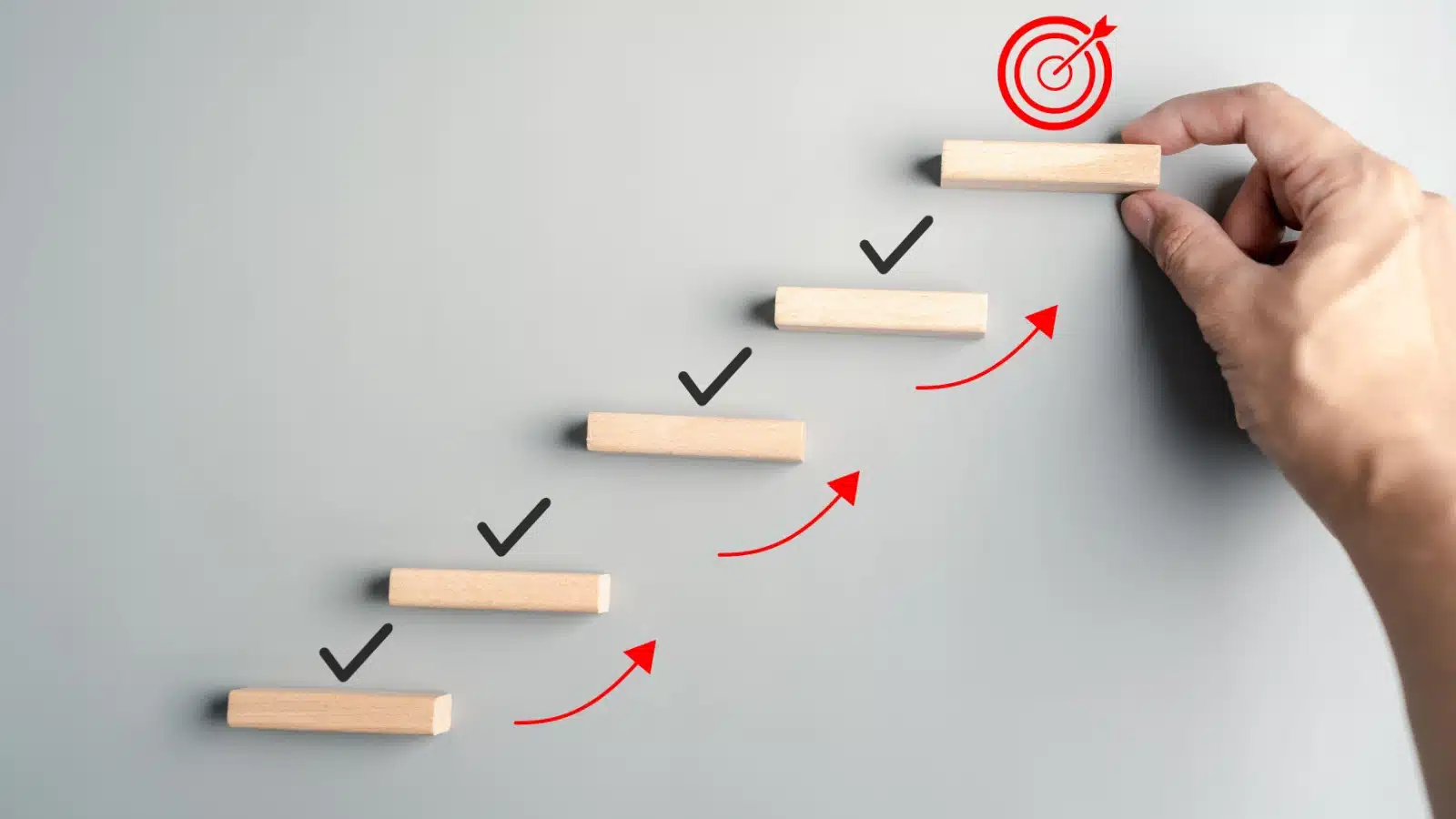
It’s easier to add one or two things to a routine at a time than try to change everything at once. Your muscle memory can quickly adapt to a small change, but big changes will take more effort.
Don’t try adding all the things at once. Pick the one that’s most crucial, and work it in. When it becomes second nature, try adding another. Ease yourself into it.
Rushing habit stacking is a recipe for failure.
Reward Yourself

It’s easier to stick with something if you know there’s a goodie involved!
Give yourself a reward for each week you accomplish your new habit without fail. Looking forward to your reward will help you power through, even when your brain is saying “no way!”
Eventually, it will be second nature and you’ll do it without thinking about it – and without needing the reward!
Build Your Healthy Routine

Habit stacking is a secret hack for developing healthy lifestyle habits. It tricks your brain into just doing the new thing along with the stuff you were already doing.
Try it out – see if it works. You’ll be surprised at how easily you can keep up with something new when you squeeze it into your pre-existing routine!