

It’s Wednesday. As you make your morning coffee, you make a mental note that you’re almost out of creamer. You need to add that to the grocery list.
While showering, you see that you’re out of soap, and while dressing, you notice that your sock drawer is almost empty. When you get into the car, you see the oil change is due next week, and while driving to school, your kids remind you of a parent-teacher conference next month.
Add all of it to your mental load.
What is the Mental Load?

mentalmind via Shutterstock.com.
The mental load describes all the household management tasks needed to make life work.
But it’s not physically doing the tasks; it’s the mental and emotional labor that goes into it.
It’s having the foresight to know it needs to be done, planning how to do it, organizing it, and making sure it gets checked off the list. It’s the mental energy required to run a home rather than the physical act of accomplishing tasks.
And it’s a LOT of work.
Steps of the Mental Load
In 2019, Harvard doctoral student Allison Daminger authored a paper about the mental load, where she broke it down into four main parts: anticipate, identify, decide, and monitor.
- Anticipate – think ahead about the needs
- Identify – research mode where you gather information
- Decide – making the final decision
- Monitor – keeping track of how it’s going and making sure it gets done
These are the invisible steps that are required to accomplish any task.
Mental Load, Mental Labor, and Emotional Labor
The mental load encompasses both mental and emotional labor, which are distinct forms of work despite how often they get lumped into one.
Mental labor is the thinking part (project management, remembering things) of the mental load, while emotional labor is the feeling part (cheering up a sad child, considering how members of the house will react to news).
Both are vital for running a household, but they’re also invisible and often ignored (by the folks who aren’t doing it!).
Mental Labor Examples

We shared some easy examples of the mental load in the opening paragraph. A physical task is shopping for groceries, but the mental load of that task includes figuring out what we need for the week by planning meals and remembering what’s empty, and then deciding how grocery shopping will fit into the schedule.
Another example is managing all the household appointments. You need to anticipate all the doctors’ and dentists’ appointments needed, schedule them, remember when they are, and then make a plan for how you will get there. Actually going might be the only physical task, but you’d never actually get there if you didn’t carry the mental load first.
A big portion of the mental load is about remembering things. Remember to do the laundry, to wash the car, to make that reservation, to schedule a delivery, to start the dishwasher, to…to…to…
It never ends.
Emotional Labor Examples

Studio Romantic via Shutterstock.com.
The examples above highlight the mental labor associated with the mental load, but the emotional labor takes just as much of a toll.
Emotional labor is recognizing and managing someone else’s emotions. It’s essential for parents as they try to guide their children toward how to feel and express themselves. But it’s also crucial in all of our interpersonal relationships.
For example, what do you do if your partner comes home angry? Do you ignore them, or do you try to cheer them up? Have you ever avoided a topic to prevent someone from getting angry (or sad), or chosen your words carefully because you were afraid of how someone would react to news?
That’s all emotional labor, and it’s required to keep a peaceful home.
Impacts of the Mental Load
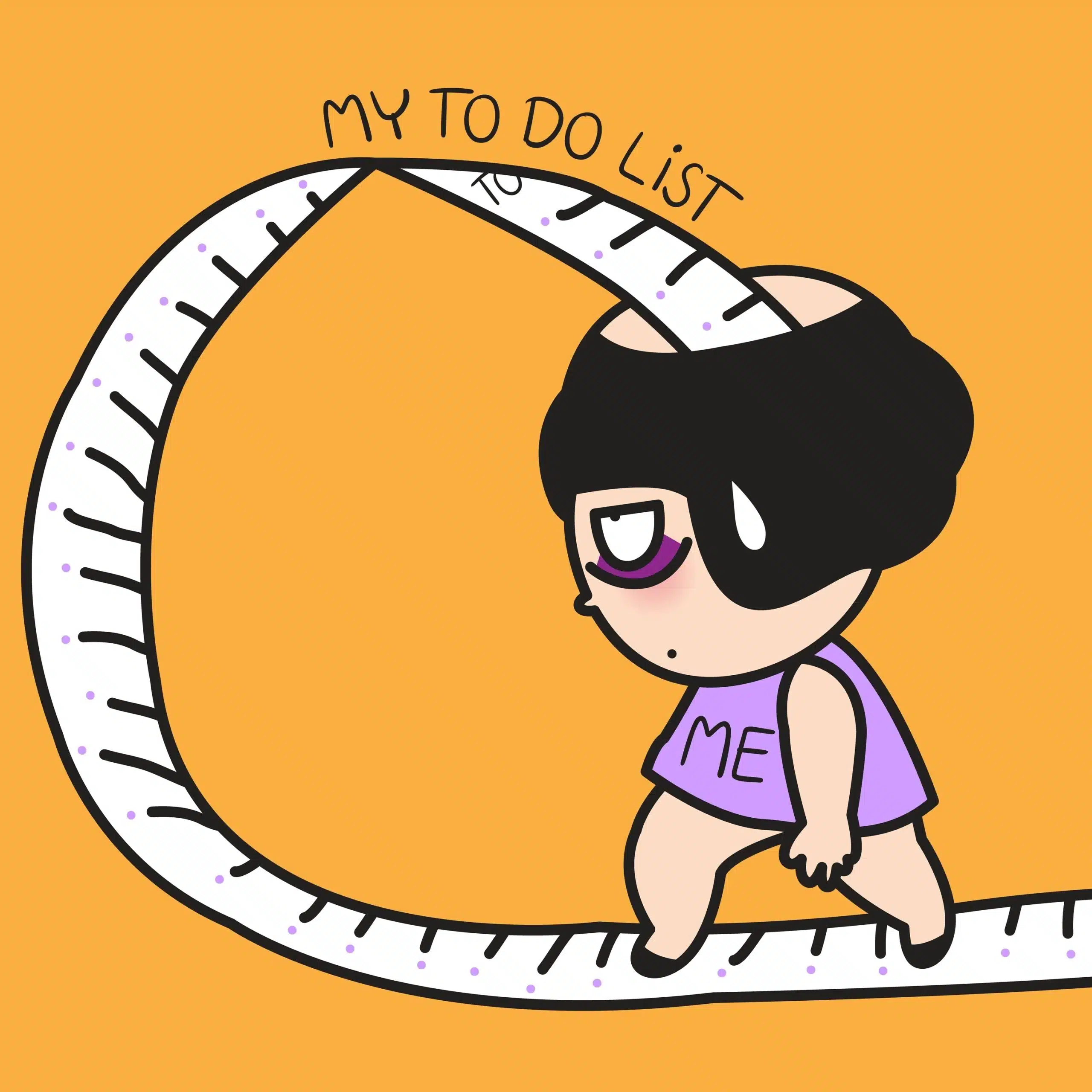
When the mental load gets to be too much, it can wreak havoc on your mental health. People with too much on their minds experience higher levels of stress and are susceptible to burnout.
You may struggle to remember important tasks because your brain is so full, lack energy for things you enjoy, or experience decision fatigue, where you’re completely incapable of deciding anything else for the day.
It can be overwhelming. But because it’s invisible, many suffer in silence, unable to express why they’re fatigued.
You Should Have Asked
The feminist cartoon You Should Have Asked does a great job of illustrating how the mental load works.
The comic showcases how the mental load is about noticing a problem and then solving that problem. It’s about anticipating what needs to be done rather than waiting for someone to tell you to do something.
In it, the wife handles everything, from feeding the kids to getting dinner ready for guests, while the husband relaxes. He ignores everything she is doing until it becomes too much, then lambasts her for failing, with the iconic words:
“You should have asked for help.”
The mental load is noticing that stuff needs to be done without someone pointing it out or directly asking.
The Mental Load and Gender Expectations

mariakray via Shutterstock.com.
The mental load comes up a lot in feminist circles because the work is typically carried by women, especially mothers. A 2024 study found that moms take on a whopping 71% of household tasks that require mental energy, compared to just 45% for fathers.
Daminger’s paper showed that mothers do the majority of anticipating and monitoring, while men stepped up to share in the decision-making.
The internet bursts with anecdotal stories supporting the research. Women post online about managing everything at home, seeking advice on how to get their husbands to share the load.
How to Share the Mental Load

Most of these women are overwhelmed with doing everything, and just want their husbands to step up.
It’s possible to share the load, as long as he’s willing.
Talk About It
Communication is always the first step. If you’re overwhelmed with everything, you need to let your partner know rather than pretending it’s all okay.
Yes, it’s a form of weaponized incompetence for him to ignore everything, but consider that men aren’t socialized to care about these things, and maybe it’s just simple incompetence.
Give him the opportunity to do better by expressing your needs.
Divide Responsibilities
During your conversation, decide how you will divvy up responsibilities. However, stop thinking of it in terms of 50/50. Instead, think in terms of what makes the most sense to you and your family.
Make it Visible
The mental load is invisible labor, but we can make it visible. Instead of just listing the physical chores, list the mental labor associated with them.
Consider grocery shopping:
| Physical Task | Mental Load |
| Shop for groceries | Determine what we’re running out of |
| Decide what we’re eating for the week | |
| Anticipate things we might need | |
| Write a list | |
| Decide when to go to the store |
When you write down the mental load, it becomes visible.
Share the Tools
Part of making the mental load visible could be sharing productivity tools that help you organize your life.
Create a shared calendar with all the appointments, so they can see them just as easily as you can. Use an app featuring shared to-do lists, so you both have visibility over what needs to be done.
Approach it like a Team
You should feel like your partner is on the same team as you. Instead of approaching it as you vs them, approach it as us vs the problem.
Let them be on your team and figure out a solution together.
Fair Play
In the early 2020s, Eve Rodsky developed a new system for sharing the mental load. Tired of being the default parent (and task manager) she decided to research the problem and come up with a solution.
She wrote a book, Fair Play (which is now also a documentary), and released task cards that outline the most common household tasks from start to finish, including the mental labor involved.
In the Fair Play system, one person takes complete ownership of a given task. If they get grocery shopping, they need to plan the meals, check for empties, and decide when to fit going to the store into their schedules.
It’s a way to make the invisible work visible and guide the difficult conversation of divvying it all up.
When He Refuses to Contribute

Blogs, stories, advice, and opinions abound, telling women how to split the mental load. Most of them list the ideas we just discussed, but many won’t admit the harshest truth:
Sometimes he won’t contribute.
Some men already know that you’re doing everything, and they’re content to coast through life off your labor. They aren’t stepping up because they don’t want to, and they don’t have to.
If they don’t do something, you will. If they drop the ball, you will pick it up.
He’s ignoring the mental load on purpose because it makes his life easier. It doesn’t matter how much you beg, plead, share calendars, or communicate; he will never share the load because he doesn’t want to.
What should you do?
A Tough Decision
In these cases, you ultimately have two choices. You can either accept that you will do it all on your own, or you can leave.
Millions of women have decided on the latter. Walk Away Wife syndrome is on the rise, and although the men say they’re baffled, we all know why she left. She’s tired of doing everything. She’s tired of having a “partner” who refuses to contribute.
We don’t blame her, or any of them.
But you can also choose to stay. Maybe taking on the mental load is a fair price to pay for everything he provides (emotional support, financial support, friendship, the physical tasks, etc.).
You’re the only one who can decide whether he’s contributing enough in other ways. You’re the one who has to be in the relationship, so decide if it’s worthwhile to stick it out.
Making the Mental Load Bearable

If you’re overwhelmed with the mental load and can’t get help from a partner, there are other ways to make it more bearable.
Consider these tips to alleviate the stress of doing it all.
Use an External Brain
You don’t need to track everything in your head. An external brain gives you space to store it all so you don’t lose it.
Brain dump into a notebook, use a bullet journal, or use productivity apps to keep track of everything so you don’t have to remember it all.
Let go of Perfection
Sometimes we get overwhelmed because we’re trying to be the best of everything for everyone.
Let go of that perfection.
Your house doesn’t need to be spotless. You don’t need to cook five-star meals every night. Allow yourself some imperfections and you’ll feel a lot better.
Drop Some Balls
Two can play the refusing game. If your partner refuses to share the mental load, stop carrying theirs for them.
Don’t think about whether they have clean work clothes or bread for their lunches. If they’re not worried about it, why should you be?
Allow the balls to drop, and let them handle the consequences. Stop making it your problem.
Minimize Decisions
Decision fatigue happens when we have to make too many choices in a limited timeframe. If you minimize your decision-making, you can minimize fatigue.
Meal prep your lunches on Sunday so you don’t have to decide what to make every day. Lay out your clothes for the week so you don’t have to think about what to wear. Have a routine so you don’t have to decide when to wake up or go to bed.
Removing these decisions can help boost your brain energy for the parts of the mental load you can’t ignore.
Mental Load Finally Getting Recognition

I love that society is even talking about the mental load. For eons, women have been handling this invisible labor with no words to even describe what they’re doing.
Now we have the words. Now we can put a name to something that’s been a problem for a long time.
I call that progress.
Though today, women are still mostly doing all the mental labor, the very fact that we’re talking about it, writing about it, and even conducting research on it highlights that we’ve identified the problem.
It may take time to fix, but hopefully we’re going in the right direction.