

Are you ready to confront your true self and integrate all aspects (both good and bad) into a cohesive whole?
Then you’re ready for shadow work exercises.
What is Shadow Work

Shadow work is the process of understanding our whole selves, warts and all. It was popularized by famed psychologist Carl Jung, who characterized the part of ourselves that we try to hide as our “shadow self.”
But hiding our true selves limits our potential. We need to confront the darkest parts of ourselves and integrate them into our being to self-actualize as the best version of ourselves. Shadow work helps us do that.
How to do Shadow Work

There are lots of ways to do shadow work. I’m partial to journaling, but you can also meditate, talk it through with yourself, or use art therapy.
We’ve already highlighted the various methods for performing shadow work, so here, we’re going to get more detailed with specific shadow work exercises that help you integrate your shadow and light selves.
Shadow Work Exercises

Shadow work exercises help us confront our shadow selves. But beware – you might not like what you find.
Although shadow work is crucial to self-love and acceptance, it can be a difficult and heartbreaking process.
Our first tip for conducting shadow work exercises is to do them under the care and instruction of a trained therapist who can help you process the emotions you uncover.
But, therapy is expensive, and this article is free. So if you want to go at it alone, these shadow work exercises can help.
Important: Don’t engage in shadow work exercises without professional help if you struggle with low self-esteem or a mental health issue that might spark an adverse reaction.
Shadow Work Journal Prompts

Krakenimages.com via Shutterstock.com.
I told you I love journaling, right? I believe it’s the absolute best way to explore your shadow self.
But you can’t just write about anything. Instead, you want to deep dive into your psyche and explore your secrets.
These ten shadow work journal prompts can help you get started:
- What’s the worst thing you’ve ever done? Why did you do it?
- How does showing yourself love and kindness make you feel? How does it feel when others show you love?
- What behaviors did you inherit from your parents that you wish you could change?
- Share a time you were wronged and didn’t do anything about it. How did that make you feel?
- What was the biggest mistake of your life? What would you do differently if given the opportunity?
- Share a situation where you lashed out emotionally. What about the situation caused the emotional reaction? How would you handle it differently?
- List the last time you experienced the different human emotions: fear, sadness, joy, anger, shame, contentment, boredom, jealousy, pride, etc. Which do you try to avoid?
- What do you always lie to others about? What do you lie to yourself about?
- What’s one personality trait that you wish you could change? Why would you change it?
- Identify all the things holding you back in life. Next, write about how you would control them if you could
Create Your Opposite
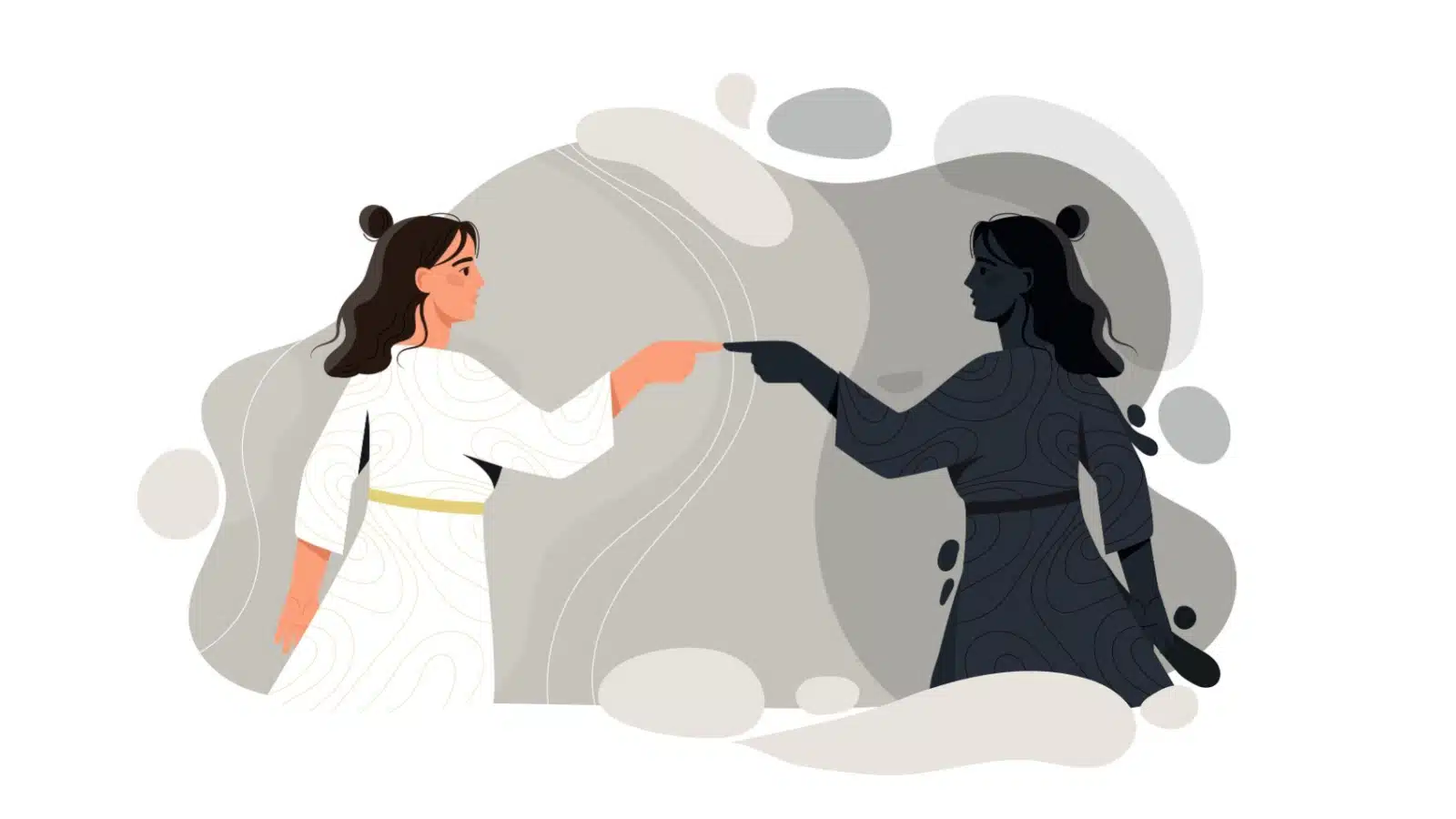
Here’s an intriguing shadow work exercise for you – create a person that’s the opposite of you in every way imaginable. If you’re tall, they’re short. If you’re male, they’re female.
But get personal with it. If you’re generally happy, maybe they’re usually sad. If you’re easy-going and laid back, maybe they’re a ball of anxiety.
Consider all of your traits, and make this person the complete opposite.
Would you be friends or would you hate them? What would you say to them? How would you interact?
Now – what traits in them do you actually see in yourself?
3-2-1 Method

Author Ken Wilber developed the 3-2-1 method for shadow work exercises based on his integral theory of consciousness.
It’s crucial to note that Wilber is not a real psychologist, as he dropped out of undergraduate university. However, his theories are popular in new age circles, and some folks do appreciate his 3-2-1 method, so it’s worth mentioning here.
There are three pillars to this shadow work exercise:
- Face it
- Talk to it
- Be it
These steps help people shift their perspectives of their shadows from the unknown through the 3rd, 2nd, and 1st person.
Face it
The first step is facing it, which means bringing the shadow self out of hiding and into the 3rd person perspective. Here, you can think of it in terms of he/she.
Think about how she reacts to bad news. Point out her insecurities.
In this stage, you can think of your shadow objectively because you’re personifying it as something outside of yourself.
Talk to it
When talking to your shadow self, you’re shifting from 3rd person to 2nd person. Now you can ask questions, like “Why do you do that?” or “What makes you feel insecure?”
In this stage, you can have a conversation with it, but it’s still personified as outside of yourself. Yet, because you are actively engaging with it, it’s a little closer.
Be it
Finally, you must shift the “you” to “I.” You must become your shadow.
Here, you start to accept the uncomfortable parts of yourself. Acknowledge it with first-person language like “I feel insecure when…”
Scrutinize Your Emotional Reactions

Our shadow selves are often responsible for our emotional outbursts, so paying attention to our reactions is a great way to confront our shadows.
Keep an emotions journal and make an entry every time you feel sad, fearful, angry, insecure, or jealous (or any other emotion you wish to confront). Scrutinize the entire situation and try to pinpoint exactly what caused the feeling.
Tip – Use Media
Using real-life situations to understand our emotions can be overwhelming. If you’re not up to that challenge, consider doing the exercise with media instead.
Watch a movie, play a song, or read a book that causes a similar emotional reaction. Write about how it made you feel, and why you felt that way.
You may discover that you relate to a certain character, or that a specific plot point raises your hackles. Use that as an entry point to confronting your shadow.
Analyze Your Dreams

Our dreams can serve as gateways to our shadow selves. They carry messages from the subconscious, allowing us to see the whole picture that our conscious minds can’t grasp.
Grab a dream journal and start recording your dreams. Keep track of recurring people or things, and try to determine what they might mean.
Challenge Your Beliefs

tomertu via Shutterstock.com.
Our core beliefs are fundamental to who we are. But do we really walk the talk?
Challenging your deeply held beliefs helps you conduct shadow work because it forces you to come to terms with your true values.
Think of it like playing Devil’s Advocate with yourself. Write down three of your strongest beliefs (they can be about who you are, what you value, your faith, etc.). Next, try to disprove these beliefs with evidence from your real life.
For example, if you truly believe you are a selfless person, find examples where you behaved selfishly. Keep in mind – behaving selfishly on occasion doesn’t make you a bad person, nor does it mean you aren’t mostly selfless. It means you are human – and accepting yourself as such is why we do shadow work exercises.
Write a Story

Sometimes it’s easier to confront our shadow selves in fiction than in reality. Writing a story helps us do that.
We can craft characters that achieve our loftiest dreams or face our biggest fears. Our heroes can represent our best attributes while our villains highlight our worst. You may not even know what you’ve been hiding until it comes out in your characters.
But you can’t stop after writing the story – that’s the easy part. The real shadow work exercise is analyzing your story to uncover why the characters behaved the way they did, and what it means about you as the author.
Tip – Use Fan Fiction
Coming up with your own characters and stories is tough – especially if you aren’t very creative. To make it easier, write fan fiction.
Use a story you already love or characters you already identify with. Put them in unique situations and see how they behave. You might uncover hidden realities about yourself.
Write a Stream of Consciousness

Prostock-studio via Shutterstock.com.
If fiction isn’t your jam, consider stream of consciousness writing.
Grab your journal and just start writing. Write whatever comes out, even if it’s just a diatribe about how what you’re doing doesn’t make any sense and won’t help.
Keep writing.
Eventually, your subconscious will take the reins, and your words will flow onto the page.
Examine what you’ve written; it might hold secrets to your shadow self.
Paint with Emotion

Abstract expressionism is one of the purest forms of emotion. We move away from learning and writing, instead exploring our inner selves with color, shape, and motion.
Throw paint on canvas. Let your subconscious speak through color and design choices.
When you’re done, consider what you’ve created.
What does your color scheme say about your emotional state? Is your canvas well designed, or a ball of chaos? What do you think your shadow self was trying to convey?
Mirror Work

Self-help author Louise Hay popularized mirror work as a shadow work exercise to develop self-love. The idea is that the mirror will reflect your feelings about yourself, and so when you do mirror work, you can see what you really think.
Park yourself in front of a mirror for five minutes, and look at yourself. Really look.
Stare deep into your own eyes. Now speak kindly to yourself. Give yourself compliments. Recite positive affirmations.
Watch how you react. Pay attention to small flinches and resistance, and try to find out why you reacted that way.
Mirror work is uncomfortable, but the more you do it, the easier it will become.
Examine Your Bias

Everyone has biases. We all have cultural expectations and childhood experiences that shape the way we think.
We often think of biases in terms of social justice, like bias against a certain race or unfair stereotypes, but there are many different forms of bias that can impact your life.
For example, confirmation bias makes us seek out or believe only those sources that support our worldview (on anything), while ignoring any research that contradicts it. The halo effect is a bias that makes us give more credence to a first impression.
How to Examine Bias
Confronting those biases as a shadow work exercise can help you identify and overcome them. First, you must understand what these biases are and how they work.
That’s the easy part.
Next, you need to identify where and when you behave with these biases. Are you choosing sources based on something you already believe, or are you examining all sides of an argument? Are you open to new information?
Discovering when you act with bias is the hard part. You must be self-aware enough to see them, brave enough to confront them, and strong enough to change deeply held beliefs.
It’s worth the effort, though. Not only will you face your shadow, but you’ll become a better person.
Face Your Fears
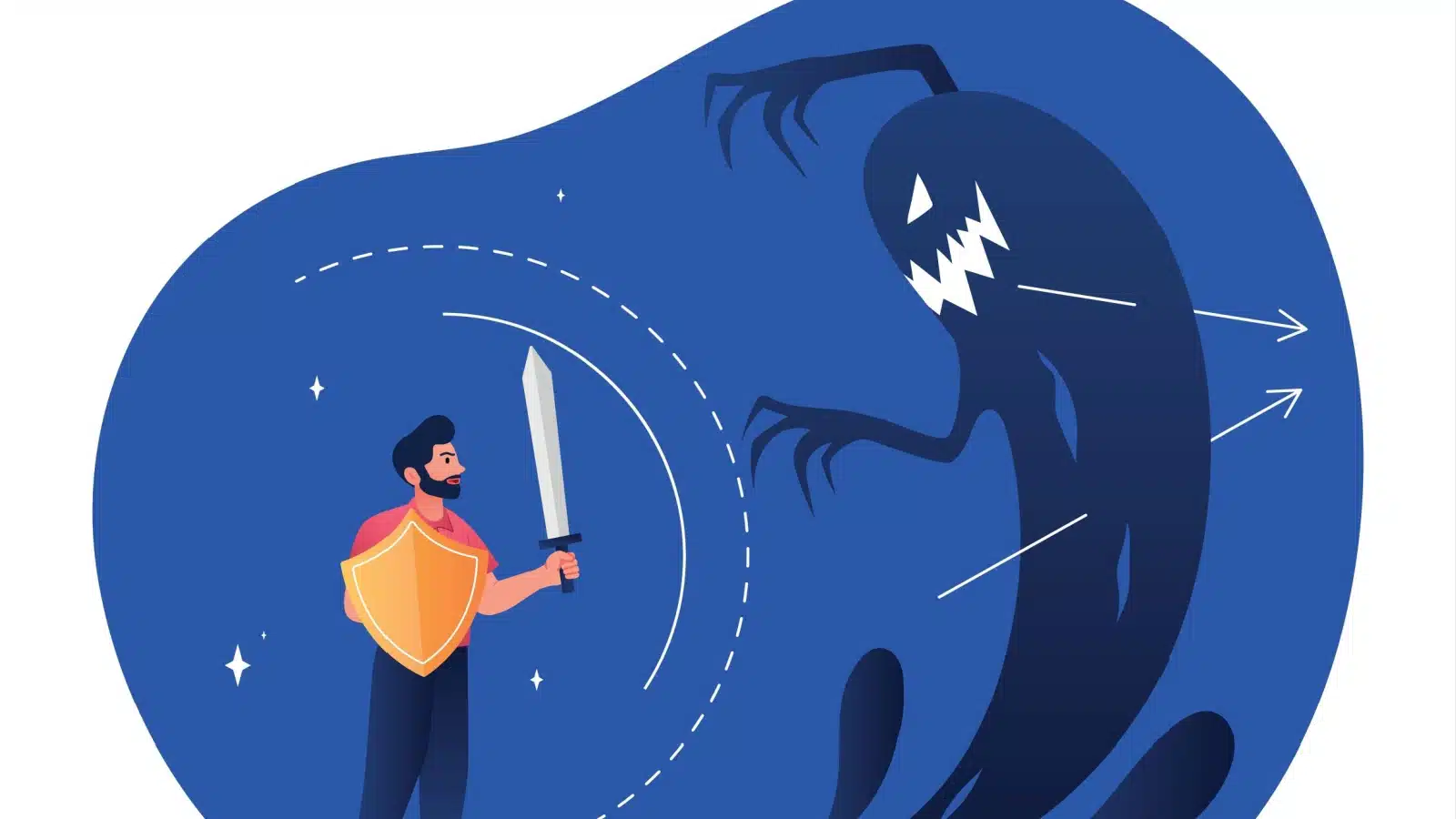
Our shadow selves might be preventing us from reaching our full potential. Sometimes, that’s the part of us stuck in a fixed mindset, terrified of trying anything new.
To face that shadow, we must face our fears.
First, identify what you’re afraid of. Is it a failure? Not living up to a standard? Letting someone down?
Next, find small ways to confront the fear. Journal about what would happen if it came to fruition. Think about the absolute worst-case scenario – how would it really impact your life? Would it be as bad as you fear?
Find ways to mitigate the worst impacts. What can you do to prevent the worst from happening, while still facing your fears?
Finally, consider the best-case scenario. Stop asking what happens if it all goes wrong, and start thinking about what would happen if it all goes right.
When you face your fear, you also face your shadow, and you might realize taking a chance isn’t as scary as it seems.
Shadow Work Challenging, but Worth it
If these shadow work exercises sound tough, that’s because they are. Shadow work is not easy. It’s challenging, often painful, and sometimes terrifying.
But it’s so worth it.
You come out the other side with greater self-awareness and a sense of self-acceptance that’s difficult to achieve in any other way.
Give it a try and become the best version of yourself.