
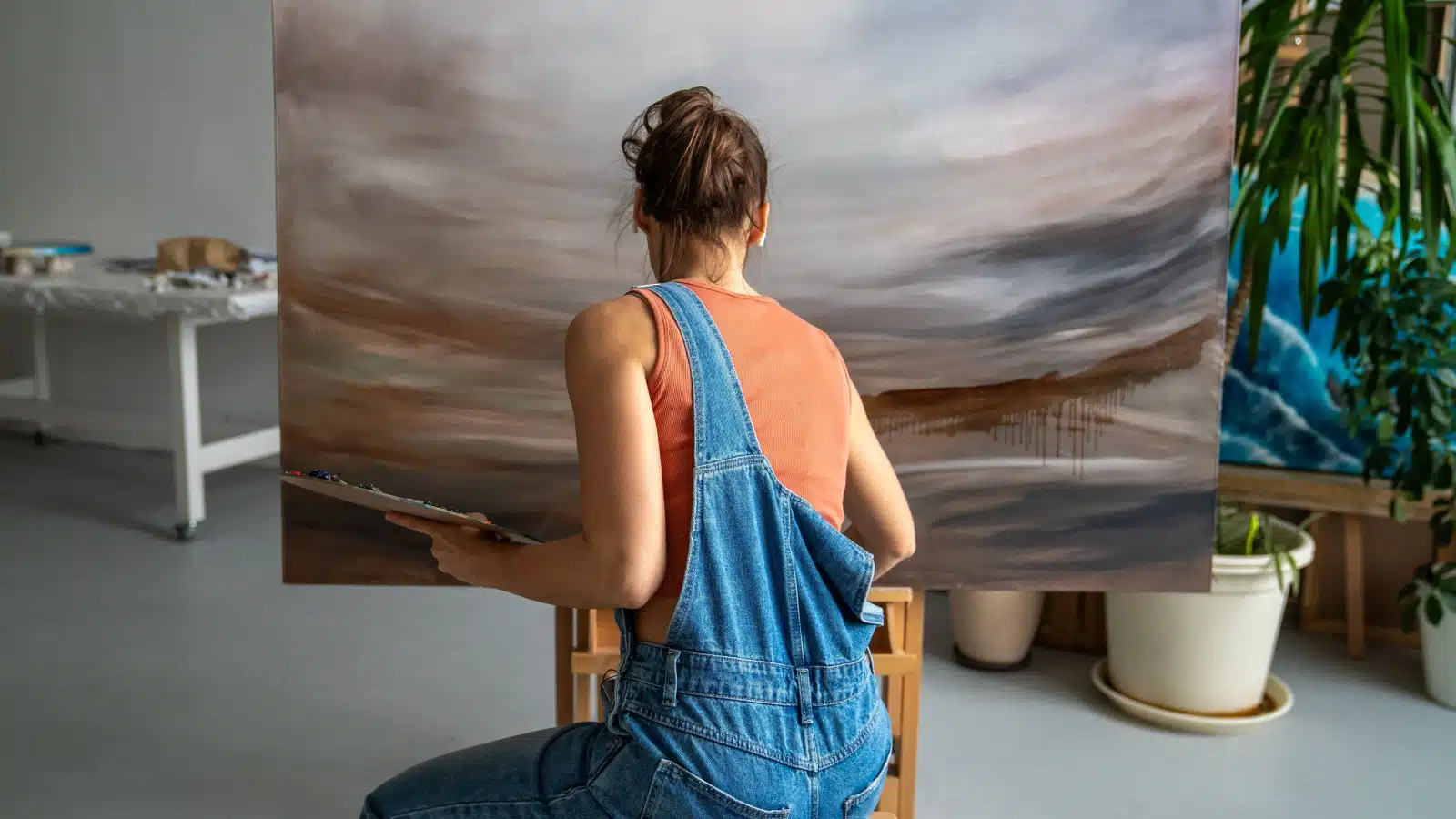
I love abstract art.
For me, it’s raw and primal, like peering directly into an artist’s soul to explore the jumbled mess of humanity inside.
It’s a powerful, emotional, awe-inspiring journey.
But there’s far more to abstract expressionism. Discover everything you want to know about the movement, from its origins to what it means plus how to create your own abstract masterpiece!
What is Abstract Art

Abstract art is non-representational, meaning it doesn’t showcase something you see in the world. Instead, it uses the fundamental elements of painting, like color, shape, line, texture, and value, in new ways you wouldn’t expect. It can be random, pattern-less, colorful, shapeless, geometric, bold, or a simple streak of color on a dark backdrop.
Abstract is wild, imaginative, and passionate. Sometimes, it seeks to showcase the human spirit, while at other times, it tries to deconstruct other art forms, laying bare its most basic components.
You don’t look at an abstract piece and think, “Oh, that’s a beautiful landscape,” or “What a lovely portrait.” Instead, you look with your emotions to understand something deeper.
However, it can still be representative, even if the images it seeks to showcase aren’t recognizable at first glance. It may also represent emotions or ideas rather than objects.
Abstract Art Origins
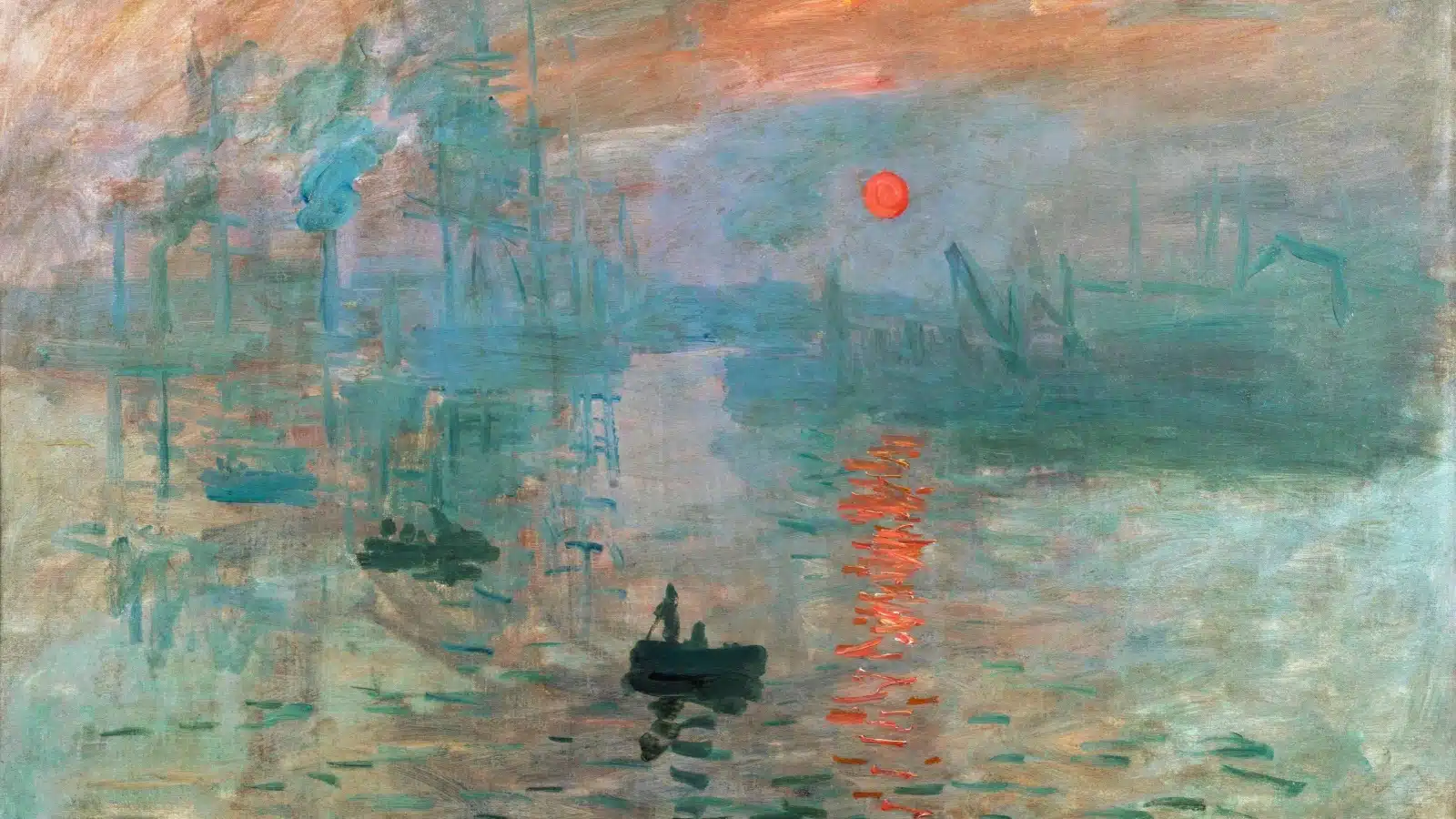
All art movements reflect cultural and historical values. They flow from the trends of the time, growing from or rejecting the popular movements.
Abstract art grew from the Impressionist movement of the late 19th century. The impressionists used representational imagery but focused more on the color and light of the scene than the form and function of their predecessors.
Post-impressionists like van Gogh leaned even more into the emotional aspect of representational art, creating a flow and movement with his work. Cézanne, the other famed post-impressionist, developed new forms of representation, breaking objects down into their underlying structures, like cones and circles.
Next came expressionism, which mainly focused on the subject’s emotions rather than the subject itself, and cubism, a short leap from Cézanne’s method that focused far more on the shapes than the subject matter.
These movements and ideas gave artists in the early 20th century permission to experiment more with non-representational art. They deconstructed form and function, using shape (or lack thereof), color, and light to express themselves.
The First Abstract Paintings

Abstract art arrived earlier than you might think. The first paintings we might consider “abstract” were created in the 1870s.
In 1871, Georgiana Houghton exhibited a collection of abstract watercolor works known as “spirit paintings.” They’re entirely abstract, created decades before the famous male artists explored the movement, yet history often neglects her contributions.
The above example of one of Houghton’s spirit paintings is primarily abstract, although it has a portrait in the upper right corner. Many of her spirit paintings only feature the colorful lines and swirls that fill the majority of this work.
Famous Abstract Artists
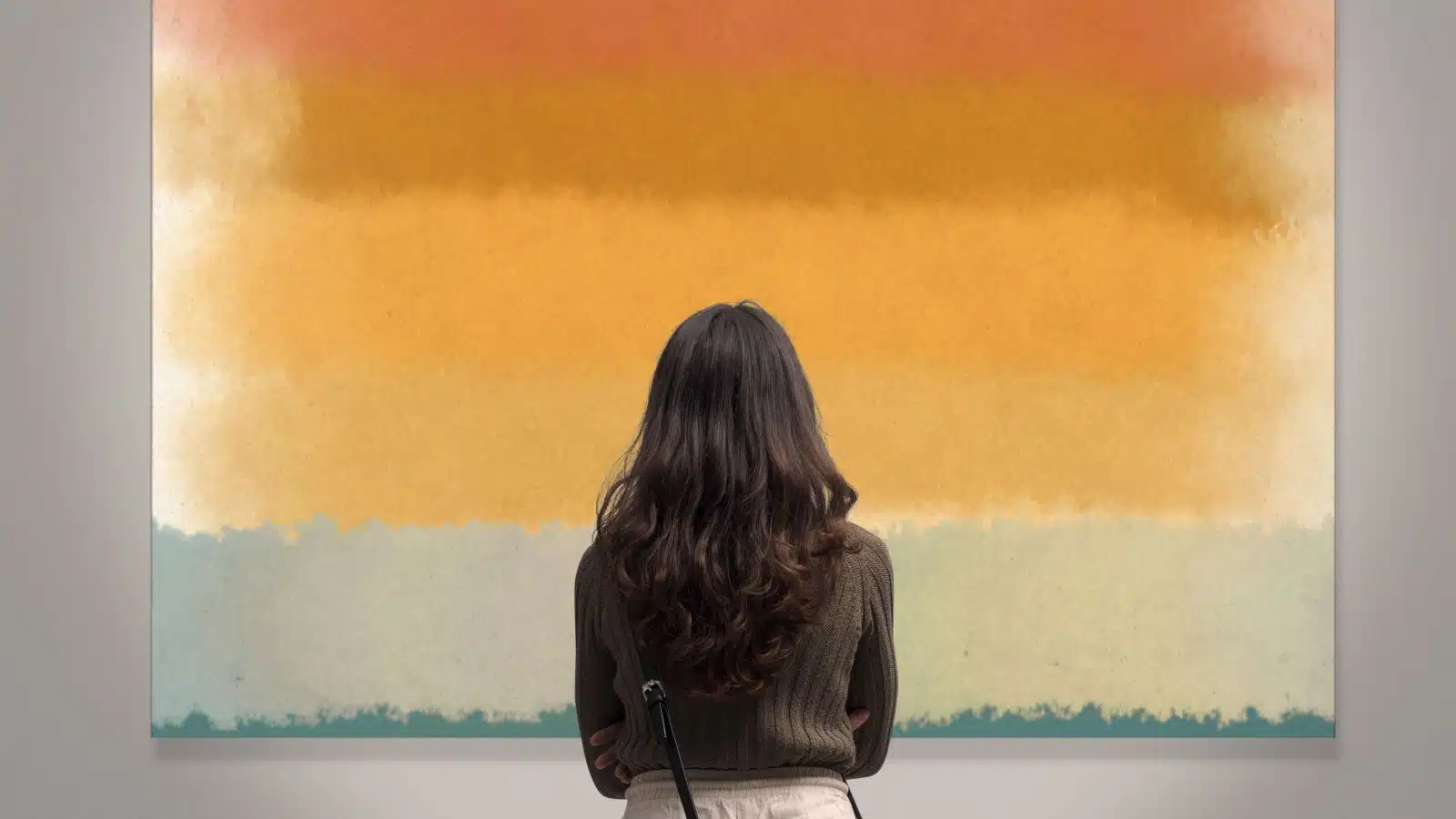
The best way to understand abstract art is through artists who contributed to the movement. Here, we explore the contributions of these seven artists to what we now know as abstract expressionism:
- Henri Matisse
- Pablo Picasso
- Piet Mondrian
- Jackson Pollock
- Mark Rothko
- William De Kooning
- Joan Miro
Henri Matisse
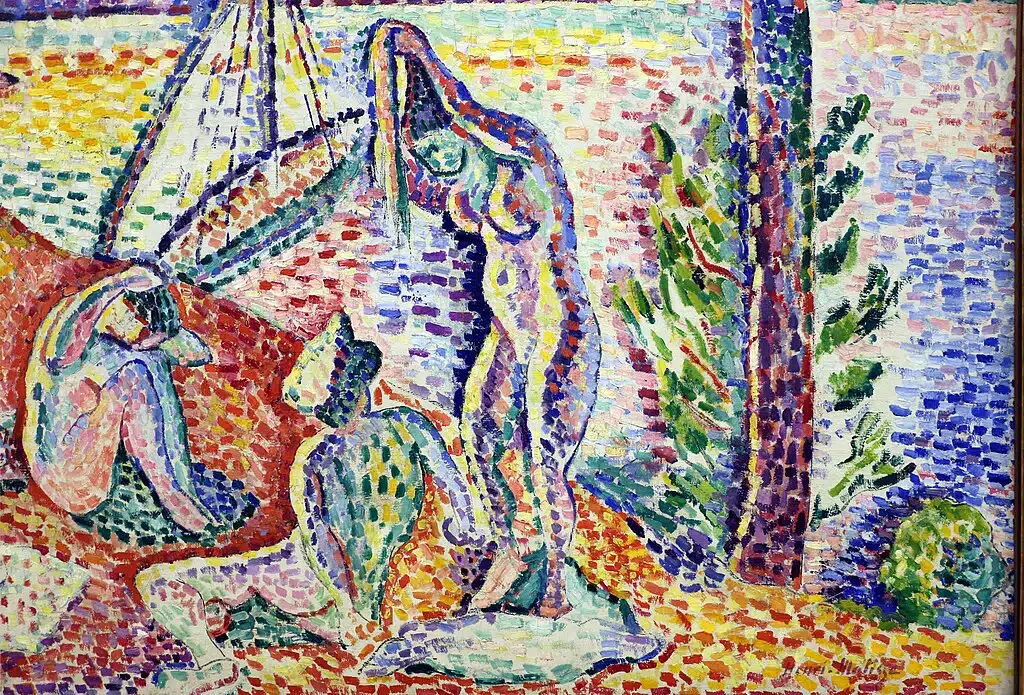
Matisse only painted one truly abstract work, but his evolution from post-impressionism through Fauvism and exploration of color made him an early pioneer of methods that led to abstract expressionism.
His earliest works are representational, but as he grows as an artist, he starts breaking images down into their base colors, experimenting with perspective and shape in ways nobody had before.
Pablo Picasso

Pablo Picasso was not an abstract artist; however, his cubism movement was an early predecessor to the 20th-century abstract movement.
In cubism, the subject matter is broken down into “cubes” that celebrate the two-dimensional space of the canvas more than the subject itself. Picasso is known for paintings where a subject’s geometric features don’t align with what you would expect.
Early cubist paintings had fairly straightforward subject matters, but in the twentieth century, cubism evolved into geometric abstraction, which is why Picasso is so relevant to the movement.
Joan Miro
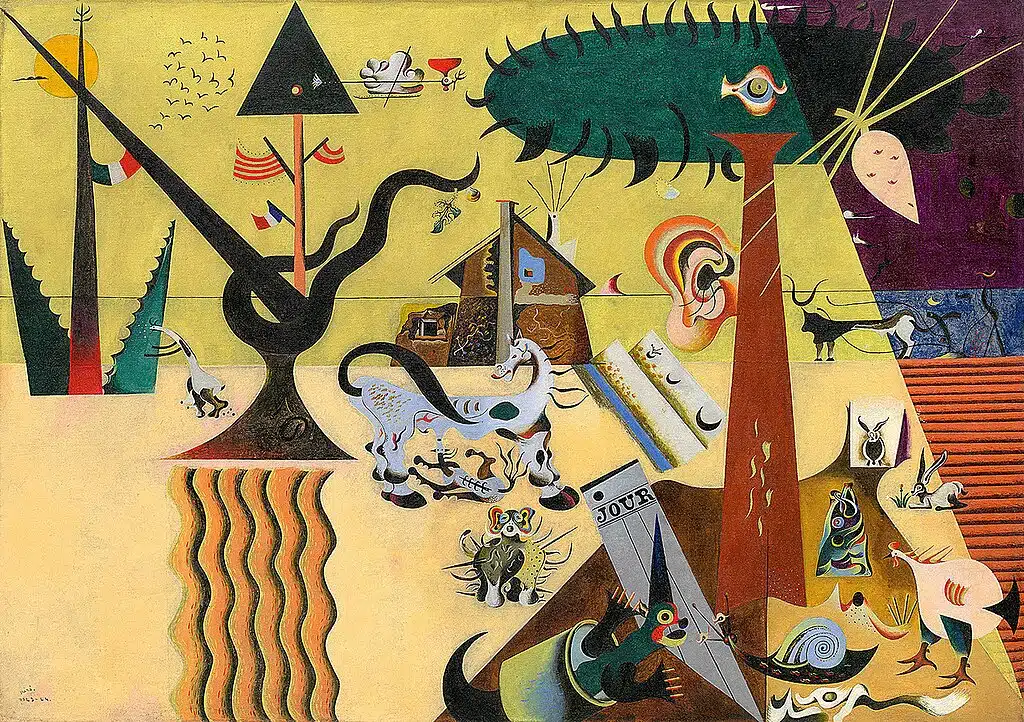
Joan Miro can be considered a surrealist rather than an abstract painter, but he dabbled in abstraction later in his career.
As a contemporary of Picasso, he was influenced by the two prominent post-impressionist painters, Cézanne and Van Gogh. He is essential to the abstract movement because his works bridged the gap between post-impressionistic paintings and modern-day abstraction.
Piet Mondrian

In the 1920s, Mondrian deconstructed art. His compositions broke it down into the most essential components: straight lines and primary colors.
We consider Mondrian’s work geometric abstraction, as it’s not representational but has geometric form. However, this work was a crucial precursor to the works that came after, which were often stripped of form. The above, Composition with Large Red Plane, Yellow, Black, Gray and Blue is one of the most famous paintings in the world because it strips composition down to its most basic forms.
Jackson Pollock

Jackson Pollock is arguably the most famous abstract expressionist and one of the most famous painters of all time. His drip paintings are almost synonymous with abstract art.
Pollock’s style was unique for the time. He’d lay out a canvas, flinging and dripping paint across it, resulting in fabulous lines of fluid movement across the space. His works are messy and unpredictable yet rhythmic in their own way.
Pollock is the first abstract artist I discovered; it was love at first sight. I loved how his work didn’t represent anything reminiscent of real life. It was like a peek into his very essence—his mind and soul, and thus the mind and soul of humanity.
Our lives, thoughts, ideas, and feelings are messy, convoluted, and often confusing. His artwork represents that in a visceral way that’s hard to describe with words. It’s pure feeling.
Mark Rothko
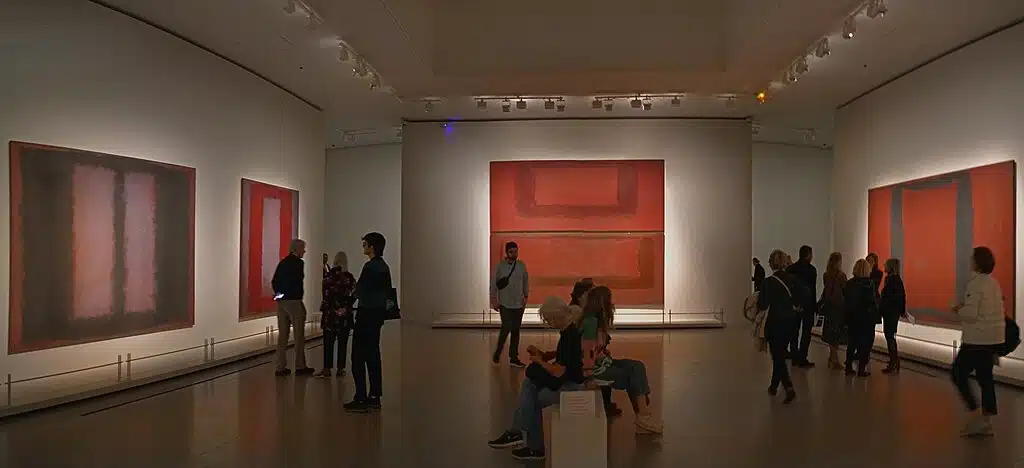
Rothko is one of my favorite artists, not because his art is spectacular, but because it’s not. The man really just painted a canvas red and then some rough black squares on it, and he is celebrated as one of the great abstract artists of the 20th century.
If he could make a living selling art, anyone could.
To be fair, his works are influential because he was the first one to do it. He was the first to explore the relationship between shape and color alone in abstraction.
Though some of his works have clearer subjects, he is most renowned for painting bold, irregular rectangles and squares on a field of color.
Willem de Kooning
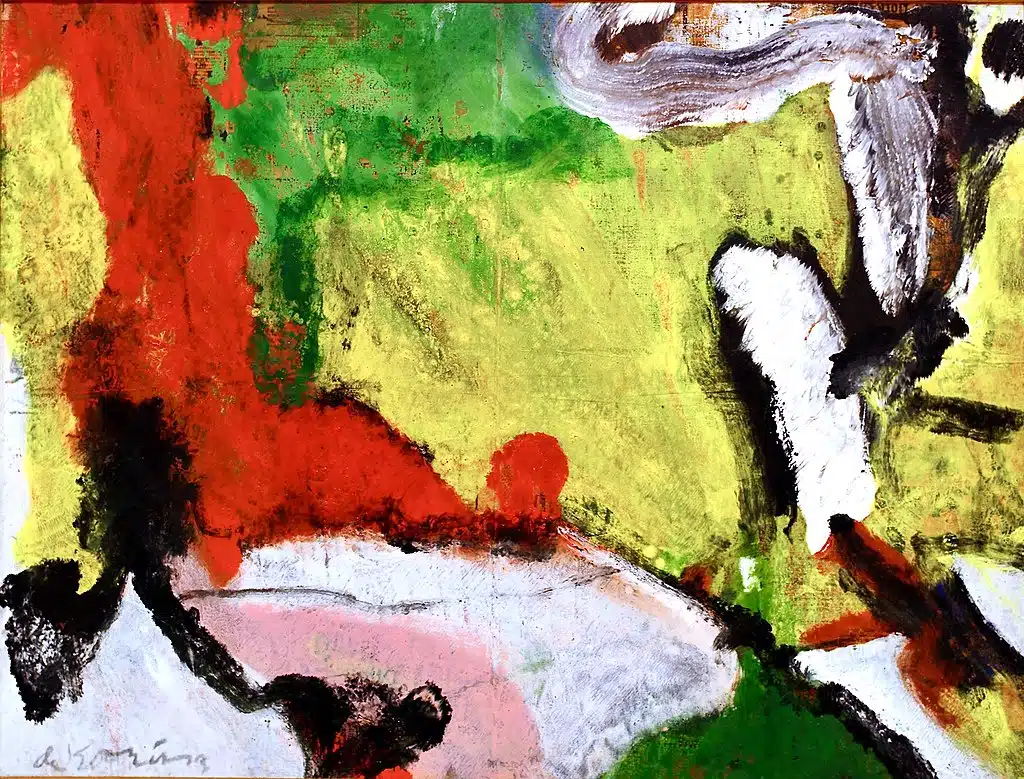
Willem de Kooning and Pollock were members of the New York School of Abstract Expressionism. He is known primarily for his black-and-white paintings, which were a departure from what many of his contemporaries were producing.
Abstract paintings were known to celebrate the boldness and richness of color, but the black-and-whites forced the viewer to focus on the geometric shapes that became apparent in the work.
De Kooning’s color paintings are also well-known as essential pieces in the action painting style. He also dabbled in sculpture and form, using Picasso as an inspiration for some of his pieces.
He married a fellow abstract artist, Elaine De Kooning.
Are There Rules in Abstract Art?

My favorite thing about abstract art is the complete lack of rules. Maybe folks who study art, live it, breathe it, and nitpick it to place it in the correct art movement might have something different to say, but as a normal person who loves to paint and consume pure abstraction, the idea of this style of art being beyond the rules makes it appealing.
With abstract, you don’t have to be a talented painter. You don’t have to be concerned about figure, form, color, and value. Your painting doesn’t have to be perfect and representational; it doesn’t even have to be anything at all.
It can be wild, representative, messy, and impure, just like our real-life thoughts and emotions.
But it can also have structure if you so choose.
Many abstract artists rely on geometric shapes to convey certain emotions and ideas. Some even use realism as a base – our art writer, B. Gill, claims that abstraction is nothing more than realism in disguise. He says that you can’t have abstracts without realism, and most abstracts originate with the realistic.
All of that and more can be true with abstract art, and that’s why I love it so much. The viewer gets to decide how to think and feel about it.
The subject matter is secondary to the emotion that it conveys.
The Elements of Abstract Art
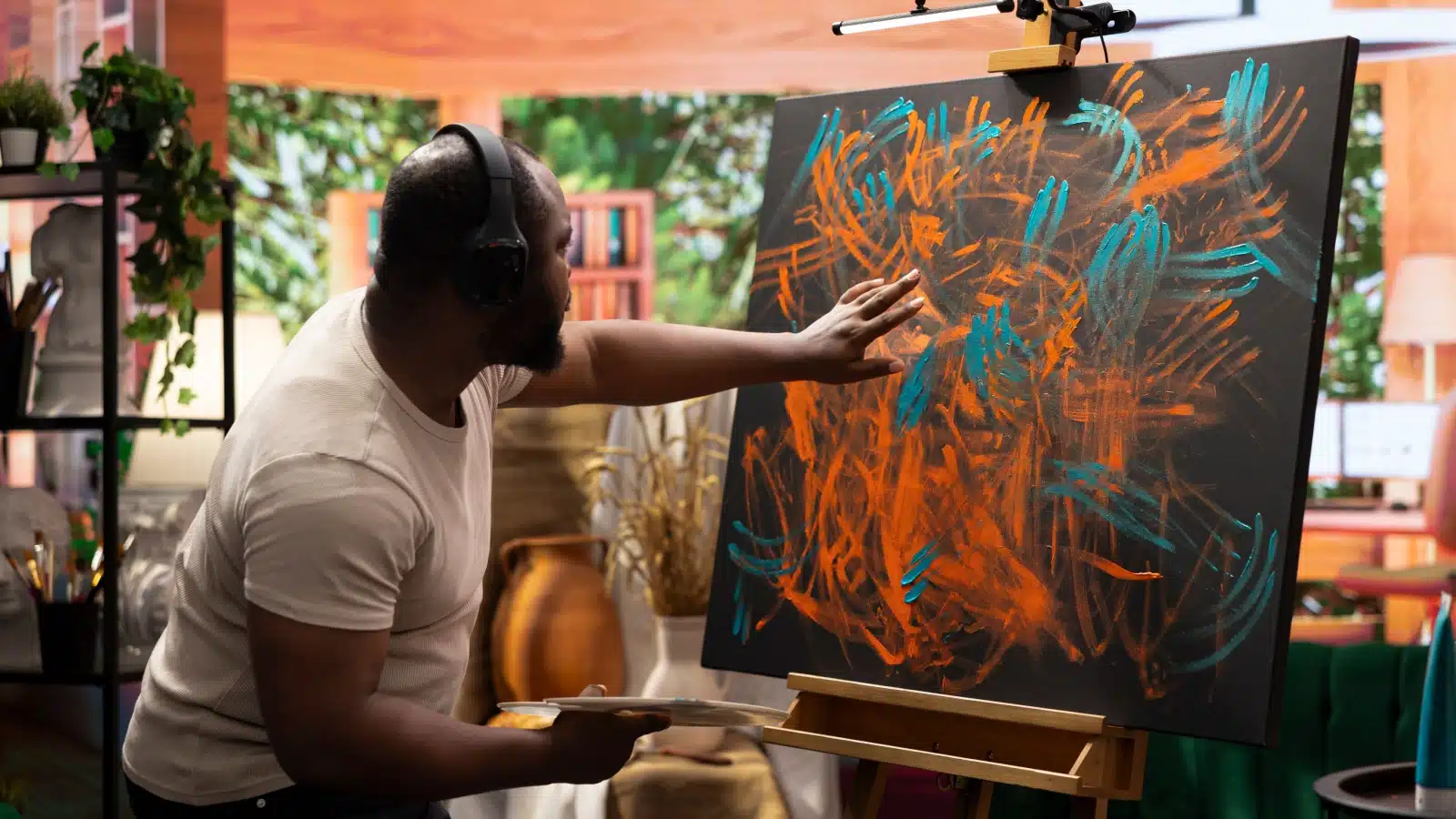
Abstract art may be messy, but it still has a few defining elements. They are:
- Line
- Texture
- Shape
- Form
- Color
- Value
With most painting techniques, these six elements come together to create a recognizable image, but in abstract art, they’re more expressive.
An abstract piece can contain all of these things or be made up of just one. The art form allows you to play with these elements in new ways.
What happens if you remove the form from an image and try to create a formless painting? How can we remove color and create a black-and-white abstract, a la de Kooning?
My favorite aspect of abstract art is the lack of structure, which lets artists use the elements in their own way without a rigid process.
How to Paint an Abstract Piece

Wallpaper studio via Shutterstock.com.
Did I convince you to try creating your own abstract masterpiece? Here’s how to get started.
Painting Supplies
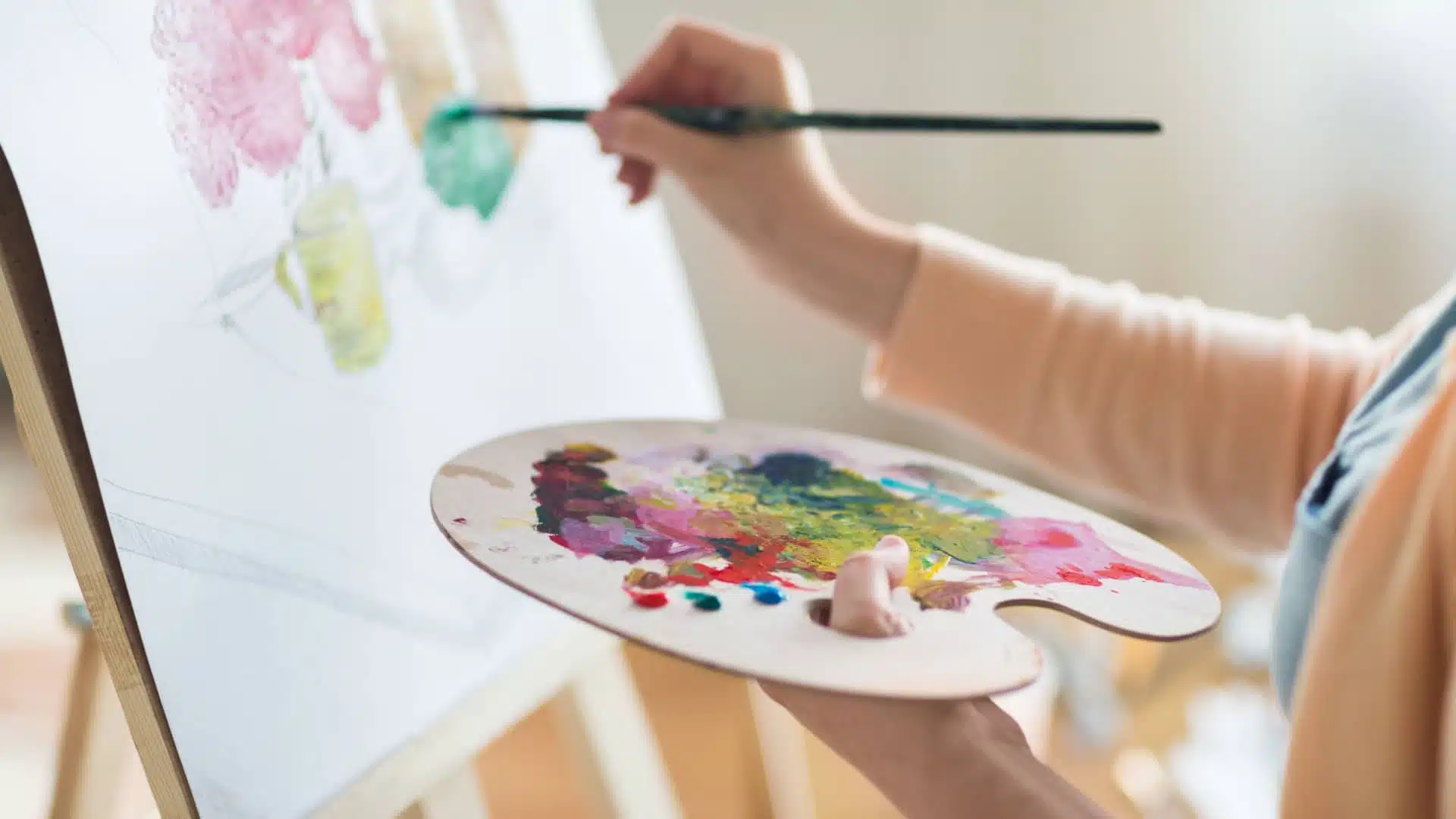
First, gather your supplies. You’ll need a palette, brushes, canvas, easel, and any items you’d like to use to create texture. I’ve used sponges, rags, stamps, rollers, and random things I’ve found around the house—the possibilities are endless!
Paint
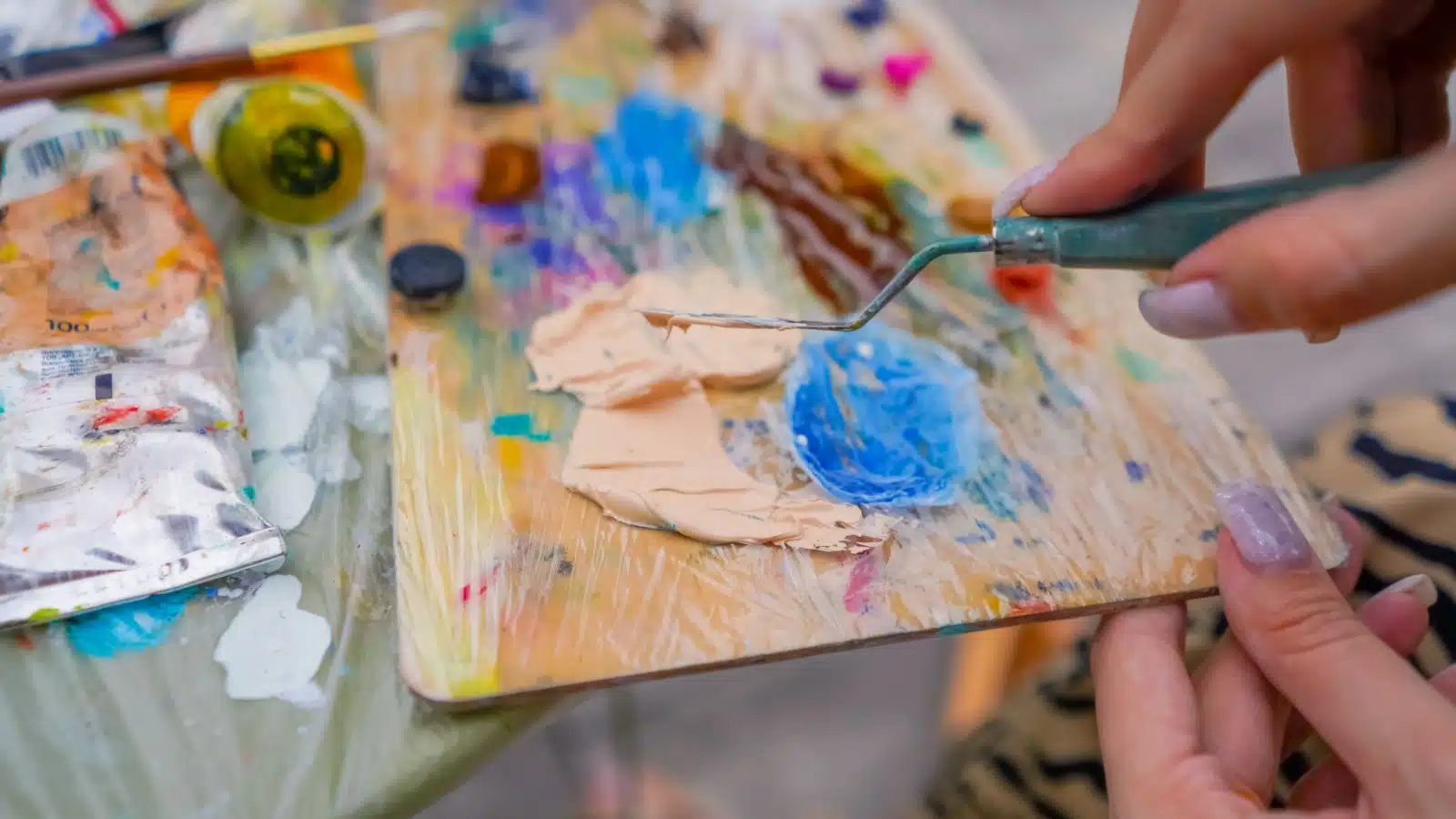
Deciding what paint to use is essential for your abstract masterpiece. Acrylic paint dries quickly, meaning you can layer it easily. You can also add many different blending mediums, like glass balls, stucco, and gloss gel, to provide different textures.
Oil paint is of higher quality and ideal for blending. It’s slower drying, so if you want to create multiple layers, you may have to wait for a few days for your first layer to dry. However, the slow drying makes blending different parts on canvas easy to create a seamless transition.
Watercolor paint is non-toxic and easy to clean. When added to the canvas, it creates beautiful bursts of color. However, it’s harder to maintain structure with watercolors (especially for a novice), and you’ll need special watercolor paper to ensure your work holds up to the water.
Experiment
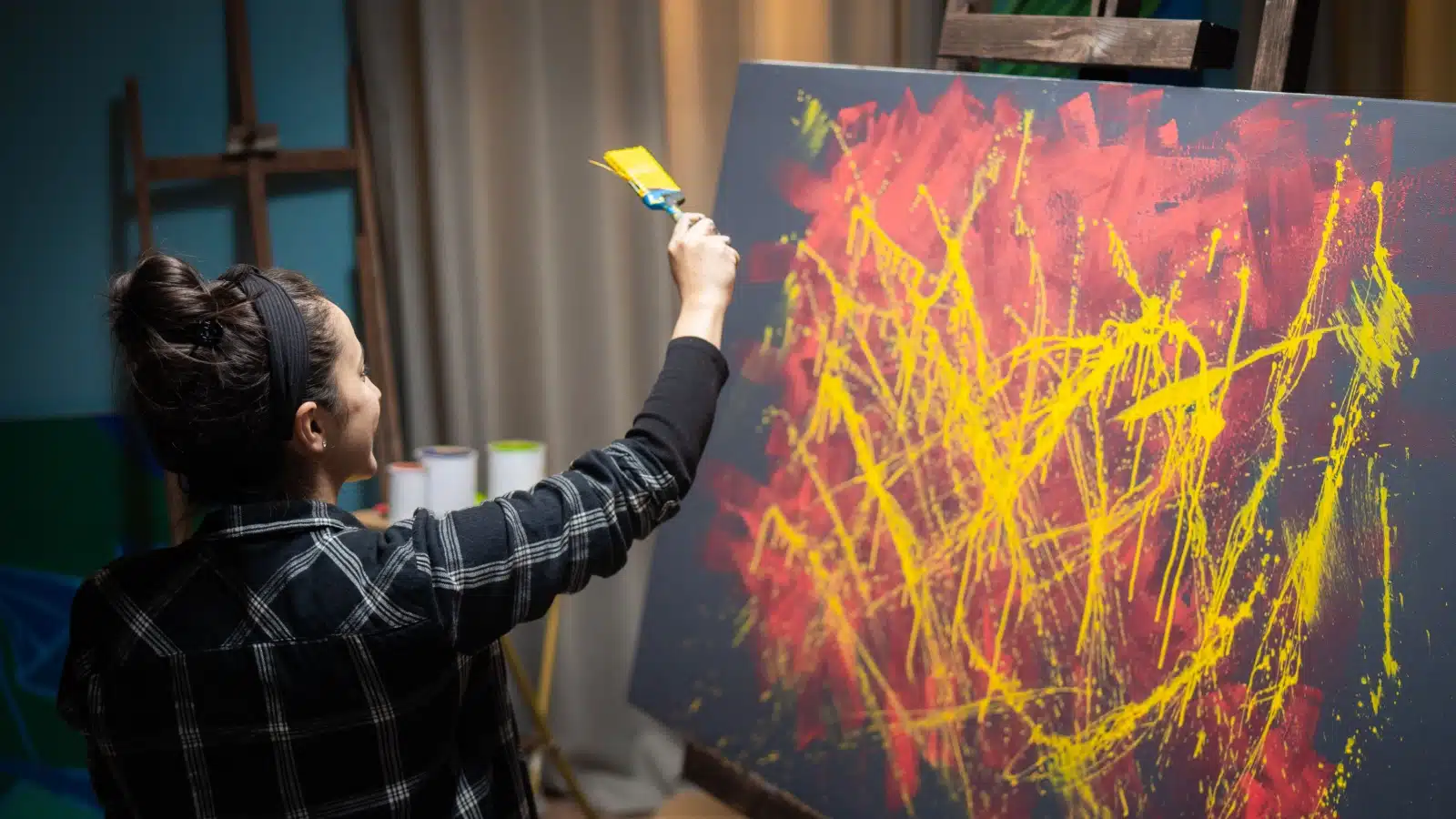
Once you have all this stuff ready – start experimenting!
Throw paint on that canvas! Use color theory to determine which colors will look best (or worst) together, and play with different combinations of mixes and mediums. Choose colors and motions that align with your emotions.
Most of all – have fun.
Abstract art is about being creative, exploring vivid color combinations, and experimenting with how the six elements of shape, form, texture, value, lines, and color interact, intermingle, and complement one another.
Embrace the wildness of having no rules to follow and create your masterpiece!