

Is the Matrix real?
The conspiracy theory that we’re living in a simulation has been gaining steam since the iconic film hit theaters over 20 years ago.
The idea, called Simulation Theory, might not be as “conspiracy” as you think. In fact, there’s real scientific evidence.
What is Simulation Theory?
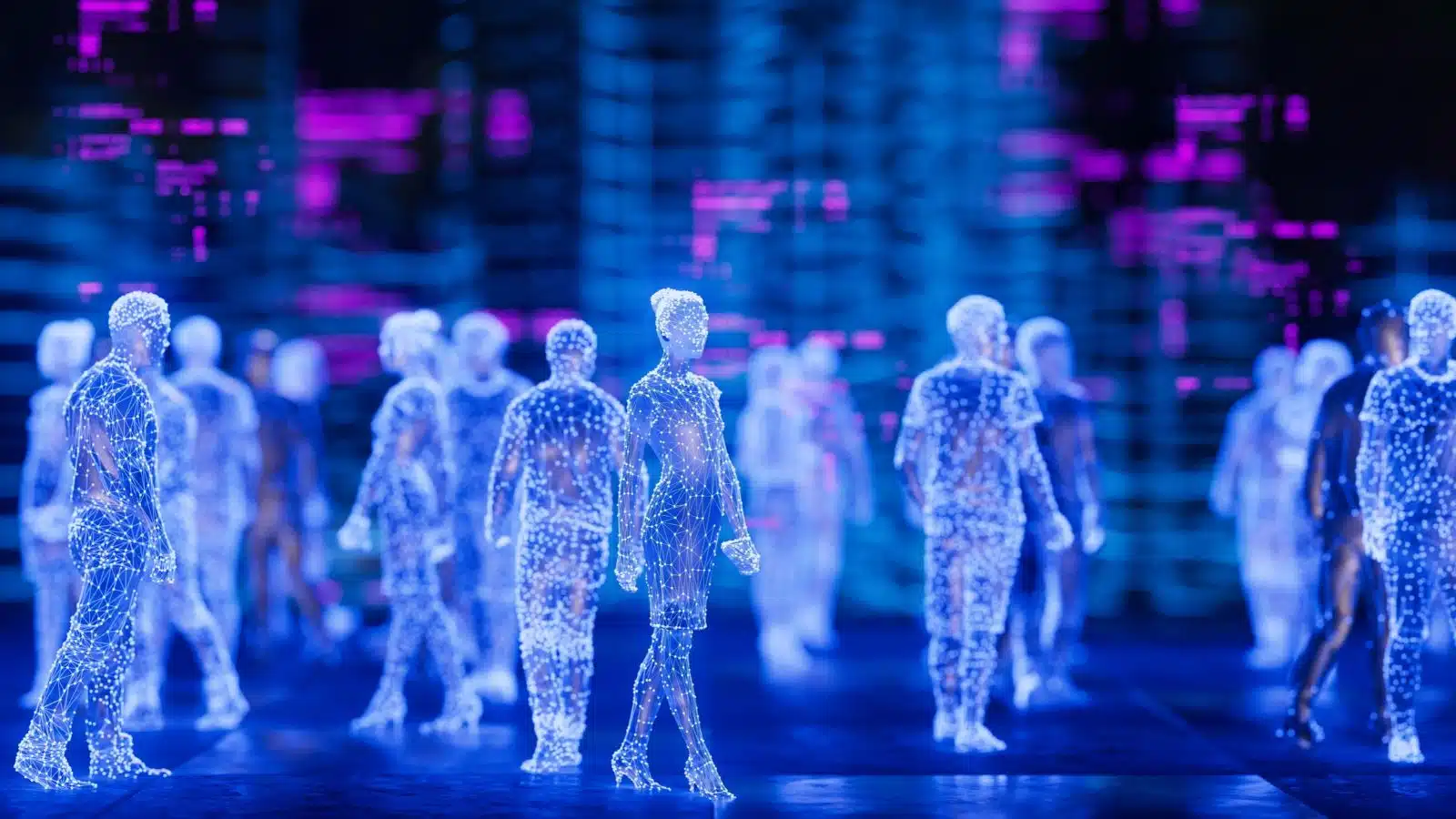
Simulation theory is the idea that our entire reality is a simulation created by a hyper-advanced computer system.
Philosopher Nick Bostrom popularized the idea back in 2003, though he didn’t explicitly claim it was true. He hypothesized that if a civilization were able to develop simulated brains, then the vast majority of brains would be simulated.
That thought led to three possible conclusions for our reality:
- No civilization will ever have the capability to create these simulations, so we aren’t living in a simulation.
- Future civilizations have the technology to create such a simulation but decided against it. Therefore, we’re not in a simulation.
- A civilization does have the technology and did create the simulations. If this is true, odds are we’re living in a simulation.
I think based on the advances in AI and the fact that companies and governments don’t seem to be stopping, we can rule out #2.
I’m terrified of #1, because it seems like the technology is possible, so if it doesn’t happen, it’s probably because we’re going to destroy ourselves before we can achieve it.
So that almost leaves us with #3.
And there’s evidence that supports it.
Evidence that We’re Living in a Simulation

But what is the evidence?
Some see evidence that we’re living in a simulation everywhere. It’s all the “glitches in the matrix”, unexplainable phenomena, and weird happenings that only make sense if life is a computer program.
But there’s also real scientific evidence that supports simulation theory.
We’re exploring it all, and you can decide for yourself what’s most credible.
Chaos vs Order
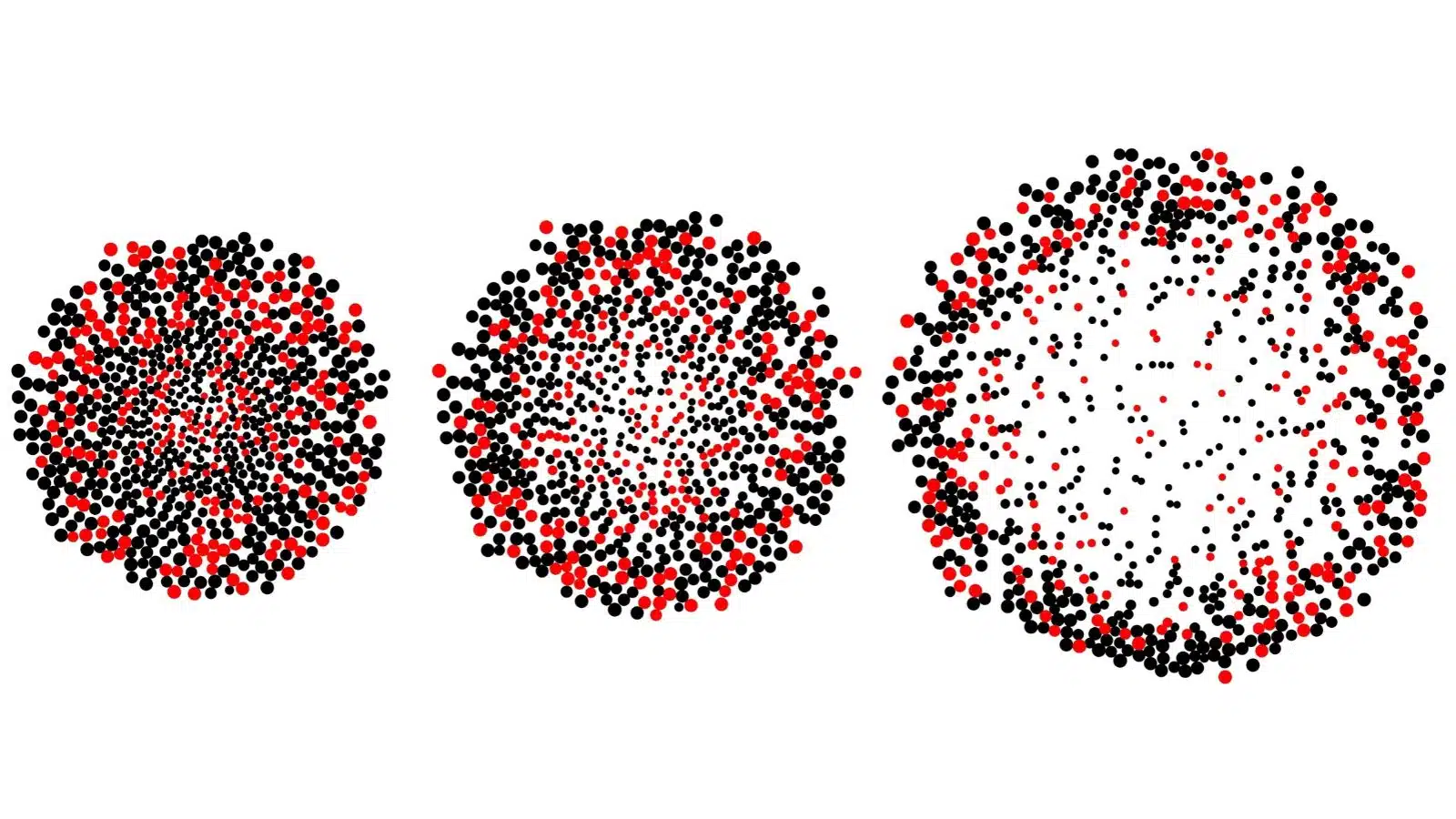
Entropy is the rule of the universe. According to the laws of physics, all things tend towards chaos.
So why doesn’t nature?
Dr. Melvin Vopson, a physicist from the University of Portsmouth, studies information physics, examining information’s relationship to the universe.
In a newly published paper, he discovered that symmetry and information seem to work against the second law of thermodynamics, which states that the universe tends towards entropy and randomness.
Dr. Vopson says that nature inclines towards order, not entropy. He compared nature’s inclination to remove extra, unneeded information in the quest for order to a computer, which deletes extra code to save storage space and optimize performance.
The research stands at the cutting edge, exploring relationships between the structure of data and the structure of atoms and how these similarities may support simulation theory.
I’m not a scientist, but my issue with this “evidence” is that nature applies to life on Earth (obviously) and doesn’t account for the fact that Earth isn’t a closed system. It’s part of the entire universe.
On a planetary level, maybe it looks like order, but if we look at the big picture, the universe as a whole is probably moving toward entropy.
I’m not smart enough to know whether Dr. Vopson’s research accounts for that.
You’ll Start Noticing

The Baader-Meinhof (BM) principle says that once you’re aware of something, you’ll notice it all the time.
So, if you start thinking that we’re in a simulation, you’ll start noticing evidence of it, like the “sameness” of the world.
Consider games like Grand Theft Auto, where you tend to see the same model car all the time. That’s because it was easier for coders to put in the same car than to code in every possible car and randomize its appearance.
You can search for days on end for a lost item, only to have it reappear a week later when you stop looking.
The Vortex of Lost Things

If we believe Sir Isaac Newton, one of the most famous scientists of all time, objects should stay where we put them.
So why do some things seem to get sucked into an interdimensional vortex, never to be seen again?
What happens to these hairpins, socks, and cat toys? Sometimes, they appear randomly in other people’s homes. People who have never used a hairpin in their lives sometimes find one in the corner.
Is there a weird wormhole connecting the houses of hairpin users to non-hairpin users, or is it a sign we’re living in a simulation?
I think there’s a simpler explanation for all of it, but some folks are convinced that missing items prove simulation theory is real.
Déjà Vu

Déjà vu is the uncomfortable feeling that you’ve experienced something before.
The Matrix used déjà vu as a plot device to show that the computer overlords changed a simulation.
Some people took that plot device as reality. Maybe it really does suggest that we’re living in a simulation.
Tech Evolution

When you sit back and think about it, our technology has come a long way over the past 100 or so years.
The Wright brothers first took to the skies in 1917, and less than 50 years later, humanity stood on the moon.
Now, the world’s connected through a global web of electrons, and we have all of humanity’s combined knowledge available at our fingertips. We have technology that people living just two centuries ago could never even fathom.
Some see the exponential advances in technology as proof we’re living in a simulation.
Video Games

The vast advancements in video gaming also lead down the simulation rabbit hole. In the 1970s, games were just dots on a screen.
The 1980s changed how we interact with media, transforming home gaming consoles into household items.
Now, video games are hyper-realistic. There’s even virtual reality gaming that puts you right into the action.
The advances in video gaming, coupled with the exponential explosion of technology, make us wonder.
What could we create in 100 or 1000 more years?
It may not be proof that we’re living in a simulation, but it’s evidence that we’re capable of creating one, which means Bolstum’s conclusion three could be true.
Weird Psychic Experiences

Have you ever been singing a song only to have it play next on the radio? Or thought of calling a friend you haven’t heard from for a while and discovered they just texted you?
These weird random coincidences make some of us think more is going on.
I’m not certain. I think it’s possible that we can pick up the electrical signals the way the radio can.
The Double Slit Experiment

Quantum physics is weird. Very weird. So weird that it makes us wonder whether anything is actually real.
The double-slit experiment is one of the most famous physics experiments casting doubt on reality.
Researchers were perplexed to discover that particles changed their behavior based on whether or not they were being observed.
How would subatomic particles know they are being observed, and why would that change their behavior? Nobody has an answer to these two crucial questions.
Simulation theory could explain it, though.
Easy Mode vs. Hard Mode

Is the fact that some folks live life on easy mode proof that we’re living in a simulation?
Video games are renowned for easy modes, helping players ease into the game, but what if the simulation had the same settings?
That begs the question of why anyone would want to play this game on hard mode.
Speed of Light

It seems arbitrary that the universe has a maximum speed. It’s also weird that light is the only thing that moves at the same speed regardless of your frame of reference.
The speed of light is a constant because it’s impossible to move faster than light without breaking space-time.
What would happen if we broke spacetime? Would we break the simulation?
Are We Living in a Simulation?

While there’s a lot of great (and not so great) evidence that we’re living in a simulation, there is no proof.
One of the most basic principles of science is that correlation is not causation. Some of the evidence correlates to simulation theory, but none of it is a smoking gun that proves simulation theory is true.
That doesn’t mean it’s not true; it just means we don’t know.
We may never know, or we may find out much sooner than expected.