

Is financial advice for women different than financial advice for men?
In theory? No, not at all.
But you wouldn’t know that from reading news articles and financial advice columns geared towards women, then comparing them with articles written for men.
Articles geared toward women offer very different (and often condescending) advice than those geared towards men (people).
Financial Advice for Women Condescending

Far too many “how to save money for women” articles feature shallow, condescending advice. They tell women to stop spending money on clothes or makeup and to ditch their morning coffee.
Clearly, the latte, not the gender pay cap, keeps women in poverty. Women would be so much richer if they stopped buying clothing.
It’s also telling that you typically don’t find similar advice in financial articles geared specifically towards men, who aren’t so frivolous as to waste hard-earned cash on tasty drinks.
Examples of Money Articles Geared Towards Women
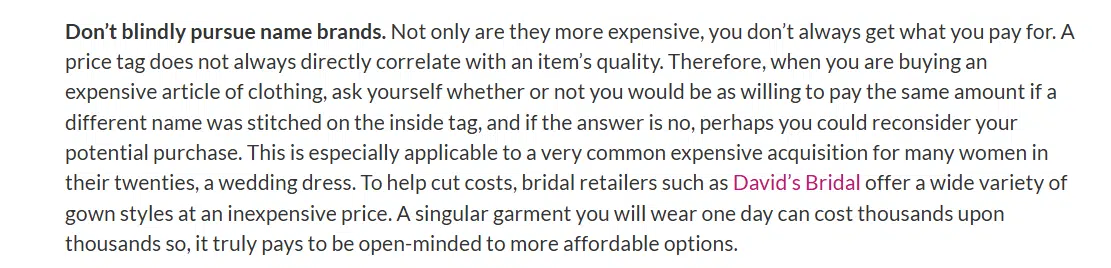
I know you don’t believe me, so I brought receipts. This post tells women to save money by avoiding name brands, because expensive bags and shoes prevent women from saving money.
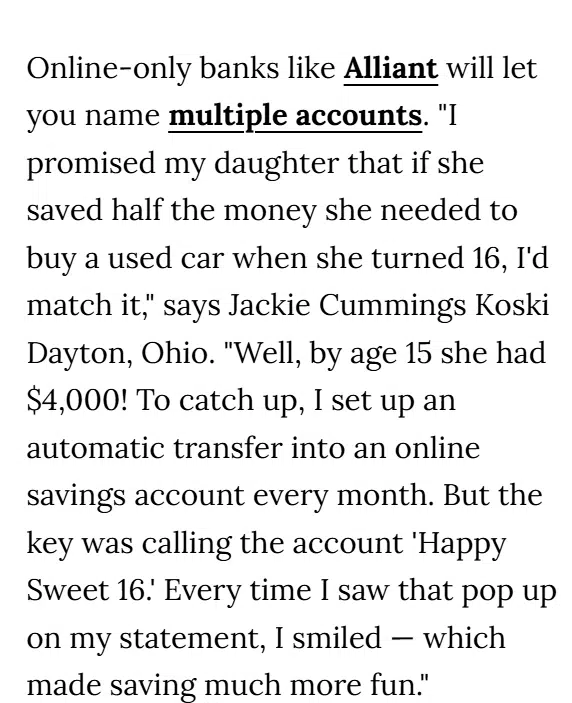
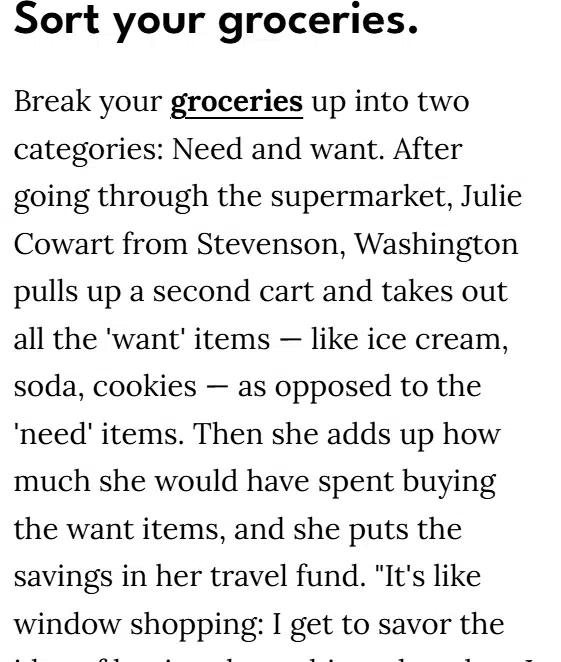
Another gem tells women to name their savings accounts and sort their groceries by needs vs wants. Although a named account can help people track their spending, a lack of names is not a limitation to saving. And it’s okay to want ice cream – splurging on a treat isn’t the reason we’re poor!
I’ll admit, most articles aren’t this bad. But there is a clear disparity between how the media talks to women about money vs how it talks to men (or people in general).
Financial Advice for Men vs Women

Most articles geared towards women focus on saving money. They direct women to clip coupons, shop at thrift stores, and avoid overspending.
While it’s all solid advice, financial articles written specifically for men hardly ever focus on saving money. Instead, these articles discuss investment advice and overall financial wellness.
Why is there such a disparity in the way we offer financial advice to men vs women?
Sexism – It’s Always Sexism

The answer always lies in sexism. But it’s not always as obvious as you think.
While some articles clearly think women spend frivolously and need to rein in, most aren’t overtly sexist.
The disparity is more complex than that. It lies in gender roles and expectations.
Women Handle the House
The media gears articles about saving money toward women because women manage the household spending.
Women do the bulk of the grocery shopping. They buy all the things their house and children need, and perform the mental labor needed to compare insurance and utility plans. We don’t offer financial advice for men on how to save money because society says that’s not men’s problem – it’s women’s.
Men Handle the Investments
Men’s role in household finance is all about building wealth. They earn the money, and they invest the money for the future.
Therefore, men need investment and career tips. They can’t concern themselves with the nitty-gritty of saving money on food, so financial advice for men is all about wealth management.
The 1950s Called – They Want Their Gender Roles Back

Anyone actually living in the 2020s knows neither of these things is actually true. Women work and invest. Men go grocery shopping and buy clothes for the kids.
The blatant sexism is also obviously false. Women aren’t frivolous spenders, and men aren’t rational savers.
Anyone, regardless of gender, can be a smart investor or a coupon clipper, a meticulous penny pincher or emotional shopper, good with money or bad with money.
Financial Advice for Men that’s Like Financial Advice for Women

I thought it would be fun to flip the script on common financial advice and explore what financial advice for men would look like if it were written the same way some advice for women is.
What type of sexist money advice would financial advisors give men, and more crucially, how would reading it make people feel?
We have ideas.
Here are five sage pieces of advice financial experts should be giving men, but don’t because everyone assumes men already know not to blow their money.
Skip the Beers and Energy Drinks

A six-pack of even the cheapest beer costs five or six dollars, and an energy drink costs anywhere from three to five dollars. That’s $35 a week down the drain and nearly $1600 per year, assuming you buy once a week.
Instead of blowing that on tasty drinks for yourself, you should save it. Make coffee at home for that morning energy boost, and limit your six-packs to once a week.
It’s better for your wallet and your health.
Stop Buying Video Games

Come on, guys. We know you aren’t saving as much as you should be because you had to have the latest Dungeon Master video game. That sixty bucks could have gone into your investment or savings account instead of being wasted on something fun for you.
You should look at your entertainment center and see how much money you have in video games. If you have more than one or two games, consider selling them on eBay.
You should focus on more important things.
Do You Really Need a Sports Car?

I get it; you want the latest model of the latest sports car so you can show it off. How would everyone know your status if you didn’t drive a fast car?
But sports cars are a giant waste of money. Instead, buy a used, reliable car such as a Toyota or Hyundai. These cars may not be as glamorous, but they are built to last and will save you tons of money in the long run.
Skip Shaving

Why do you need to make yourself look presentable? It’s not like society tells you that the clean-shaven look is more desirable and professional.
Razors and other beard-trimming products are expensive. It’s much cheaper to go without shaving. No one will even notice. It’s not like anyone can tell whether someone has shaved their face or not.
Don’t Be Too Confident in Your Investing Skills

Men are renowned for their confidence. But, frequently, they mistake confidence for hubris.
Overconfidence can lead to riskier investment choices and losses in the long term. Do a little research instead of acting like you know all the answers.
Talk to a financial advisor and ensure your investments are solid and stable. You don’t need all the answers, but you do need to know when to ask for help.
How This Advice Relates to Women

Most women reading this will see how much it mirrors the advice we receive daily.
We’re constantly told to skip the latte. The advice is so ubiquitous that it spawned a book, “The Latte Factor,” in which a “generous” older man guides a naïve young woman and helps her make better financial decisions.
Women are also told not to buy new clothes and name-brand items, which mirrors the sports car example, and to reduce their make-up and grooming costs, which is just as ridiculous as telling men not to shave.
Financial advice geared towards men rarely carries the same message. I’ve never seen an article telling men to skip beer, video games, and grooming products to save money.
The truth is that stereotypical men waste as much money as stereotypical women, but no one bats an eye when men do it, and we definitely don’t write articles about it!
Spending Vs. Investing

You may have also noticed that most of the advice in this column relates to not spending money. Where’s the piece on building wealth, investing, choosing smart tax strategies, and enhancing your career to make more money?
It’s absent, just like it usually is in most financial advice for women.
Traditionally, money advice for women hasn’t focused on investing or retirement planning. Most of it concerns clipping coupons or limiting our spending on useless junk.
General financial advice and advice geared towards men are usually more well-rounded. There will be solid tips about saving money, but men also get advice on investing, planning for retirement, and making the best use of tax laws.
With women living longer and becoming breadwinners more and more, having that kind of advice is crucial.
It’s Getting Better

The one silver lining to this post is that it’s getting better. Much, much better.
It’s harder to find these silly, stereotypical articles telling women to stop spending money, and we can also find tons of solid financial advice written for women by women.
Look to Tread Lightly, Retire Early’s epic post listing the Women of the Financial Independence Movement for a massive list of women writing about money. It may have started with women discussing financial independence, but it has expanded to include many women discussing various money topics. That post spawned a movement of women coming together and talking about finance in authentic ways that are important to us.
It’s just the start.
When I first published this piece in 2019, the first page of Google was filled with the condescending articles I referenced.
Now, the first page offers realistic financial advice for women. Unfortunately, a lot of articles still skip essential topics, like investing or retirement planning, and lean too heavily on ways to save money.
However, most condescending pieces are gone, which is a significant step forward.
More and more women are taking control of their own finances, getting involved in investments and retirement planning, and becoming the family breadwinners.
The media is slowly but surely following suit. Hopefully, someday soon, posts like this won’t be needed to draw attention to the differences. We’re closer to it now than when this was first published, but we aren’t quite there yet.
How Did This Post Make You Feel?

Ladies, did you recognize the correlations in the advice right away?
Gentleman, were you offended that I assumed you spent money on beers and video games? Or did you think it was ridiculous that I’d claim shaving doesn’t matter?
Who felt it was odd that I excluded any information on investing for the future or building wealth?
Consider your reactions.
They may help you understand why examining how we talk about money with different groups is vital, and how changing the conversation can lead to better outcomes for all.
No lie: I CACKLED reading the advice for men in this. Nailed. It.
I think you’re right re: things beginning to change. As with most things related to gender equality, it’s slow going but it is happening. That said, I am glad I have discovered so many incredible female personal finance bloggers who are absolutely killing it and proving the dumb stereotypes wrong.
Well, I don’t need a sports car, I’m driving an old Skoda and that’s fine. Actually I wanted to skip shaving, but my GF won’t let me 🙂 But don’t touch my beer!
You’re a modern woman. Older couples are pretty much traditional in their male/female patterns. Can’t blame others to try to appeal to them. Actually those tips you linked to (such as the grocery splitting) could equally apply to men as well.
I agree that all of that advice applies equally to men, but it’s usually marketed and targeted towards women. I think a lot of older couples are more traditional because they didn’t realize there was a different way, because they were bombarded with stuff like this (only worse). But that worked to hurt women as well -how many were trapped in abusive relationships because they couldn’t afford to leave? How many were screwed when their partner passed because they didn’t know how to save/invest for themselves? There are a lot of layers to this issue.