
Move over, fellows. Gaming is no longer a man’s world.
The data reveal that women play video games at nearly the same rate as men, though their participation often goes unnoticed due to the rampant sexism in gaming.
Women in Gaming Statistics
A 2025 report by Statista shows that women play video games at nearly the same rate as men, with 52% of gamers identifying as male, and 47% identifying as female. That’s a massive change from 20 years ago, when the split was closer to 60/30.
But there’s more. Newzoo, a leader in market intelligence in the gaming industry, found that 72% of women play video games in its 2023 market report update, but that they’re less likely to consider themselves “gamers.”
A 2022 study led by Jonathan Shroyer, Chief Innovation Officer of Arise Virtual Solutions, found fascinating statistics about women in gaming. The investigation discovered that 77% of women regularly play video games, and although women were slightly more likely to report they don’t play any games, the majority of both genders enjoy gaming. Many play regularly, with 54% of women and 57% of men gaming for up to ten hours each week. Men are more likely to spend long hours gaming, with 31.4% playing over 10 hours per week compared to 23.8% of women.
Only 22.2% of women and 10.8% of men reported that they don’t play any video games at all.
Where are the Women then?

The shocking statistics may come as a surprise to male gamers. If most women are gaming, why aren’t they more visible in online worlds?
A 2022 survey by Fandom Spot explains the uncomfortable truth: 76% of female gamers hide their gender to avoid sexual harassment or discrimination while playing.
Sexism in gaming is still a massive barrier that prevents women from gaming the way they’d like.
Sexism in Gaming Statistics

Women hide their gender while playing games online due to their horrible experiences with “gaming while female.”
The Fandom Spot study found that 77% of women experienced some form of harassment or discrimination while gaming. Over 70% heard negative comments about their skills, 65% experienced gatekeeping, and 50% were subject to patronizing remarks.
Nearly half of all women surveyed received unsolicited relationship advances.
A 2021 study conducted by Young Gamers & Gamblers Education Trust and published by The Independent found that 28% of female gamers endured sexual harassment, 35% received inappropriate messages, and 40% encountered verbal abuse.
Women Share their Experiences with Sexism in Gaming
The statistics are jarring, but women’s lived experiences provide better examples. Here, we showcase some of the misogynistic things women who dare play video games must deal with on a daily basis.
No Women Allowed
Twitch streamer Joie has first-hand experience with misogyny in gaming. She stopped playing random matches on most shooting games because as soon as her male team members heard her voice, they’d vote to kick her out.
Briikachu is a Twitch streamer specializing in League of Legends, the popular multiplayer online battle arena (MOBA) game. She’s experienced misogyny on League’s gaming platform, while streaming on Twitch, and even on TikTok. Men constantly bombarded her with comments about getting back into the kitchen.
Mansplaining
Though getting voted off the island for your gender is annoying, it’s not Joie’s biggest gripe. She says she gets more frustrated when men attempt to teach her a game she’s been playing and streaming for years.
Her male counterparts constantly ask her about her loads, tell her she’s wrong, and explain step-by-step why they think she should change what she’s doing. Joie said she used to listen, believing they were trying to help, but found that their advice often hindered her performance.
Only Good Because of a Man
Brikikachu is so good at what she does that she was invited to the Twitch Partner program, an achievement less than 5% of all Twitch streamers earn.
But many men find ways to downplay her obvious skill. They send unfounded messages that her character is only good because her boyfriend, who is in the same league, plays for her. At one point, the endless remarks forced Briikachu to limit her gameplay to times when her boyfriend was also streaming, giving her irrefutable proof that she was the one playing the character, not him.
Women Share Stories Online
Joie and Brikachu’s experiences are just the tip of the iceberg. The internet abounds with threads and stories where women share their experiences trying to enjoy video games.
A post in the Girl Gamers Reddit community highlights the constant harassment women receive whenever they log on. In another thread, women of the community share their worst experiences, which range from bullying, harassment, stalking, unsolicited photos, and more.
A thread from nine years ago highlights how long women have been dealing with sexism in gaming.
Misogyny in Gaming – in the News
The massive problem of sexism in gaming hit the mainstream in 2014, when Gamergate exploded online. Though some claim it started due to “ethics in gaming journalism,” in practice, it granted permission for men to become their worst selves, harassing and bullying any woman they encountered in the space. Today, we see it as a backlash against feminism and representation in gaming.
But the worst part is that nothing has changed in the 10 years since the original Gamergate.
Men constantly complain that their female video game characters aren’t “sexy” enough, that games have become “too woke,” and that women are infiltrating and thus destroying their games. Recently, the manosphere complained that Alloy, the main character of the Horizon Zero Dawn series, wasn’t hot enough, and that Ciri (a *gasp* woman!) will be the protagonist of the new Witcher game.
Why is There so Much Sexism in Gaming?

Misogyny in gaming exists because of misogyny in society as a whole.
There’s a subset of men who just hate women, and a lot of those men play video games. But it’s not just hatred; there’s also a lot of ego involved.
A 2015 study found that the worse men were at games, the more likely they were to harass and degrade women. Highly skilled male players were unlikely to engage in sexist behaviors, but the men who constantly lost treated women horribly.
It seems like men who stand to lose the most status to women are also the ones most likely to harass them, while the men who are confident in their social standing are more likely to welcome them.
It’s Getting Worse
We don’t have any measures to determine whether sexism is getting worse, but it sure feels that way. People feel freer to express their toxic views than they did in the past.
With sexism rising in society and mainstream culture, sexist men no longer feel the need to hold back. The rise of right-wing sexist influencers is brainwashing generations of young men into misogynistic attitudes, which they promote online and while gaming. The book Men Who Hate Women does a deep dive into this phenomena, it’s definitely worth a read to understand how the hate propagates online.
Gaming Companies Part of the Problem
Gaming companies must make their platforms safe for all users, but they’re currently failing at that obligation.
It makes sense, as the gaming industry is dominated by men. A study by Women in Gaming found that in 2024, women made up only 23% of all game developers. The stats get worse as you go up the chain, as 87% of the decision-maker positions were filled with men.
The industry is also plagued with complaints about sexual harassment and discrimination. Activision Blizzard, one of the largest game developers in the world, has multiple lawsuits concerning gender discrimination, bullying, and harassment. They paid 54 million to settle.
How to Make Gaming Safer
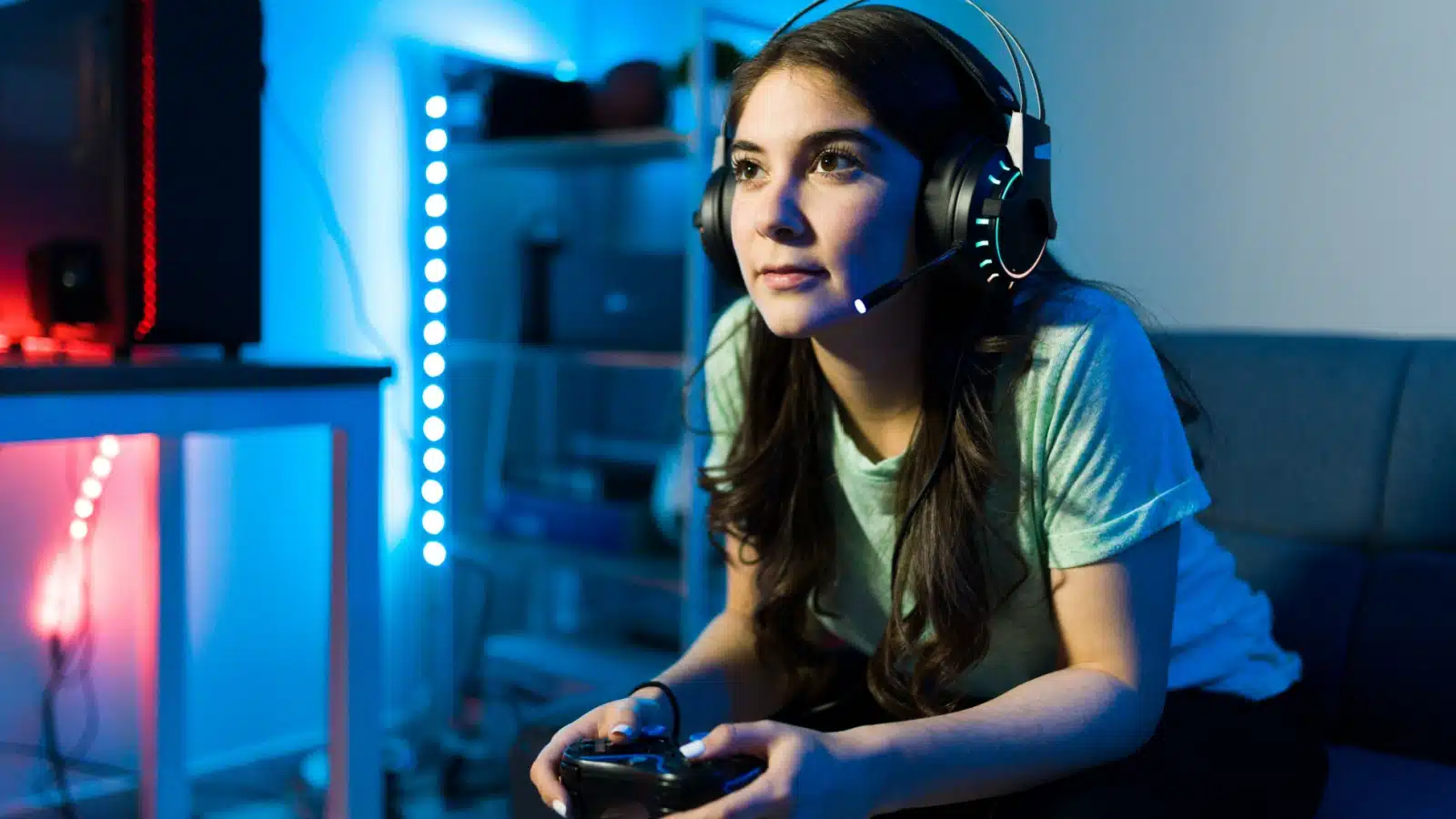
Shroyer believes gaming developers and publishers have the power to affect change in the gaming industry and limit unacceptable behavior.
He thinks industry leaders should drive accountability by setting the example of appropriate behavior and showcasing that inappropriate behavior will not be tolerated through account suspensions or terminations.
Gaming platforms need to create an environment where women feel safe to voice their negative experiences and are assured that companies will take action to resolve all issues.
Shroyer also believes that increasing diversity at the top levels of the industry will help promote change. As Shroyer proclaims, “Women need a seat at the table.”
Players Need to Help Too
Companies can’t solve all the problems. Players (male players, specifically) need to rise to the occasion and help women feel safer while gaming.
Men can listen to women and trust their experiences. They can amplify women’s voices and speak out when other men display inappropriate behavior.
Men can kick the male perpetrators off the team rather than the female victims. They can stop making sexist jokes and stop laughing along when others do.
How Women Protect Themselves
In the meantime, women can continue to protect themselves by hiding their gender, though that’s not an ideal solution.
Joie avoids gaming with certain people or those she doesn’t know. She sticks to the safe streaming communities she’s found.
Briikachu tries to rise above it. She thanks the trolls for increasing her engagement and finds comfort in knowing her own truth.
Solving the Problem Requires a Cultural Shift
Shroyer acknowledges that the problem goes far beyond the gaming industry. Preventing misogyny in gaming requires a cultural shift in gender norms and overall attitudes about men and women.
He sees gender expectations in the products marketed to young children, noting that he rarely finds video games or superheroes classified for girls when taking his niece shopping. Shroyer believes that as a society, we need to release the boundaries we place on children to help them see choice and opportunity rather than attempting to influence them to behave or act a certain way.
Cultural shifts take time. While waiting, women will continue to enjoy gaming while hiding their gender to stay safe online.