

Shopping for a new journal seems simple until you’re standing in front of dozens of options, wondering which one actually fits your life.
Journals come in more than just different formats; they come in different styles, each designed for a specific way of thinking, planning, or reflecting. Some are flexible enough to grow with you, while others are purpose-built for a specific goal.
Here’s everything you need to know about the different types of journals so you can choose the best one for you.
Styles of Journals
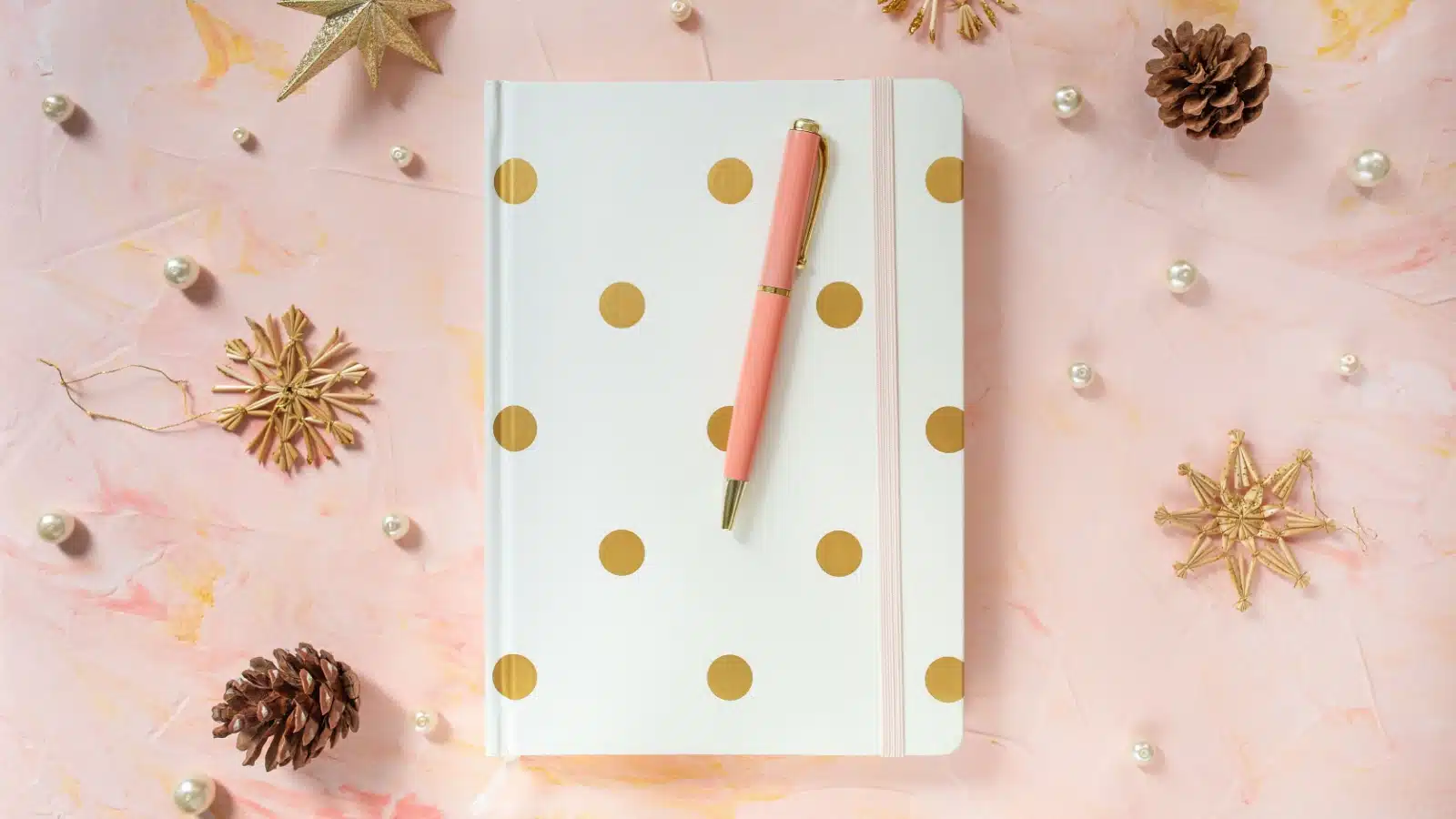
It all starts with a bit of style.
Journals come in three main styles: ruled, blank, and dotted (bullet).
Each has pros and cons, depending on what you want out of a journal.
Ruled Journals
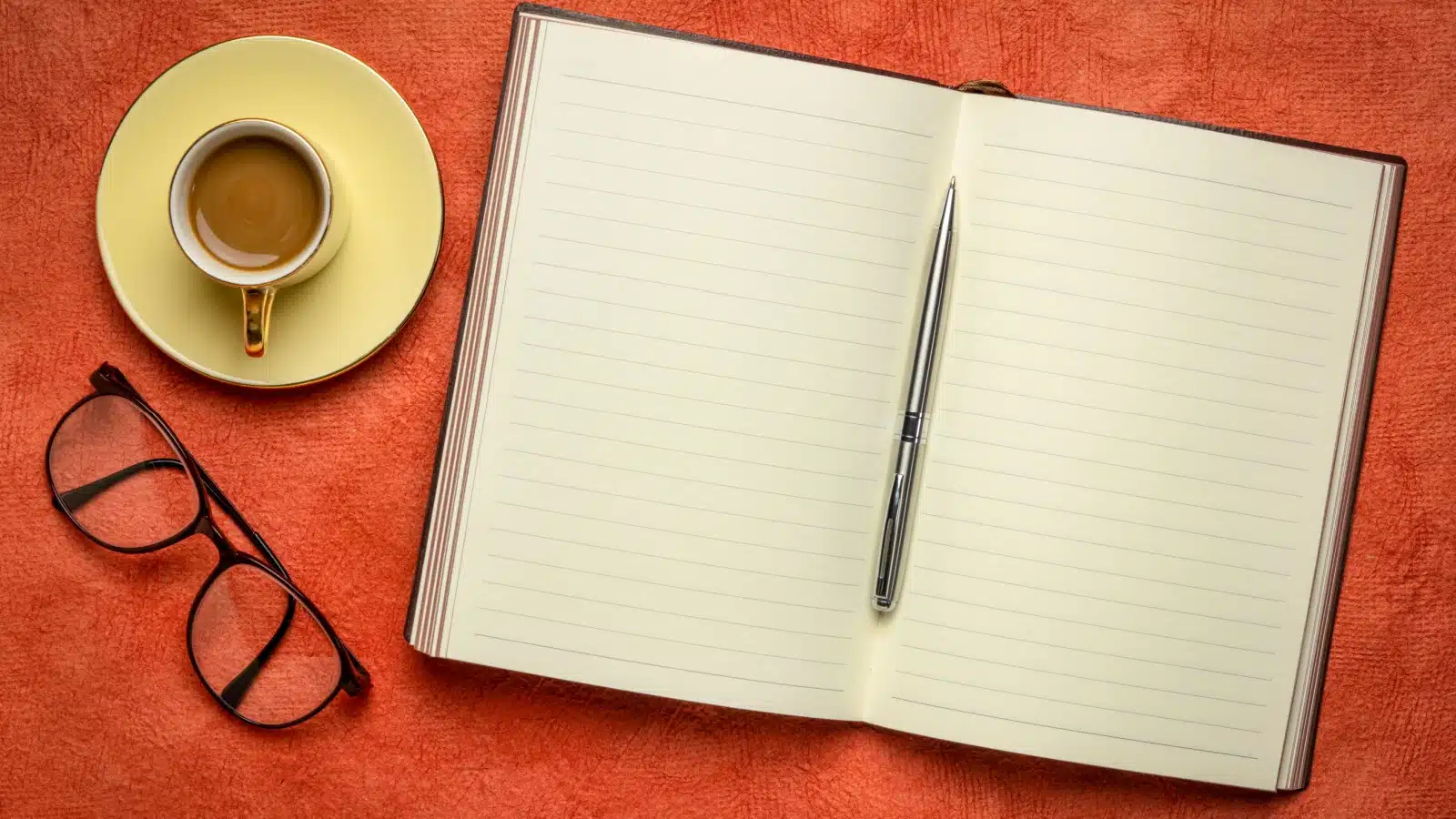
When you think of journaling, you probably picture the traditional lined journal. It’s your typical diary-style journal filled with lined pages for writing anything you want.
Ruled journals are versatile and easy to use for almost anything.
Some come with extra inspiration, prompts, or other goodies to help you along your journey, depending on what type of journal you get.
Blank Page Journal
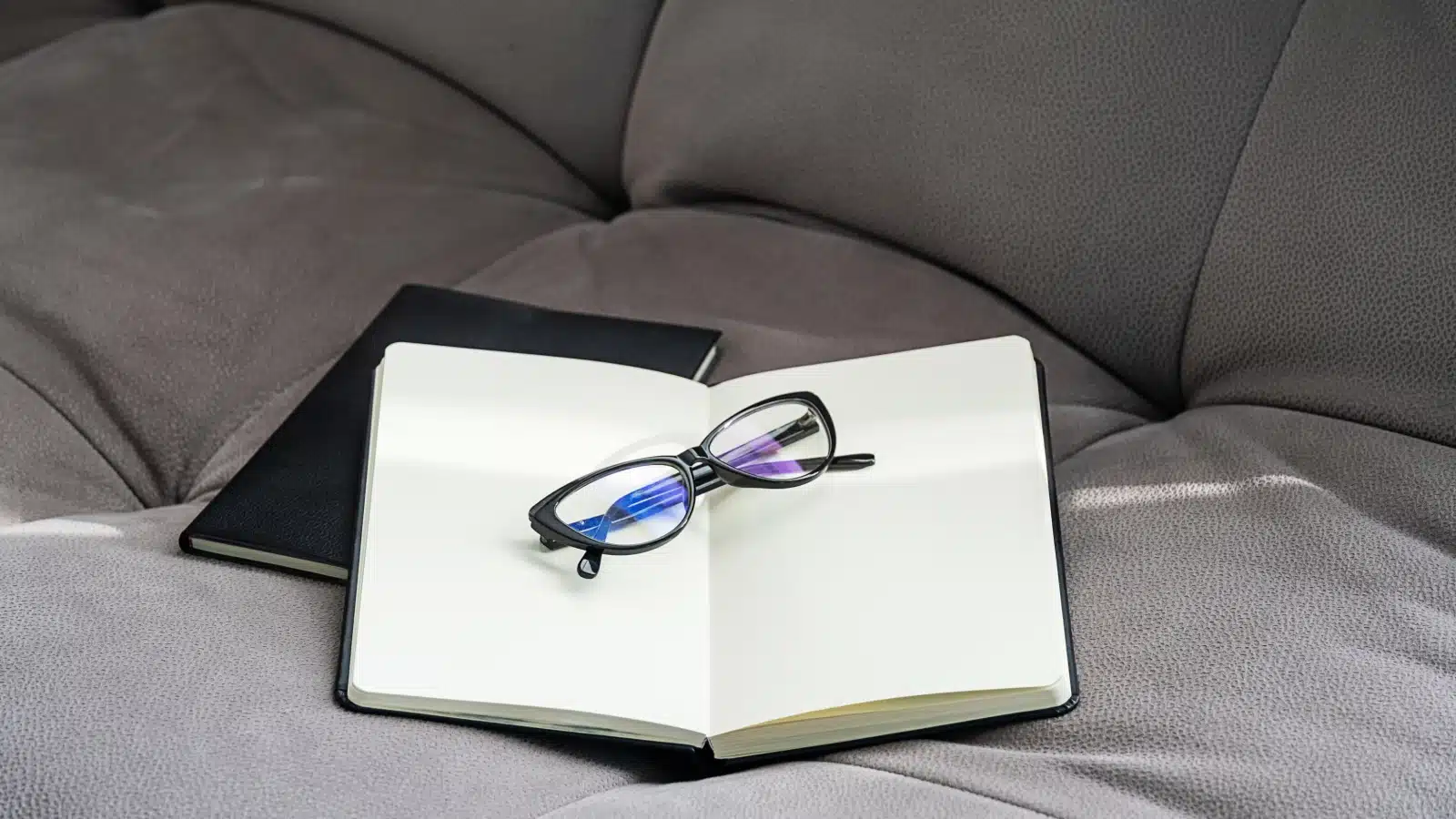
A blank-page journal is perfect for creatives who think in images rather than words or want to add sketches and drawings to their journals. Doodling in your journal is far more fun if you don’t have those pesky lines getting in the way!
The disadvantage of a blank journal is that writing in a straight line is challenging for some (and by some, I mean me).
Line journals provide more structure for even writing, but aren’t the best for artistic ventures.
Bullet Journal
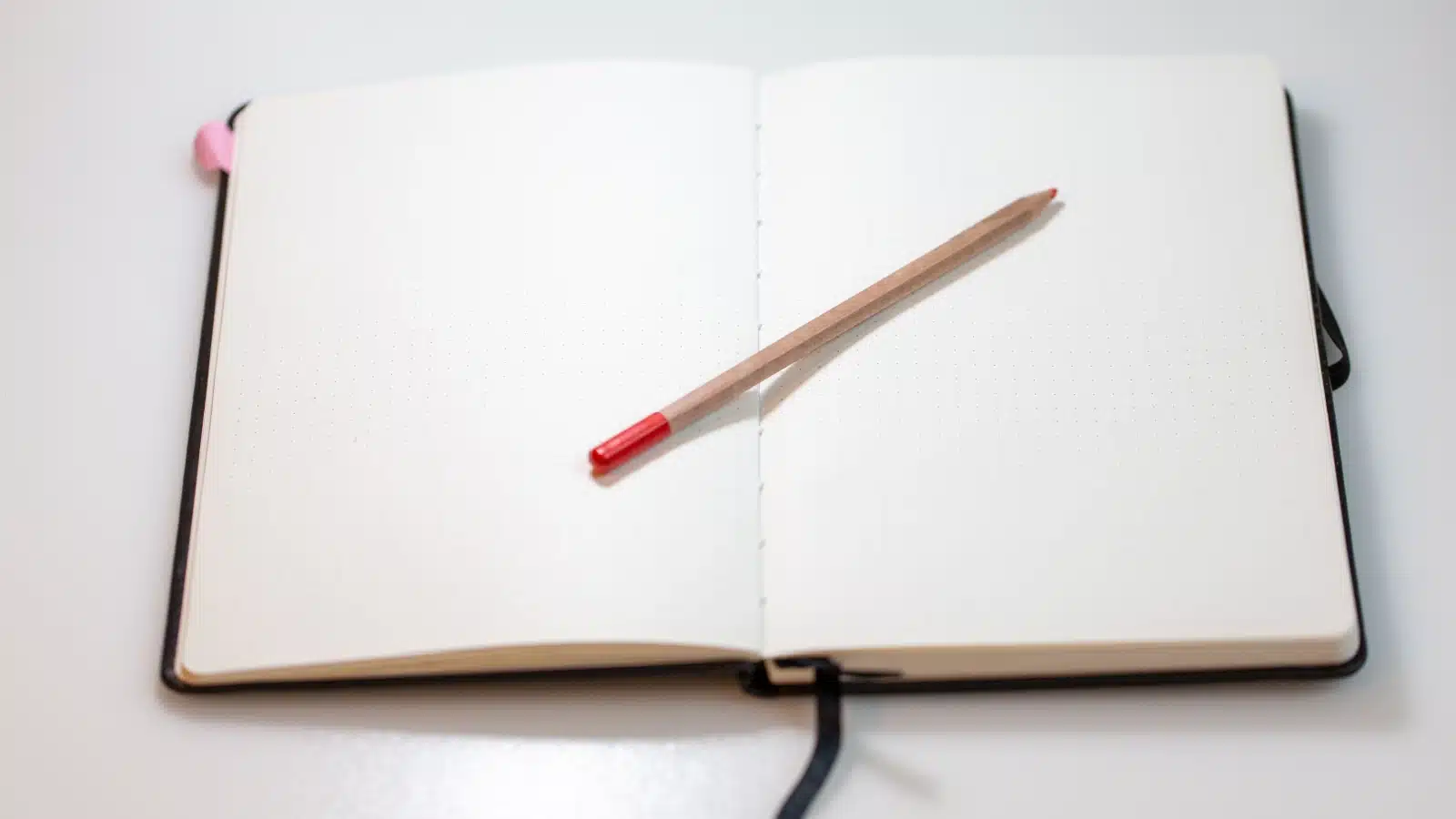
A bullet journal contains pages filled with little dots, or bullets, in a grid, which helps you draw your perfect journal design.
The grid makes drawing straight lines easy, letting you create planners, to-do lists, habit trackers, or anything else you want on the pages. As a bonus, they’re gray scale, not bold black, so they don’t get in the way of doodling.
Bullet journals are ideal for folks who want a blank template to design a unique journal. And although you can use one for nearly anything, some types of journaling are ideally suited for bullet journals.
It’s typically the best style of journal for productivity and self-improvement.
Different Types of Journals to Keep
Now that we understand the three styles of journals, what types of journals are best for each style?
We’ve got you covered. Discover the different types of journals, grouped by which style works best.
Remember that journaling is personal. No rule states you must use a bullet journal for productivity or a blank journal for art.
You can use any style of journal for anything you want – it’s your journal.
Hey folks! Transparency Disclosure- Some of the links in this article are affiliate links. That means I’ll receive a small commission if you decide to click on it and buy something. Don’t worry, it doesn’t cost you anything extra!
Bullet Journals are Best for these 7 Journal Types
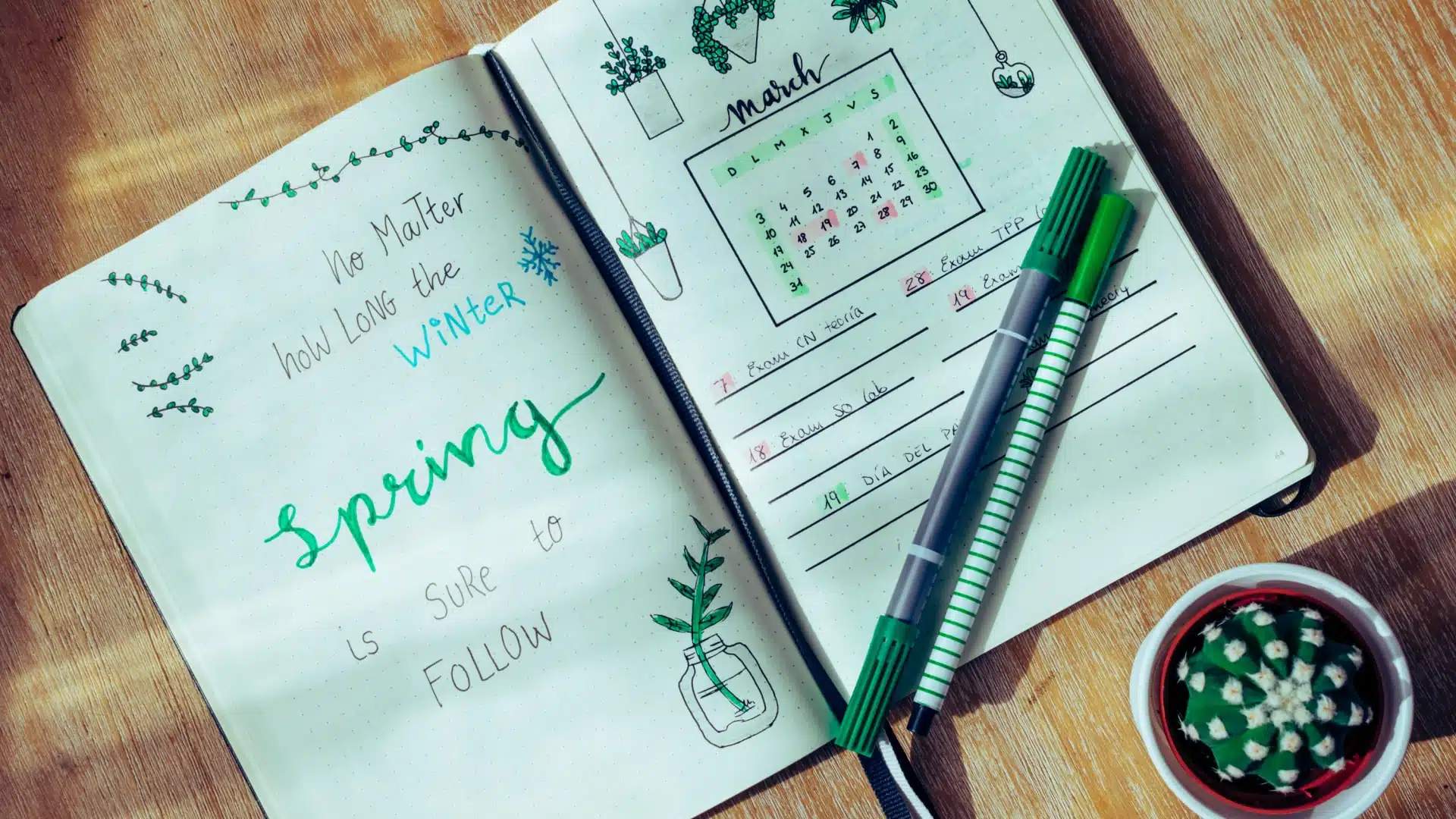
Bullet journals are ideal for planning, organizing, project management, and tracking goals. If you’re starting one of these seven types of journals, a bullet journal is probably your best friend.
Productivity Journals
Productivity journals help you stay motivated to achieve your goals. They allow you to keep track of task lists, block your time, and visualize your progress.
This type of journal is ideal for folks who need to visualize their goals or get immense satisfaction from checking things off a to-do list.
Planning Journals
Planning journals help you plan your days, weeks, and even months. Use it to create monthly spreads to keep track of appointments, chores, and activities, or make weekly spreads to monitor assignment due dates and keep track of your week at a glance.
Planning journals are great for families. You can create chore charts and see where everyone needs to be in one easy-to-use resource.
They’re also great for folks who love outlines. Planning journals can help you plan a trip, a move, or a big project at work, but they can also help you plan your days, weeks, and months.
The versatility is a big bonus.
If you’re primarily concerned with keeping track of schedules and daily plans, a standard planner may work better than a bullet journal, but you lose the ability to create a unique spread designed for your life.
Tracking Journals

Journaling is a great way to track anything, from goals to bodily functions to natural occurrences.
Many use their journals as mood trackers, fitness trackers, cycle trackers, and even to keep tabs on the weather or moon phases.
A bullet journal works best for tracking because you can draw a simple chart, illustrate your progress visually, or make complex tracking templates filled with keys representing various activities.
Project Journal
A project journal can help you manage all aspects of a complex project. Use it to outline project phases, assign tasks, track progress, and keep notes related to completion.
While project journals are ideal for work, they can also be used for complex personal projects, like a big move or a home remodel.
Money Journal
Keeping track of your finances is essential, and a money journal can help. This type of journal can help you develop a budget, track your spending, and create a progress report for long-term financial goals.
A money journal lets you consider what you want from life and develop a financial plan to achieve those goals.
Bullet journals are well-suited for money journaling, as they offer space to create the unique charts you need to keep tabs on cash flow. Those wanting to do a deep dive into their relationship with money can use prompts to better understand their financial goals right in the bullet journal pages.
Check out our money dreams journal prompts available on Etsy.
Food Journal
Food journals can help you on your weight loss journey. In this type of journal, you write down your meals, including everything you eat for breakfast, lunch, dinner, and snacks. You also record the calories to get an idea of how many calories you consume each week.
The best food journals also allow you to write down your daily exercise. The key to losing weight is calories in versus calories out, so the food is only half the journey.
If you don’t want to create your own food journaling spread, consider the Life and Apples Wellness planner on Amazon. It’s a bullet journal style with premade prompts and templates related to healthy living.
The Everything Bullet Journal
The best thing about a bullet journal is its versatility. If you opt for a bullet journal, you can combine numerous types of journals into one.
Create a weekly spread with your daily schedules and a habit tracker. Incorporate your fitness goals into your productivity journal along with your work goals.
There’s an endless supply of ideas for your bullet journal. The only limit is your imagination.
Get your dotted journal at Staples
10 Types of Journals Best Suited for Ruled Journals

Lined journals are best for diaries, introspection, and traditional writing.
Although you can write about whatever you want, you can also get a specific type of journal offering prompts or inspiration for a certain topic.
Here are some niche journal ideas that work well with lined journals.
Diary
A diary is what most people think of when they think of writing in a lined journal. It’s a specific type of journal that allows you to record your thoughts and feelings for a particular day and time.
Many people also use their diaries to record important events in their lives and their corresponding emotions.
The great thing about a diary is that there is no right or wrong way to use one. Write whatever you want in it. Use it to tell a story about your day or explain why you feel a certain way about a specific event. Write letters to your past or future self, explaining how you feel. The options are endless.
Diaries can help us work out complex feelings we didn’t know we had or simply allow us to record the happenings in our daily lives.
Gratitude Journal
A gratitude journal is explicitly designed to help you embrace gratitude and thankfulness.
Although you can use any journal as a gratitude journal, those who need help getting started or discovering things to be thankful for can purchase one that includes prompts, quotes, and ideas designed to inspire daily appreciation.
Some offer tips for showing gratitude to the important people in your life and pausing to appreciate all the good things around you.
You can find a wide range of gratitude journals on Amazon.
Self-Help Journals
Self-help journals assist you on journeys of self-discovery. Use them to reflect, work out your emotions, or engage in shadow work.
Sometimes, therapists recommend their patients keep a journal to help them work through grief, trauma, or complex emotions. The self-help journal is typically best for this type of work.
The best self-help journals are simple lined journals offering space to work out your inner turmoil. Consider grabbing a blank-lined journal and using journal prompts to assist you in your journey of self-discovery.
Check out our self-discovery and introspection journal prompts on Etsy for some inspiration.
Travel Journal

If you want a journal that will help you remember your travel experiences, keep track of your bucket list destinations, and help you find new and exciting places to visit, you need a travel journal.
Travel journals come in many shapes and sizes. Some prefer a tiny pocket-sized journal that fits easily in any suitcase, while others want something with prompts and ideas to help them plan adventures.
Those bringing the journal along for an adventure should consider durability. Get something with a hard cover that won’t get destroyed if shuffled around in your backpack.
Best Travel Journals
- Moleskine City Journals (This one is for Rome!)
- Travel Listography, a small hard-backed journal filled with prompts and lists of ideas for a variety of travel-related ideas
- Moleskine pocket journal (Ideal for travel due to its small size)
Ideas Journal
Use your journal as an external storage drive for your brain with an ideas journal. Record your story ideas, the things you want to follow up on, and your next big project ideas. Flesh them out on the pages of your idea journal to determine what will work and what won’t.
You can also use an ideas journal to brain dump. Get everything out of your head and down on paper to determine which ideas need your focus and which can wait for later.
Creative Writing Journal
If you love writing, consider keeping a creative writing journal. Record your best story ideas and get an outline going in your journal pages.
Write poetry in the pages or get the first draft of your first story down on paper. Jot down notes whenever inspiration strikes, or use the journal to refine your writing skills.
Check out our creative writing prompts on Etsy for a head start on filling yours.
Grief Journal
A grief journal helps you heal from a traumatic event. These events might include losing a loved one or difficulty starting a family. Grief journals contain prompts to help you work through the complicated emotions inherent in loss.
While it’s heartbreaking that this journal is needed, many of us experience loss. A grief journal can help us process that loss.
Meditation Journal
A meditation journal will help guide you through your meditative process. Some might have prompts for setting intentions for your meditation, while others may ask that you reflect upon your thoughts while meditating.
A great way to get into the process of journaling for meditation is by joining Silk & Sonder’s journaling club. Their subscription-based journaling program includes access to their app, a member-only community, and daily affirmations and exercises to help you on your journey.
You will also receive a themed journal in the mail each month!

Dream Journal
A dream journal helps you remember and understand your dreams.
Writing your dreams when fresh in your head is the best way to remember them, so keep a dream journal under your bed. Grab it first thing in the morning, and write down everything you remember from the night’s escapades.
After writing the details from your dream, consider what they might mean. Dig deep to analyze the messages your subconscious was trying to tell you.
A dream journal may include prompts, whimsical imagery, or notes on how symbolism works in dreams.
The Knock-knock dream journal on Amazon has prompts and other activities dedicated to helping you understand your dreams.
Pocket Journal
A pocket journal is a small journal that fits in your purse or pocket. These journals allow you to jot down notes, ideas, and inspiration as they strike.
All too often, our best ideas hit us when we’re far from our notepads at home. Grab a pocket journal to record these strokes of genius wherever they hit.
Find Your Perfect Ruled Journal At Staples
3 Types of Journals Well Suited for Blank Page Journals
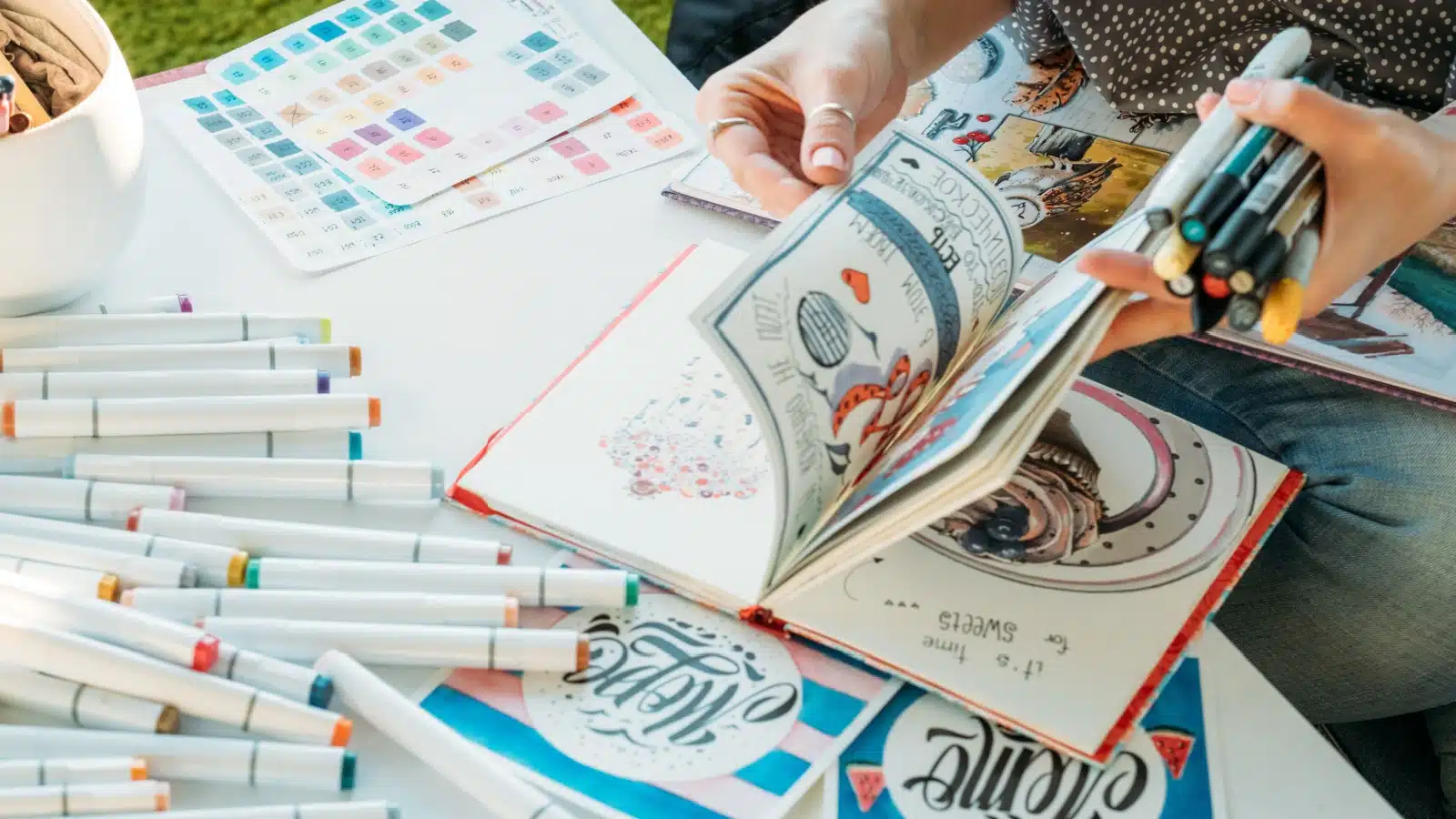
Blank-page journals offer a completely blank slate. They don’t have lines for writing or laser dots for creating charts.
You can use them for anything and everything, but three types of journals work best with blank pages.
Memory Journal
A memory journal can help us remember important events in our lives. It’s akin to a diary, where you write down what you want to remember, but it should be much more than that.
A memory journal is a cross between a journal and a scrapbook. Use it to record significant events, doodle, and store memorabilia like concert tickets.
The blank pages make it easy to tape or glue in photographs or ephemera while also providing room to jot down notes, write captions, and record your thoughts and feelings about particular events.
The great thing about a memory journal is that it can be whatever you want. You can get a blank journal and use it as a memory journal, or you can go to a craft store for some scrapbooking stuff and turn your memory journal into an image-filled scrapbook.
Journaling is a personal experience, and the right way to do it is whatever way works for you.
Scrap Book Journal
Scrapbooks are a particular type of memory journal focused more on photos and mementos from important events in your life than writing.
Scrapbook journals take a little more than pen and paper. Many like to include stickers, stamps, washi tape, and craft paper to make their memories come to life.
You must also collect photographs and scraps related to special events to fill your scrapbook journal.
Art Journal
Artists and creatives use art journals to jot down ideas and sketch prototypes. These journals are made for doodling!
Sometimes artists want to do a quick sketch of an idea they were considering or write notes about the next masterpiece they will create. A journal is perfect for artists to collect their thoughts and keep their projects on track.
Traditional, unlined journals are best for art journals, but you must be careful about which you choose.
Art journal paper is generally thicker than the paper in traditional journals, allowing you to experiment with different media on the journal pages without ruining the book.
Great Art Journal Options
- The Visual Journal, available on Amazon, is a basic mixed-media journal
- The Painted Art Journal, available on Amazon, has 24 prompts designed to help you create your artistic narrative
Guided Journals and Workbooks

Krakenimages.com via Shutterstock.com.
We covered some specialty journals above, but there’s a huge market for them.
A lot of companies have created journaling workbooks to help you with a specific problem. They are like journals in that you answer questions and respond to prompts, but they aren’t open-ended like the journals above.
They’re more like workbooks than journals, but they can help with personal development and self-improvement.
Check out the best guided journals at Staples:
Seasons Guided Journals
Another company, Season Journals, offers four niche guided journals. Three are related to the biggest events of our lives: engagement, marriage, and pregnancy. They’re specifically designed to help you record and keep the best memories from these life-altering events.
Their fourth guided journal works for everyone. It’s focused on positivity, providing daily exercises to help everyone identify and embrace all the good things in their lives.
Season Journals also offers a wide range of mindfulness tools, workshops, and gifts for nearly all of your journaling needs.
6 Niche Journals to Explore

There’s a specific type of journal for nearly everyone. Here is a small collection of fun niche journals to give you an idea of the various journaling options available.
Junk Journal
A junk journal is a journal you can make from stuff you find around the house. Use paper scraps, cardboard, poster board, and notepads to create a journal that is uniquely yours.
Junk journals are fun because you get a bonus crafting activity with them. Many people use their junk journals as art journals or diaries, but your imagination is the only limit.
Hobby Journals
Thousands of hobbies lend themselves to journaling. Here are some examples of using a journal to track and appreciate different hobbies:
- Collectibles
- Track the items you have, the ones you want, what you paid for, and what they are worth!
- Food/Beverage
- Wine tastings, favorite restaurants, what you ordered, flavor profiles
- Photography
- Favorite locations, places to go, ideas for the photo setup
- Gaming
- Favorite games, character builds, retro games, items
- Reading
- Favorite books, authors, and thoughts while reading
There’s a way to incorporate journaling into any hobby you enjoy. It offers a fantastic way to organize things, track your progress, and look back at where you were at any given point in the past.
The best hobby journal depends on your hobby. Artists may prefer an art journal, but collectors may want to create unique spreads in a bullet journal. Photographers may find that a scrapbook journal best suits their needs.
The Stuff I Hate Journal
Emily Rose created a niche journal to flip the script on traditional journaling. Many journaling proponents embrace positivity, growth, and development.
While those are fantastic goals everyone should strive for, sometimes we need to vent. Life isn’t always rainbows and butterflies, and everything isn’t positive all the time.
Rose considered these competing thoughts when creating The Stuf I Hate Journal. The journal throws positivity out the window and allows users an outlet for the rage, snark, and negative feelings everyone experiences. It’s an excellent tool for shadow work, venting, or allowing yourself to dislike things.
Grimoire
Witches need journals, too. A grimoire, or Book of Shadows, is a witch’s journal filled with spells, charms, and ideas to help a witch refine her craft.
Many practicing witches craft their own grimoires, but those dabbling in the craft may prefer something that comes prefilled with prompts, charts, and guides to help them get started.
The Grimoire Journal on Amazon is a perfect choice!
A Hunter’s Journal
Niche fandoms can produce entertaining resources. The hit show Supernatural spawned a new genre of journaling: The Hunters Journal.
A Hunter’s Journal is just for fun. It’s a fictional resource allowing users to pretend to hunt the supernatural beings found in the show. Some may contain dictionaries of the creatures or hints about defeating them.
Although this is just for fun, it also showcases that there are journals for everything you can imagine.
Bonus: Real Hunter’s Journal
Though the Supernatural Hunter’s journal is just for fun, those who enjoy hunting as a real hobby can also benefit from journaling.
Hunter’s logs allow hunters to record details of their hunts, helping them remember the most successful setups and the best hunting conditions.
Grab a real Hunter’s Journal on Amazon.
Journal Without Writing – the Video Journal
Writing isn’t for everyone, but that doesn’t mean you can’t reap the benefits of journaling. If you don’t enjoy journal writing, consider making a video journal instead.
Grab your webcam and microphone and spill your guts out. Talk to yourself about anything and everything, and get those complex feelings out of your head and onto the screen.
Scholarly Journals
Scholarly journals are a very different type of journal. They showcase the latest research from scientific communities and allow scientists to communicate their findings with other scientists and the general public.
Scholarly journals include scientific journals, medical journals, and research journals. These peer-reviewed journals are essential for building scientific consensus and understanding the world’s workings.
Scientists in most fields use scholarly journals for research and to develop their own theories based on the work of others. Getting published in a prestigious journal is a top career goal for many scientists.
Check out this website if you’re looking for information on scholarly research!
Bonus: All-in-One Planner/Journal
OlgaPS via Shutterstock.com.
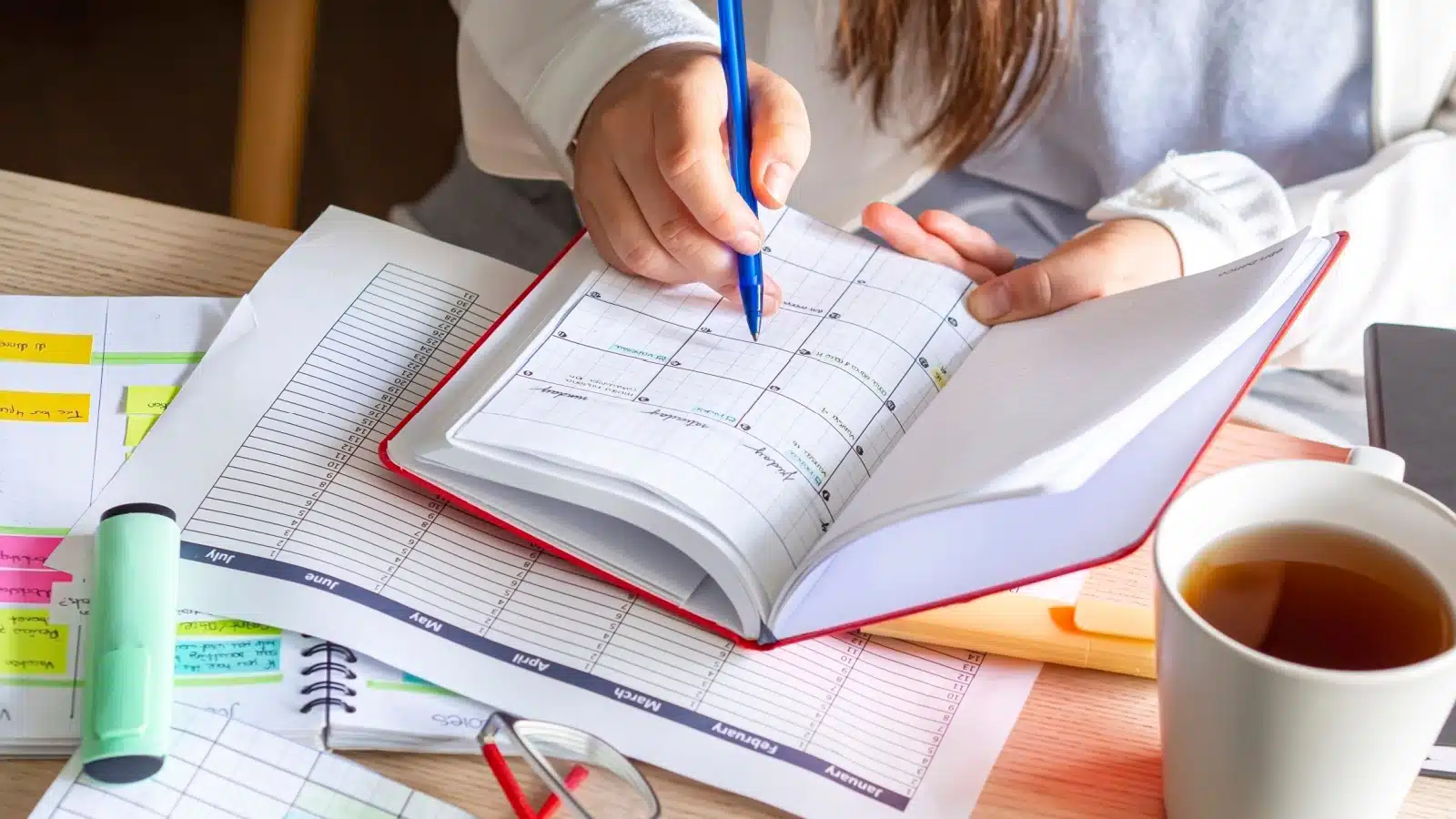
All-in-one notebooks are a cross between a journal and a planner. These have schedules, calendars, task lists, and extra room to write out your daily thoughts, all built right into the pages.
These all-in-ones are mostly planners but also have loads of extra space for journaling. They are ideal for those who only want to keep one book but don’t want to draw out their own spreads like in a bullet journal.
Best All-in-One Planners
My favorite all-in-one is the All-in-One Planner from Ivory Paper Co. Remember that these resources are planning-focused and ideal for those looking to add a bit of journal writing to their planner.
Journals and planners aren’t usually the same though. Check out our favorite planners to find the one that’s right for you.
A Journal For Everything

Journaling is a great habit to get into, regardless of why you choose to start. Hopefully, this post gave you fabulous inspiration and ideas on why you should start journaling.
The best thing about journaling is that there’s something for everyone. There is a specific journal type to fit many different needs. There may even be more niche journals that we haven’t yet discovered!
A regular lined or blank journal is the perfect fit if you’re unsure where to start. Grab one and start writing today!